US Congress Subcommittee Chair: America will help Peru ‘take back’ Chancay
Plus, COFCO invests US$400mn into Mato Grosso.

Plus, COFCO invests US$400mn into Mato Grosso.
Subscribe for regular briefings, reports and updates on the China-Latin America relationship.
Never miss a market movement, diplomatic fall-out or security development again.
LATAM–China Monitor
Weekly LCM Briefing | Issue #9 | Coverage: [15-29.04.26]
| Brazil | Argentina | Mexico | Chile | Peru | Colombia | Panama | Costa Rica | Ecuador |
This week — key signals:
- US Congress chair: America will help Peru ‘take back’ Chancay
- COFCO invests $400mn into Mato Grosso
- BYD delivers two driverless trains to Line 17 of the São Paulo monorail
- Brazilian labour watchdog chief Luiz Felipe Brandão de Mello fired for BYD blacklisting
- China’s Bank of Communications named a pilot in China-Brazil bond access scheme.
- Argentina Lithium and Energy receives US$100mn investment from Lanshen
- SQM share prices take a 6.83% plunge in mid-April
- Chinese regulator tells Maersk and MSC to leave Panama ports
- Ecuadorian government takes Coca Codo Sinclair dam into ownership after dispute
Top Signal Analysis:
Salazar’s intervention is less a credible expropriation threat than a coordination cue: it raises the probability that Peru’s next government (especially under Fujimori) tightens regulatory, ownership, or operational constraints on the Port of Chancay — creating a pathway for “soft rollback” of Chinese control without outright seizure.
The view from Beijing:
- The Peruvian election is still delayed. Since last week’s briefing, centre-left candidate Roberto Sánchez has overtaken the ‘far-right’ Rafael López Aliaga (of Popular Renewal) into second place against Fujimori in first round voting. Sánchez represents a centre-left to far-left coalition made up of social democrats, democratic socialists and communists — he also served in the controversial presidency of ousted Pedro Castillo. While Fujimori isn’t actively hostile to Chinese interests in Peru, Sánchez is notably more China-aligned than his competitor. Beijing will likely prefer Sánchez’s candidacy for diplomatic alignment and Fujimori’s for investment openness — especially in mining. The Popular Renewal Candidate has vowed to close open-pit mines — potentially threatening Chinese investments in Las Bambas. Sánchez has served as the congressional chair of the Chancay port commission — positively leading Peruvian involvement with Chinese SOE COSCO. Additionally, in 2025, he wrote an op-ed in the Global Times, a CCP-connected outlet, arguing that, with the US pursuing protectionism: “unity and consensus across the Global South is more vital than ever.”
- A Chinese policy paper has suggested using an upcoming November summit of the Asia-Pacific Economic Cooperation (APEC) group in Shenzhen to try and revive a Pacific free trade area, the FTAAP (Free Trade Area of the Asia-Pacific) — a proposal which stalled 20 years ago. Mexico, Chile and Peru are members of the APEC forum — and have all placed anti-dumping measures on Chinese goods in recent years.
- China’s central bank has lifted lending caps on the Export-Import Bank of China (Exim Bank) to encourage the global use of the yuan.
- Brazil and China’s government Middle East experts have met in Beijing. Special Envoy on the Middle East, Zhai Jun met with Brazilian counterpart Ibrahim Abdul Hak Neto. The men discussed how to use the talks in Pakistan to broker peace in Iran.
- Chinese battery company CATL has announced a US$4.4bn fund to establish a mining subsidiary managing access to rare earth metals — as demand for EVs ticks up in reaction to fossil fuel shocks caused by the Iran-US-Israel war. The CATL arm is intended to pursue mining projects domestically and abroad — securing vital supply chains for batteries. In concrete terms, CATL’s expansion could lead to increased competition in Latin America — especially upstream in prospecting, extraction and basic processing.
Peru:
Infrastructure
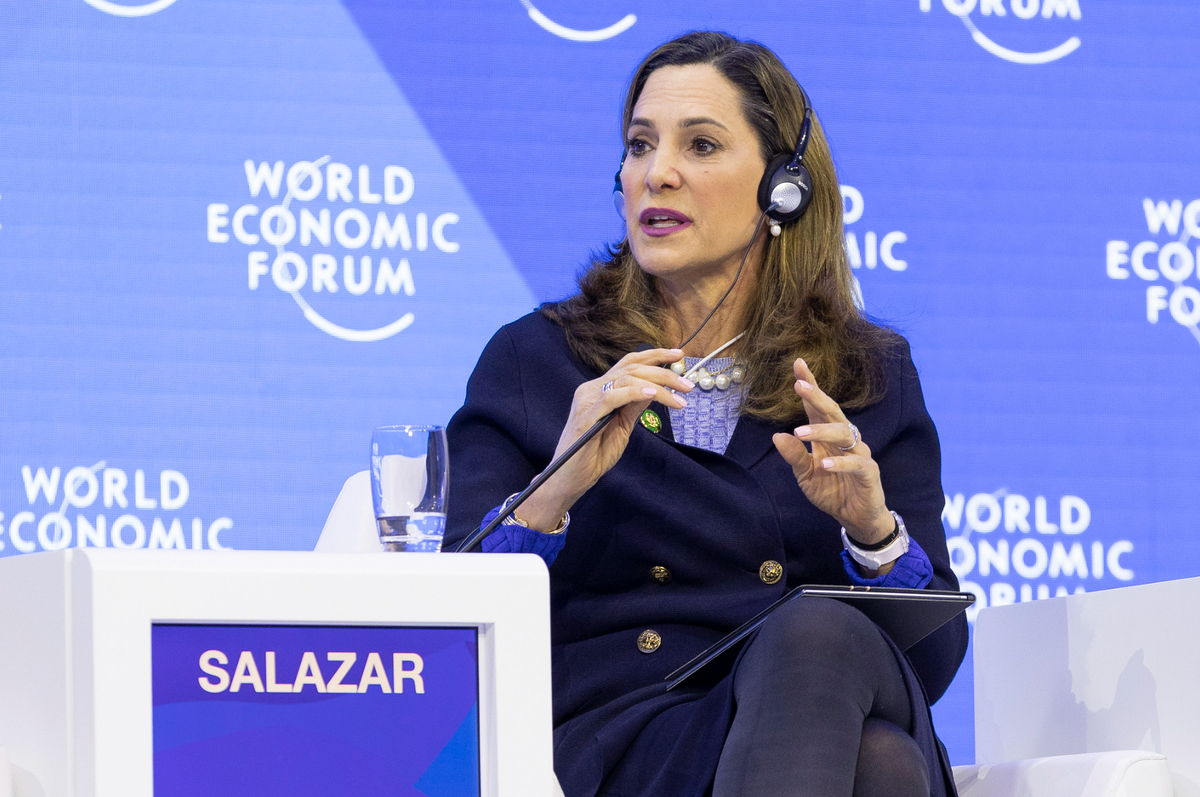
- [SIGNAL] [17.04.26] On the 16th of April, GOP Florida congresswoman and chair of Congressional subcommittee: Foreign Affairs, Western Hemisphere, Maria Salazar, claimed the US would ‘help’ Peru seize the COSCO run port of Chancay. The claims were made during a subcommittee hearing on ‘Latin America After the Fall of Maduro.’ During her opening remarks, celebrating the emergence of the ‘Donroe Doctrine,’ Salazar also addressed the ongoing Peruvian presidential elections, saying: “In Peru, leaders now understand the dangers of China owning a deep water port…That's a direct threat in our hemisphere, right in the country of Peru. For that reason, the new Peruvian government, which will be elected next June, must take it back. That port, take it back, and the United States will help them under the Trump administration.” Source: [SCMP]. [T4, BC] Why this matters: Presidential follow through on Salazar’s comments tests whether the US will actively unwind — not just outcompete — Chinese assets in Latin America.
Trade
- [WATCH] Peru has imposed a 5-year anti-dumping (AD) duty on Chinese wire rods exported into the country. The duty is being set at US$81.3 per ton for all Chinese producers of non-alloy and various carbon wire rods. This decision comes after an AD was launched in January 2025. Source: [Yieh Corp]. [T3, BSP].
Cross-Country:
Commodities
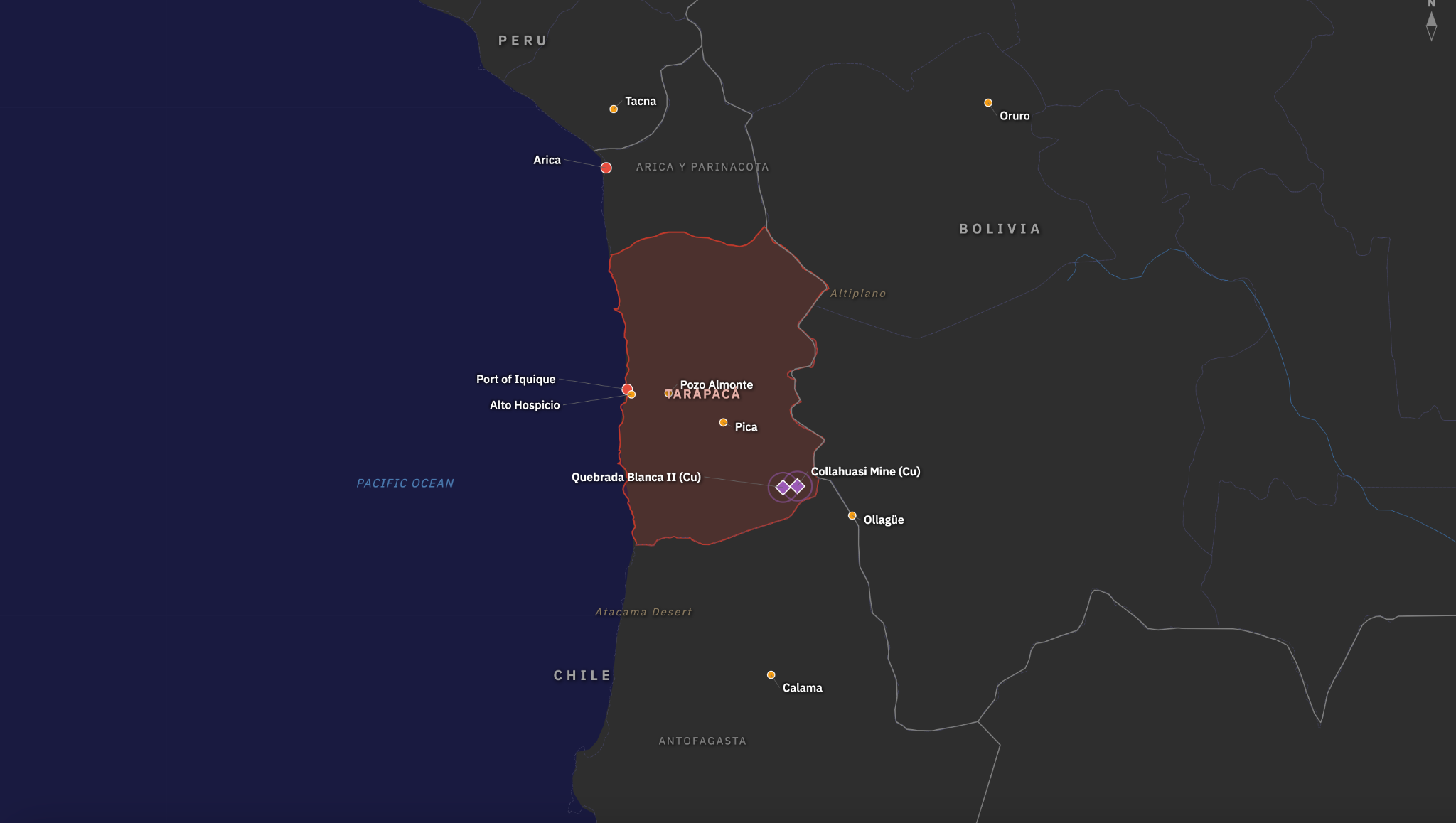
- [WATCH] [25.04.26] Canadian mining company Teck Resources is seeking approval for a merger with UK commodities giant Anglo American from Chinese regulator SAMR (State Administration for Market Regulation) under anti-trust protocols. Teck and Anglo American both control large copper mines in Chile and Peru — including Collahuasi and Quebrada Blanca mines in the northern Chilean region of Tarapacá. If the merger is complete, Anglo-Teck will be one of the five largest copper producers in the world. Source: [BNAmericas]. [T4, BSP].
E-Commerce
- [WATCH] [23.04.26] An executive from Argentine e-commerce giant Mercado Libre has claimed the site is aiming to recruit Chinese sellers, in an interview with state broadcaster China Global Television Network (CGTN). Mercado Libre currently has around 40% of the e-commerce market share in Latin America, according to Fernando Yunes, Executive VP of Commerce for the company. Source: [Bastille Post Global]. [T2, BC].
Brazil:
Infrastructure
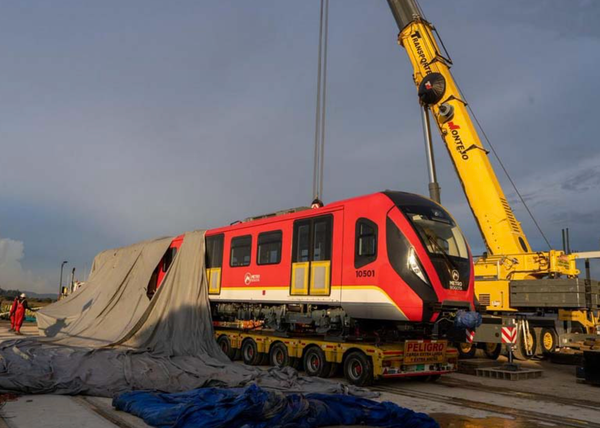
- [SIGNAL] [17.04.26] Chinese automaker BYD has delivered the first two of its driverless trains on Line 17 of the São Paulo monorail — as part of a US$221.2mn project with the city. The full 2020 contract will deliver 14 cars to the line, signalling systems and platform doors. The final trains are due for delivery by late summer 2026. The BYD project was initially conceived for Brazil’s 2014 World Cup — before facing significant delays and budget over-run: a final US$1.1bn vs a planned US$402mn. Source: [Rolling Stock World]. [T3, BSP]. Why this matters: Shows Chinese firms can survive delays and still entrench themselves in high-spec urban infrastructure.
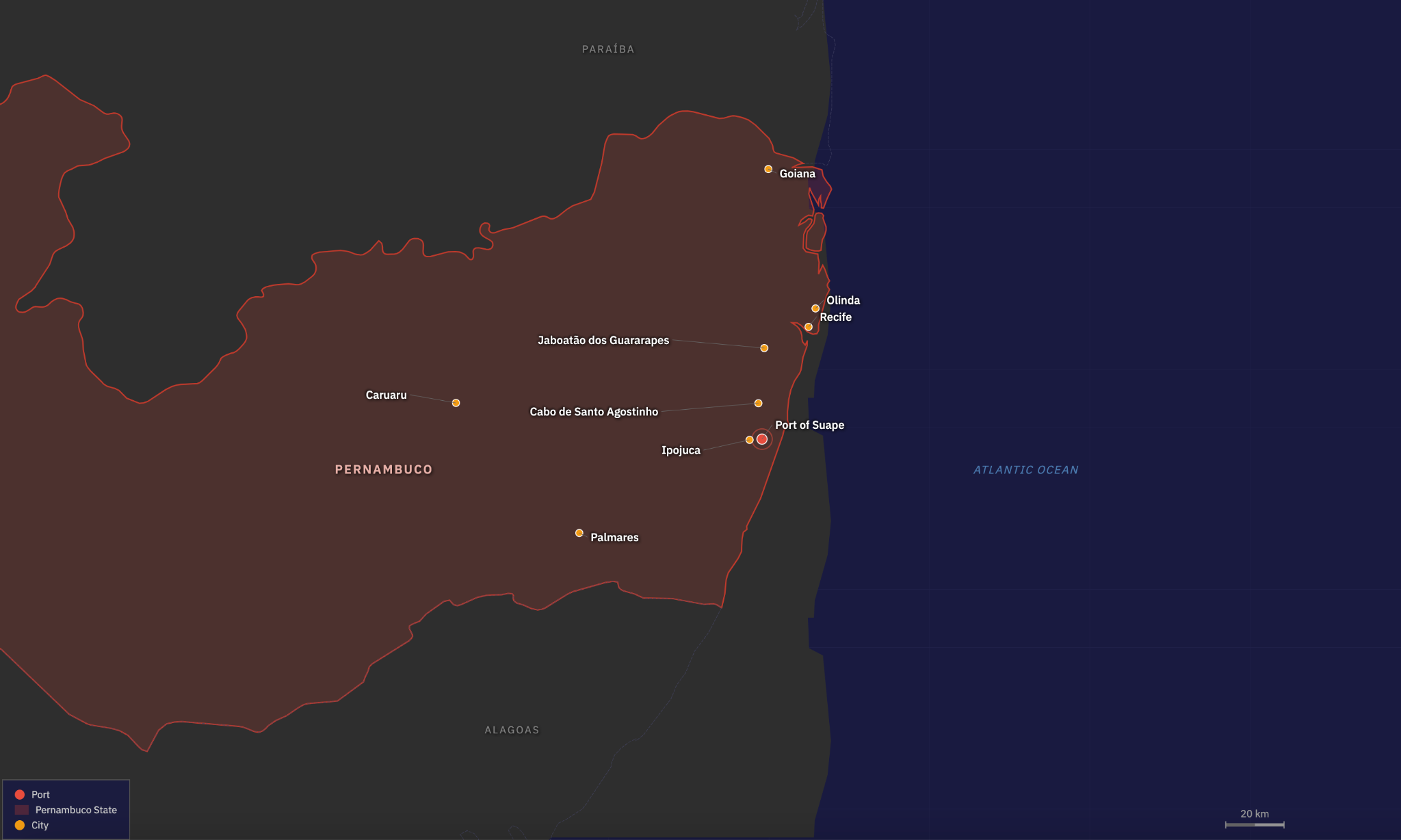
- [WATCH] [19.04.26] A Brazilian-Chinese agreement intends to invest around US$1.5bn into an industrial complex, producing green hydrogen, based at the northeastern Port of Suape in Pernambuco state. The Sino-Brazilian complex is intending the US$1.5bn project to produce over 10k jobs in the region. Source: [ClickPetroleoGas]. [T3, BSP, BN].
FDI
- [SIGNAL] [14.04.26] The labour watchdog leader who put BYD on a blacklist for Brazilian labour violations has been fired by the government. Luiz Felipe Brandão de Mello placed the Chinese company on the list after a series of investigations into ‘slavery like’ conditions at one of the automakers plants in Camaçari, northeastern Brazil — restricting BYD’s access to certain loans. The National Institution of Labour Inspectors (Anafitra) has claimed the firing is an unjust case of “institutional retaliation” against de Mello. Source: [SCMP]. [T4, BC]. Why this matters: Signals Brasília may be willing to dilute labour enforcement to keep Chinese capital onside.
Agriculture
- [SIGNAL] [24.04.26] Chinese food-processing SOE COFCO, has confirmed an investment of US$400mn into its soybean processing plant in the central state of Mato Grosso — creating the largest soybean processing plant in Brazil. The investment is expected to enlarge a COFCO plant in the town of Rondonópolis. The investment will almost double processing volume for COFCO. The project is slated to be finished by 2028. Source: [ClickPetroleoGas]. [T3, BSP, BN]. Why this matters: Food security strategy is being industrialised inside Brazil’s borders.
- [WATCH] [16.04.26] China has halted the importation of beef from Brazilian company Frigosul — after discovering traces of medroxyprogesterone acetate, a veterinary product not approved in China. The shipment originated in a Frigosul plant in Várzea Grande in Mato Grosso. Source: [Valor International]. [T4, BSP, BN].
Debt
- [SIGNAL] [24.04.26] China’s Bank of Communications (BOCOM) has been named the pilot bank by the People’s Bank of China for a China-Brazil bond market connection scheme. The connection will allow Chinese and Brazilian investors access to each other’s domestic bond markets and produce bilateral currency swaps. Why this matters: This could shift China–Brazil ties from commodity dependency to monetary interdependence. Source: [Yicai Global]. [T3, BS, BC].
Commodities
- [WATCH] [16.04.26] A number of bills introduced into Brazil’s congress by pro-Lula deputies have proposed a new national critical minerals body: Terrabras which would oversee the development of rare earths, lithium and copper. The bills come in response to increased competition and foreign policy signalling from the US and China over Brazil’s vast reserve of critical minerals (the second largest in the world). Lula’s administration has consistently taken the stance that rare earths and critical minerals should be processed domestically, allowing Brazil to capture more of the value chain. Currently, the South American nation only processes 1% of the world’s rare earths, despite its huge deposits. Source: [Climate Home News]. [T4, BSP, BW].
Argentina:
Commodities
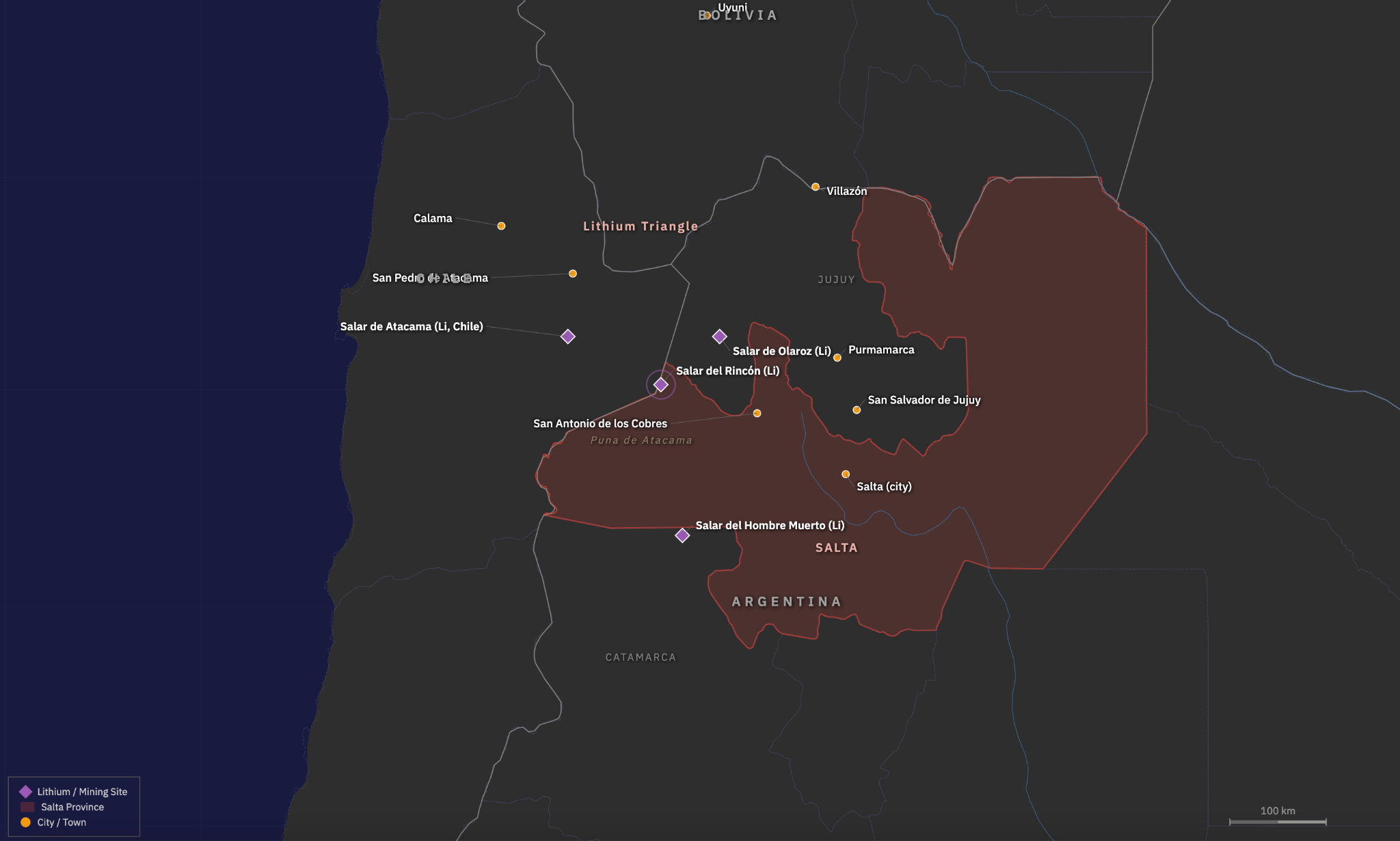
- [SIGNAL] [21.04.26] Argentina Lithium and Energy (ALESA), a junior mining company, has received a US$100mn investment from its joint venture partner Chinese private Xi’an Lanshen New Material Technology to advance lithium mining efforts at Rincon West in the northwestern province of Salta. ALESA is prospecting the feasibility of the Rincon West project across seven stages — the successful result of which will be Lanshen gaining a right to 30% equity in ALESA’s subsidiary which owns the Salta lithium mine. Why this matters: Salta is becoming a template for gradual Chinese equity embedding in critical minerals. Source: [Mining.com]. [T3, BSP].
Trade
- [WATCH] [17.04.26] Chinese auto and coach manufacturer, King Long, has rapidly produced 150 electric buses for an Argentine fleet destined for Buenos Aires. The buses were processed and manufactured in just 16 days, and come under current Argentine prices by a range of 20-30%. Source: [CPG]. [T3, BSP, BN].
Infrastructure
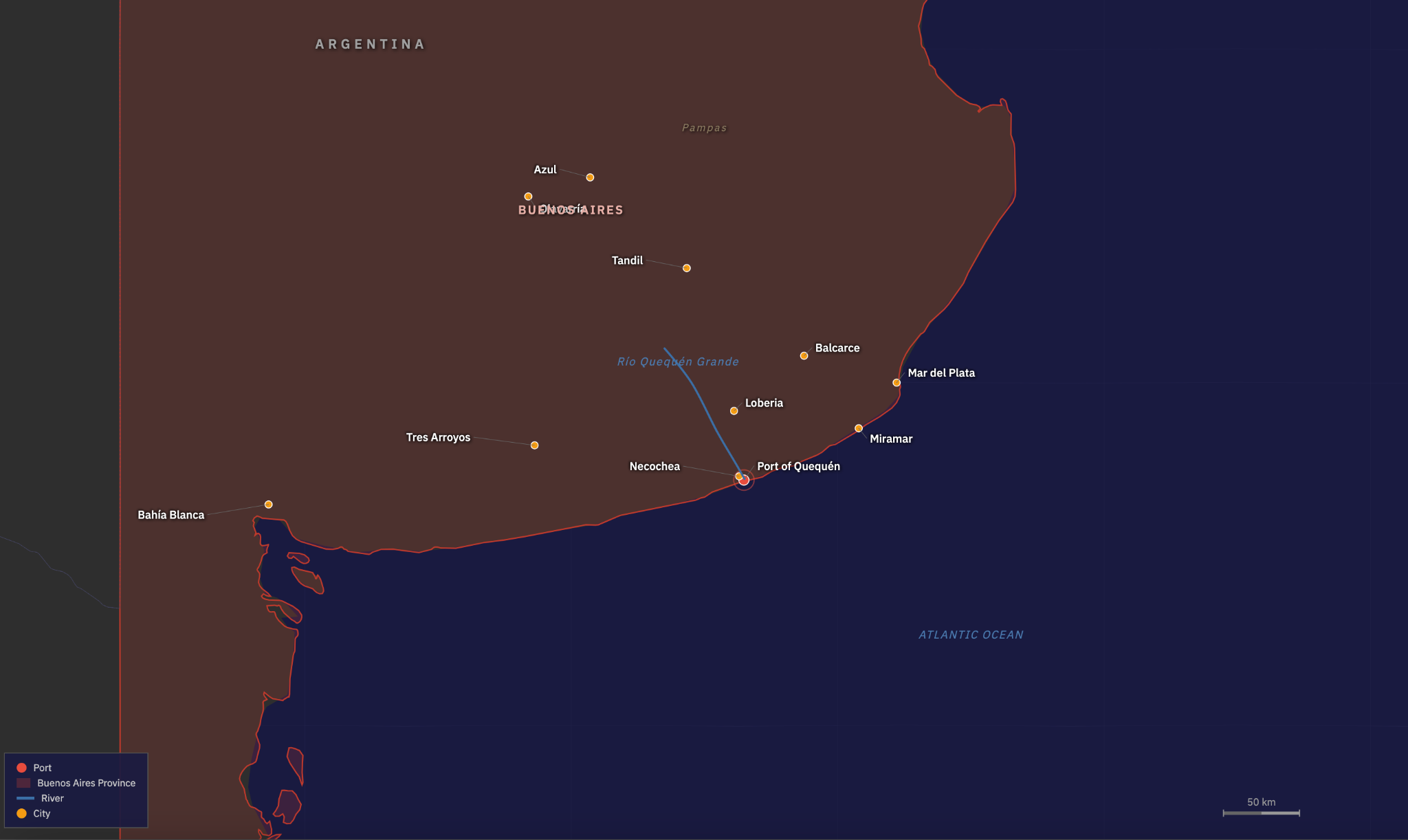
- [WATCH] [22.04.26] Truckers have been blockading the Port of Quequén, south of Buenos Aires, in a strike action over pay. The trucker group has agreed to meet with farming and shipping authorities in the coming days to agree a deal, according to local authorities. Quequén handles 20% of Argentina’s soy exports — mainly to China. However, the major terminal of Rosario — responsible for over 85% of Argentina’s exports is currently unaffected. Source: [Reuters]. [T4, BW].
Diplomacy
- [WATCH] [23.04.26] The US Undersecretary of State for Arms Control and International Security, Thomas DiNanno, stated that there was ‘concern’ about Chinese infrastructure in Argentina, during a press conference at the US ambassador's residence in Buenos Aires. DiNanno talked further about both Argentina and the US having to “balance” commercial interests with national security interests. Source: [Reuters]. [T4, BW].
Mexico:
Trade
- [WATCH] [20.04.26] Mexico has started an anti-dumping investigation into Chinese thermal paper roll imports. Chinese firms and regulators will have 23 working days to respond to any charges the investigation brings. Source: [HKTDC Research]. [T4, BS].
- [WATCH] [21.04.26] Mexican-Taiwanese bilateral trade has surged in 2026. Mexican imports from Taiwan increased 400% YoY in February 2026, reaching US$7.5bn. Much of this increase has been driven by semiconductors. Source: [Mexico News Daily]. [T3, BN].
- [WATCH] [22.04.26] Post Trump’s reciprocal tariff move last year, Mexico has outcompeted Canada for exports into the US – reaching rates 40% higher than its northern neighbour at US$535bn in 2025. Much of this trade growth was made up of surging Mexican tech exports to America — chips, computers and servers exported from Mexico increased by US$41.6bn in a year. This increase is mostly down to data centre demand powered by the US AI industry: who are increasingly shifting production from China to Mexico to derisk supply chains. Source: [Globe and Mail]. [T4, BW].
Chile:
Commodities
- [SIGNAL] [17.04.26] Publicly traded SQM (Sociedad Química y Minera de Chile) share prices dropped by 6.83% between April 16th and April 17th (from US$95.31 to US$88.80) and haven’t fully recovered as of the 28 April. SQM is part owned by Chinese private sector Tianqi Lithium (23.77%). SQM’s share price had been rebounding after lows in 2025. There is now scrutiny over the strength of this rebound — given Chilean regulatory moves. Source: [Quiver Quant]. [T3, BSP, BW].
Trade
- [WATCH] [22.04.26] Chinese sulphuric acid exports to Chile reduced to zero in March 2026, according to customs data. Sulphuric acid is a vital component in the processing of copper — Chile’s strongest commodity export. The Iran-US-Israel war has constrained China’s willingness to export sulphuric acid surpluses abroad — instead retaining supplies domestically. Chile previously took one third of China’s sulphuric acid export supply. Source: [Reuters]. [T4, BW].
Colombia:
Energy
- [WATCH] [14.04.26] Chinese energy SOE, China Three Gorges Corporation (CTG), has reported it has reached full commercial operation at its Nisperos solar farm in the northern city of Baranoa, Atlántico. Source: [Renewables Now]. [T3, BSP].
Panama:
Infrastructure
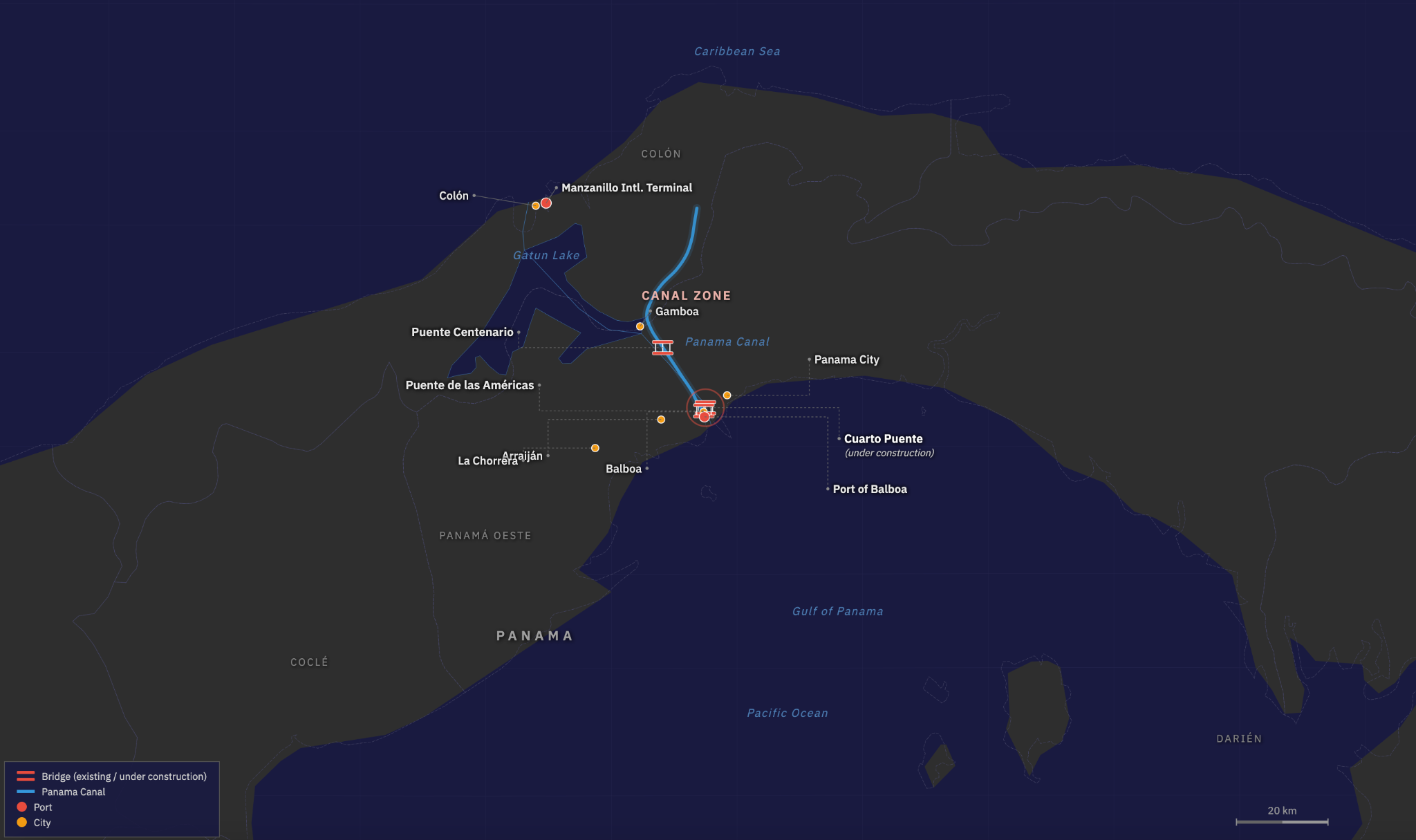
- [SIGNAL] [14.04.26] In a meeting with China’s National Development and Reform Commission (NDRC), the Danish and Swiss shipping companies Maersk and MSC were told to leave Balboa and Cristóbal ports on the Panama Canal. Maersk and MSC had previously taken over the Panamanian ports on temporary concession terms from CK Hutchison, after the country’s supreme court ruled that a previous concession granted to the Hong-Kong based company was unconstitutional. Maersk and MSC executives argued against the NDRC, claiming that their port concessions were necessary for keeping transit open in the canal. Source: [FT]. [T4, BW]. Why this matters: Signals China is willing to escalate from commercial pressure to soft operational coercion.
- [WATCH] [19.04.26] Panama’s government is considering sanctions against the Chinese Panama Fourth Bridge Consortium (made up of SOEs China Harbour Engineering Company Ltd and China Communications Construction Company Ltd) for alleged labour violations. The consortium is responsible for construction on the ‘fourth bridge’ project — which is intended to connect Panama City to its western suburbs across the canal. Panama’s Minister of Labour, Jackeline Muñoz, has reported that her department have found vast working condition inequities between Panamanian and Chinese workers on the site — conditions which have now led to potential sanction measures from the government. Source: [CNN Latin America]. [T4, BW].
Shipping
- [WATCH] [14.04.26] China continues to detain Panama-flagged container ships at its ports, in response to CK Hutchison’s ejection from Balboa and Cristóbal. However, Panama-flag registrations haven’t gone down during this time. Panama continues to rank as the world’s second highest shipping registry behind Liberia. Source: [Lloyd’s List]. [T4, BSP].
Costa Rica:
Diplomacy
- [NOISE] [20.04.26] In response to Panamanian-Chinese disputes over Panama Canal ports and Panama flagged shipping detentions by Beijing, Costa Rica’s Ministry of Foreign Affairs joined other nations in condemning China. The ministry published a statement, writing that: “[Costa Rica] expresses its deep concern and the firmest condemnation for the commercial measures imposed by the People’s Republic of China on Panamanian vessels due to the delays and arbitrary and unjustified inspections in Chinese ports, because they put global trade at risk.” Source: [Tico Times]. [T3, BN].
Ecuador:
Infrastructure
- [SIGNAL] [14.04.26] The Ecuadorian government will receive US$400mn in compensation for taking ownership of the Coca Codo Sinclair dam from the Chinese SOE Sinohydro after a period of international arbitration between the two over faults in the project. PowerChina, Sinohydro’s parent company (and also an SOE) will operate the dam on behalf of Ecuador for the next 25 years. Cracks in the dam were reported as early as 2018, preventing the infrastructure’s final commissioning. Why this matters: Even when projects are politically unwound, Chinese SOEs are retaining operational control via backdoor concessions. Source: [Infobae]. [T3, BN].
Further reading:
Americas Quarterly, ‘Is Argentina Ready for a Copper Moment?’ — Argentina has untapped copper reserves, and unlike lithium, they are not dominated by China. [15.04.26].
Latin American Post, ‘Paraguay Becomes Washington’s Quiet Prize in Latin America’s New Contest,’ — Paraguay, with high growth rates, relative stability and renewable energy, becomes a key site of contestation between China and the US. [15.04.26].
U.S Naval Institute, ‘What China Can Learn From Washington’s Caribbean Model?’ — What legal precedents have been set by President Trump’s unilateral extraction of Maduro from Venezuela? And how can they be used to Chinese advantage? [04.26]
Atlantic Council, ‘A US Tech Agenda Focused on Latin America to outcompete China,’ — American tech firms need to compete in Colombia on price and efficiency, not ideology. [17.04.26].
Wall Street Journal, ‘The US Wants to Ban China’s High-Tech Cars, But They’re Already Here in El Paso,’ — Chinese EVs banned from American markets are flourishing just across the border in Northern Mexico. Now dealers like BYD and Geely are attracting Texans across the border. [28.04.26].
To watch next week:
Early-May signalling on China–Mercosur trade track. Watch window: 4–9 May (policy signalling/leaks/preparatory talks).
- Brazil has recently shown new openness to a Mercosur–China trade arrangement, including partial or sectoral deals.
- Early May is a typical window for pre-summit positioning ahead of later May/June diplomatic activity.
About this briefing:
LATAM–China Monitor (LCM) aggregates weekly developments in policy, politics, infrastructure, commodities, energy, FDI, diplomacy, and military cooperation across Latin America and China. This project is designed to support future strategic briefings and political risk advisory services from SinoAméricas (SA).
Subscribe for future briefings
This briefing is free and focuses on aggregation.
Want deeper analysis on China-LATAM relations? Contact info@sino-americas.com
Know someone tracking China-LATAM? Forward this briefing.
Analytical weekly briefings, risk reports and corporate advisory services will be available in the medium-term.