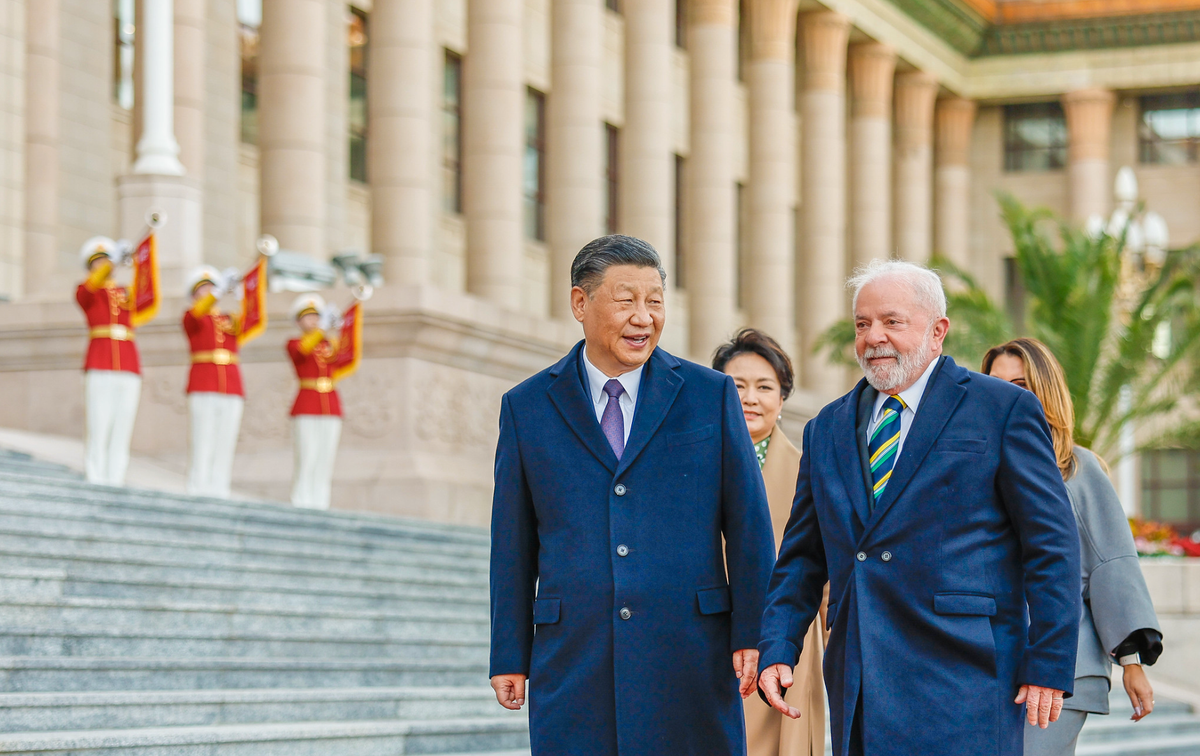
Brazil to issue US$735mn in ‘Panda Bonds’
Plus, massive Venezuelan debt restructuring leaves Beijing in the dark.
Plus, massive Venezuelan debt restructuring leaves Beijing in the dark.
Subscribe for regular briefings, reports and updates on the China-Latin America relationship.
Never miss a market movement, diplomatic fallout or security development again.
LATAM–China Monitor
Weekly LCM Briefing | Issue #12 | Coverage: 21-29.06.26
| Brazil | Argentina | Mexico | Chile | Peru | Colombia | Venezuela | Cuba |
This week — key signals:
- Keiko Fujimori and Abelardo de la Espriella 'win' Peruvian and Colombian elections.
- Brazil to issue US$735mn Panda Bonds.
- Chile's Codelco to undergo reforms.
- COSCO Shipping looses Peruvian court case against consumer-protection agency Indecopi
- Venezuela sets out to restructure a US$240bn debt pile — with American investment bank backing.
The view from Beijing:
- Over the space of a few days, Latin America’s two most important Andean states, Peru and Colombia, narrowly shifted towards US-aligned, right-populist presidencies. Keiko Fujimori of Popular Force edged over the line to effectively win the Peruvian presidency — gaining 50.13% of the vote against her left-populist competitor Roberto Sanchez on 99.992% of votes counted. However, electoral officials haven’t yet declared her the winner. In Colombia, right-populist lawyer and businessman Abelardo de la Espriella narrowly defeated left-populist Ivan Cepeda by around 252k votes. Cepeda’s predecessor in the presidency and as the Historic Pact candidate, Gustavo Petro — was moderately aligned with China, bringing Colombia into the BRI in May 2025. Espriella was vocal during his campaign about realigning his country with the US after a long period of cooling relations, especially over the drug war and environment, under Petro. However, many Latin American right-populist leaders, including Javier Milei and Daniel Noboa, have struggled to extricate their countries from large bilateral trade and FDI relationships with Beijing, choosing instead to pragmatically welcome Chinese capital and goods. In 2024, bilateral trade between Bogotá and Beijing equalled US$20.8bn, a 13.1% increase on 2023. The CCP’s foreign ministry will probably be quietly confident that Espriella, like Noboa in Ecuador, will keep his country in the BRI. Indeed, FM spokesman Guo Jiakun made comments a day after Espriella’s victory, congratulating the candidate, while outlining China’s “long-term perspective” on Colombia. Beijing will also probably be quietly pleased with Fujimori’s impending victory — despite her rhetorical alignment with the US, the right-populist politician has supported open-pit mines against left-wing Sanchez, a key Chinese investment sector.
- On Tuesday the 23rd of June, Chinese FM Wang Yi called on the BRICS group to jointly collaborate on rare earth minerals during a meeting in India. Wang urged the group, which includes Brazil, gathered at a security meeting in New Delhi, to “hold high the banner of multilateralism.”
- Chinese battery giant CATL caused lithium futures and lithium company stock to plunge last week, after speculation hit the markets that it might be reopening one of the world’s largest lithium mines. CATL’s Jianxiawo mine in the south-eastern province of Jiangxi was temporarily closed in 2025 due to permitting issues, causing the price of lithium to spike. Now, after a preliminary government land assessment notice — that has indicated the mine may reopen — lithium futures have dropped by 9% over two days. Meanwhile, LATAM lithium producers also saw drops in stock price: Lithium Argentina (down 2.6%), Lithium Americas (down 1.7%), SQM (down 1.1%).
Brazil:
Debt
- [SIGNAL] [25-26.06.26] Brazil, under its finance minister Dario Durigan, has set out its intent to issue US$735mn in Yuan-denominated ‘Panda bonds.’ The debt issuance will be the largest debut of Yuan-denominated debt in China by a foreign issuer, and the first issued by a Latin American country. Durigan met with the Chinese Central Bank governor Pan Gongsheng to finalise the plans for the panda bonds, declaring that “we need to test the trajectory of [Brazilian] sovereign debt in China.” The bonds are expected to be issued within the next two to three months. In the meeting, Durigan said he was looking for a hedge to protect productive Brazilian companies from Brazilian currency fluctuations. Why this matters: Brazil under Lula is the first LATAM nation to enter the Yuan-denominated debt market. Lula has long criticised the ‘exorbitant privilege’ of the US dollar hegemony and suggested Latin American countries enter a currency union. This is an auxiliary move by Brazil towards ‘de-dollarisation.’ However, many observers will note that Brazil is effectively trading one financial hegemon for another. Source: [Reuters].
Infrastructure
- [WATCH] [22.06.26] Executive Secretary at the Ministry of Transport, George Santoro, has announced his intention to publish bidding documents for a planned ‘Southeast Rail Belt’ concession linking the southeastern states of Rio de Janeiro and Espírito Santo. At least four groups have expressed their intention to bid on the concession: including Chinese SOE PowerChina — which has been involved in the controversial Ecuadorian Coca Codo Sinclair Dam through its subsidiary: Sinohydro. PowerChina has also acted as an EPC contractor on the massive Belo Monte transmission project: connecting the Belo Monte hydroelectric dam in the Amazonian state of Pará to southeastern demand on the coasts. The concession auction is scheduled for October 2026 — and requires US$4bn in investment, mostly funded by the federal government. Source: [Valor].
Energy
- [WATCH] [25.06.26] Brazilian finance minister, Dario Durigan, has signalled Brazil’s interest in collaborating with China on green financing, tech and infrastructure, during a meeting at the Asian Infrastructure Investment Bank (AIIB) HQ in Beijing. Durigan travelled to China with a team of environmental experts last week — setting out his country’s importance for biodiversity, rare earth minerals and food security. “We see the AIIB as a strategic partner. Its experience in mobilising capital, structuring complex projects and fostering international cooperation makes it a strong partner for accelerating ecological transformation,” said Durigan. Currently, Brazil has the second-largest global rare earth reserves, but only processes and manufactures a tiny fraction of world output. Source: [SCMP].
FDI
- [WATCH] [26.06.26] As of Thursday 25th of June, eight Chinese auto manufacturers are now operating in Brazil. MG, owned by the Chinese SAIC Group, has announced it will be assembling two of its electric models in Brazil by the end of the year. MG follows other Chinese automotive manufacturers into Brazil such as BYD, Geely, Leapmotor, and GAC. Source: [Datamar News].
Agriculture
- [WATCH] [23.06.26] Many spectators have speculated on whether the US-China, Trump-Xi, summit in May would lead to US producers recapturing a slice of Chinese soybean demand after a long period of decoupling. Ten years ago both the US and Brazil accounted for around 40% each of soybean exports to China; this changed in 2018 with Trump’s trade war against China — with Beijing shifting to 60% Brazilian imports by 2026. After the Trump-Xi summit the White House declared that China would be buying, at least US$17bn in US agricultural goods up to 2028. Some of this has trickled down to American soybean exporters who are increasingly competing with Brazil for Chinese demand — emphasising the quality of their products over South American rivals. Source: [CNBC].
Mexico:
FDI
- [WATCH] [25.06.26] A former Mexican chief negotiator of the USMCA has claimed that the US might try to limit Chinese access to American markets through Mexico by tightening up rules of origin regulations. Currently, Chinese companies, especially automakers, can tariff-jump US anti-China provisions by manufacturing units in Mexico with a low enough set of Chinese inputs that they stay within ‘rules of origin’ policies. Kenneth Smith Ramos, a lawyer at Agon and former chief negotiator on the original USMCA, has said that “we are hearing the US wants to introduce limitations as to the percentage of Chinese components that can be included in a North American vehicle in order for the car to qualify.” Smith Ramos, alongside NAFTA negotiator Antonio Ortiz-Mena, has claimed that the US might push for capital and technology origin rules alongside input rules when the USMCA negotiations start in July. [FDI Intelligence].
Transport
- [NOISE] [24.06.26] Chinese electric shuttle buses connecting travellers to CDMX and football stadiums have been playing a central role in the 2026 World Cup — according to Chinese state-backed newspaper The Global Times. The Chinese-manufactured Yutong Bus fleet is deeply embedded in Mexico — with over 1,500 vehicles across the country and 700 units in CDMX alone. Key to World Cup logistics around CDMX — according to the Global Times — is Yutong’s signature 26-metre model designed for high demand routes. Yutong currently holds 60 to 70% of the electric bus market in CDMX. Source: [Global Times].
Chile:
Commodities
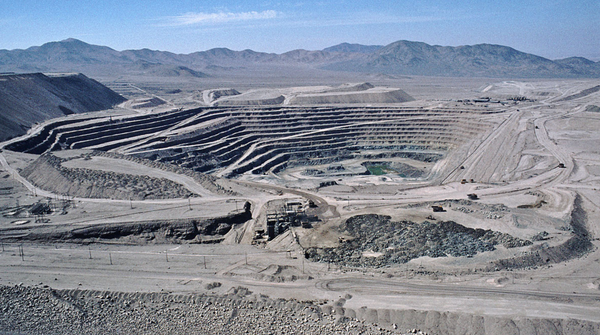
- [SIGNAL] [24.06.26] Codelco, Chile’s state-owned copper producer, and the largest copper company in the world, has signalled that it might sell off some of its assets this year. Codelco’s new chairman, Bernardo Fontaine, is under pressure from new right-populist president Jose Antonio Kast to make reforms to the SOE — especially given irregularities found in recent production reports issued by the group. Codelco currently owns major copper mines in Chuquicamata and El Teniente. It's unclear whether Kast will push for the full sale of Codelco assets, or for joint ventures with foreign companies. It is also unclear whether Kast, and Fontaine, will favour US majors or Chinese mining companies for asset sales and JVs. Why this matters: Codelco has long operated on a model of direct profit transfers to the Chilean government, causing a lack of long-term investment and debt accrual. The new Kast administration probably sees Codelco as a relic of statist Latin American political-economy — its ability to make convincing reforms in the medium-term will probably ensure its survival. Source: [Reuters].
- [WATCH] [23.06.26] Sociedad Química y Minera de Chile (SQM), which is part-owned by Chinese Tianqi Lithium (22%), could be overvalued according to investor analysis. Shares of SQM dipped by 1.9% over the last month, while year-to-date, shares are up 12.8%. Simply Wall Street argues that SQM’s shares, once undervalued, have now priced in lithium price growth, after a recent medium-term downturn. Source: [SimplyWallStreet].
Peru:
Infrastructure / Law
- [SIGNAL] [23.06.26] Chinese SOE, COSCO Shipping, went to court to block the Peruvian consumer-protection agency Indecopi from having powers to review Chancay’s tariff structures. COSCO had issued a suit claiming that Indecopi oversight would have violated the doctrine of legal certainty for private investment. However, Peruvian courts disagreed with COSCO’s argument, issuing a narrow win granting Indecopi the ability to regulate tariffs at the port. However, a large dispute is still ongoing in the courts, relating to the Peruvian state’s ability to oversee and regulate Chancay in a wholesale manner. Why this matters: The Trump administration has been watching COSCO’s investments and projects in Latin America closely — regularly arguing that Chancay might be a violation of Peruvian sovereignty. The narrow win over tariff regulation could provide Fujimori with a positive precedent for rebutting American concerns. Source: [Rio Times].
Venezuela:
Debt
- [SIGNAL] [24-29.06.26] Venezuela, under interim president Delcy Rodríguez, is set to reveal that its debt-to-GDP ratio is around 200%, and that its current external debt value is sitting around US$240bn — much higher than previously estimated. Currently, bonds issued by the government and SOE oil giant PDVSA make up the largest chunk of Venezuelan debt at US$60bn principal and US$40bn interest. Caracas is set to restructure its debt pile in an attempt to re-access international issuance markets after being frozen out under Maduro — this restructuring will be led by US-based Centerview Partners (an investment bank), after no bidding or competition. However, another top American investment bank — Lazard — has offered a US$25mn bid to replace Centerview (who are charging US$150mn) on the restructure. Historically, Venezuela has paid off much of its debt to China via oil transfer agreements. The involvement of the US government and American investment banks in Venezuela's debt obligations significantly complicates this mechanism. Estimates claim that Chinese total lending to Caracas has been close to US$60bn — with an outstanding balance of US$10-20bn. Why this matters: Venezuela's restructuring will test, and probably clarify, the relationship between Beijing and Delcy Rodríguez, now that Maduro is out of the picture. A push from Caracas to protect the oil-transfer mechanism will be a sign that Rodríguez intends to balance her relationship between Washington and Beijing. Source: [FT / Reuters / SCMP].
Cuba:
Policy
- [WATCH] [23.06.26] Under pressure from the US embargo and threatened military intervention, Cuba’s government under Miguel Díaz-Canel has passed a series of economic reforms through its parliament — the most significant shift in the country’s formally communist system since the 1960s. Under the reforms, private companies will be allowed to buy stakes in SOEs, private banks will be allowed to operate and there will be more latitude for private real estate development. There has been some signalling that Cuba considers this less a capitulation to the US blockade and more an alignment with policies pursued by China and Vietnam since the 1980s. [FT / Socialist China].
Further reading:
S&P, ‘Venezuela’s oil-linked debt with China could complicate its restructuring push.’ [12.06.26]
Atlantic Council, ‘Experts React: What a President Abelardo de la Espriella means for Colombia and Beyond.’ [22.06.26]
Financial Times, ‘Chinese carmakers knocking at US gate from Mexico and Canada.’ [25.06.26]
About this briefing:
LATAM–China Monitor (LCM) aggregates weekly developments in policy, politics, infrastructure, commodities, energy, FDI, diplomacy, and military cooperation across Latin America and China. This project is designed to support future strategic briefings and political risk advisory services from SinoAméricas (SA).
Subscribe for future briefings
This briefing is free and focuses on aggregation.
Want deeper analysis on China-LATAM relations? Contact info@sino-americas.com
Know someone tracking China-LATAM? Forward this briefing.
Analytical weekly briefings, risk reports and corporate advisory services will be available in the medium-term.