Xi-Trump Summit — Reset for Latin America?
Plus, CMOC Group signs a US$1.7bn deal for the Ecuadorian Los Cangrejos gold mine

Plus, CMOC Group signs a US$1.7bn deal for the Ecuadorian Los Cangrejos gold mine
Subscribe for regular briefings, reports and updates on the China-Latin America relationship.
Never miss a market movement, diplomatic fall-out or security development again.
LATAM–China Monitor
Weekly LCM Briefing | Issue #10 | Coverage: [29.04.26—15.05.26]
| Brazil | Argentina | Chile | Mexico | Peru | Colombia | Cuba | Panama | Ecuador | Paraguay | Costa Rica | Uruguay |
This week’s briefing — key signals:
- CMOC Group signs US$1.7bn deal for the Los Cangrejos gold mine in Ecuador
- Brazil suspends Port of Santos auction
- USA Rare Earth signals US$2.8bn investment into Pela Ema mine in the central Brazil
- Petrobras cuts American exports to zero in Q1 2026
- Mexican Contratista General de América Latina and Chinese GEO Global Energy PTE consortium invest US$600mn into PEMEX contract in Tabasco
- Chinese spies hack Cuban embassy in Washington DC
- Uruguay imposes VAT tax of 22% on all foreign online purchases — including Temu and Shein
Top Signal Analysis:
CMOC’s move boosts Ecuador’s short-term fiscal gains while deepening reliance on enclave mining and gold price cycles.
The view from Beijing:
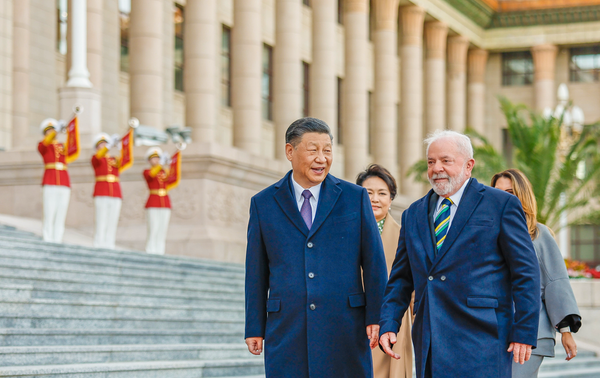
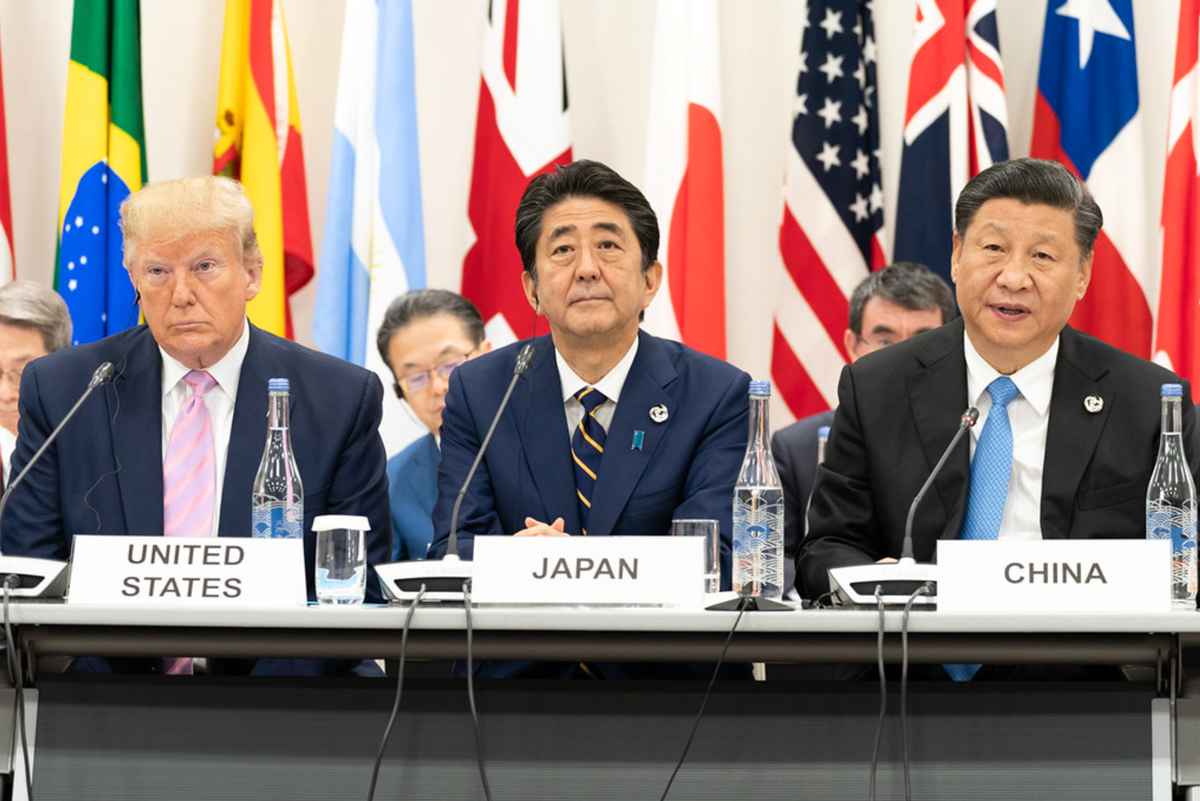
- The Trump-Xi 2026 summit is drawing closer — and is expected to kick off this week. While most pundits will be focusing on China’s role in brokering peace in Iran, the intensification or reduction in tariffs and Taiwan’s role in South China Sea security, the summit will also set the tone for future positioning in Latin America. Talks on issues such as the Panama Canal, Chancay Port in Peru, Mexico’s role in the USMCA and the Cuban blockade will probably not make headlines in May — and may not even feature in direct Trump-Xi discussions. However, there is a strong likelihood that talks will be held on the sidelines of the summit on these issues. Trump’s intention to secure rare earth supply chains for the US, however, may well lead to indirect discussion of LATAM affairs (given Brazil has the second largest reserves of rare earths in the world). What to watch for: If tensions between China and the US soften post summit, especially in trade, expect some Chinese capital and purchasing power to be rerouted to the US and away from LATAM (especially in liquid natural gas and soybeans). Any resultant reopening of the Strait of Hormuz might also redirect some Chinese purchasing away from Brazil and LATAM.
- Zijin Mining's vice president of operations, James Wang Chun, has announced at ExpoCobre 2026 that China’s largest mining company now has over US$10bn in investments in Latin American projects. Zijin has rapidly expanded its holdings in both the Lithium Triangle and territories sitting on the Peruvian-Ecuadorian border — including the La Arena project in Peru and investments in the Tres Quebradas (3Q) lithium brine project in Argentina. Meanwhile, the La Arena subsidiary’s CEO, Luo Yuchuan, has announced Zijin’s intentions to invest US$1.5bn into the Peruvian mining complex, expanding its life span by 19 years.
- Chinese shipping SOE, COSCO had several stands at the 30th Intermodal South America, a logistics conference based out of São Paulo, Brazil in mid April. Cristian Calderón, head of business for the Chancay Port subsidiary of COSCO in Peru, demonstrated much of the SOE’s AI-driven and green technology.
- The BRICS are exploring the possibility of setting up a digital intercurrency payment system outside the dollar system at the behest of India. The group, which includes Brazil and China, are due to meet in New Delhi in mid-May.
- Chinese spokesman for the Foreign Ministry, Lin Jian, has called the US hypocritical after Washington gathered regional allies to condemn China’s detention of Panama-flagged ships. “Who occupied the Panama Canal for a long time, invaded Panama with its military, and arbitrarily trampled on its sovereignty and dignity?” Argued Lin. “Who covets the Panama Canal, seeks to turn this international waterway — meant to remain permanently neutral — into its own territory, and disregards the sovereignty of regional countries? The answer is self-evident.”
- Chinese battery giant CATL accepted the world’s largest production-scale order of sodium-ion batteries this month with Chinese energy storage company HyperStrong. The contract will deliver 60 GWh of energy storage capacity over three years. The deal is a signal that sodium-ion batteries continue to move towards a competitive position against batteries requiring lithium and rare earth metals — potentially undermining LATAM leverage in these sectors.
- Peru is still waiting on its second round of presidential elections. After weeks of alleged fraud, disinformation and a criminal charge brought against left-wing candidate Roberto Sánchez for civil disorder — it’s still not clear who is going to be elected to Peru’s top post. At the time of writing, after the first round of elections, right populist Keiko Fujimori sits at 17.18% of the vote, and leftist Sánchez at 12.03%. Fujimori is less rhetorically aligned with China, while supporting numerous pro-privatisation policies which would benefit Beijing. In turn, Sánchez is rhetorically aligned with Chinese ambitions in Latin America, while proposing policies such as the banning of open pit mining which would impact pre-existing Chinese operations.
Brazil:
Infrastructure
- [SIGNAL] [1.05.26] Brazil’s Ministry of Ports and Airports has issued a request to the National Waterway Transportation Agency (Antaq) to suspend a planned auction at the southeastern Port of Santos. Prior to suspension, the Port of Santos, located downstream of São Paulo, had been planning a US$1.3bn, 621,900 sq m expansion called Tecon Santos 10. Now, Brazil’s central ministry has suspended developments to review the deal structure and competition levels — ensuring what the government calls “the best public interest.” There has been repeated disagreement over the current auction rules for Tecon Santos 10 — which currently restricts incumbent port operating companies from bidding in the first round. This policy aims to restrict market concentration in a vital piece of geostrategic Brazilian infrastructure. Currently, it's unclear when the Brazilian government will resume proceedings. Why this matters: Currently, no major Chinese SOEs have controlling stakes in Santos terminals. However, shipping SOE COSCO retains a 5% stake in a minority fund invested in a terminal — creating ambiguity around whether the group would be able to bid on Santos 10. Large Western operators like MSC and Maersk are already excluded due to their pre-existing operations. Source: [SeaTradeMaritimeNews]. [T3. BSP].
Commodities
- [SIGNAL] [29.04.26] The US under Trump has desperately been attempting to diversify its rare earth reliance and supply chains away from China (which currently refines 90% of the world’s rare earths). Brazil has been a prime target for the Trump administration for years, given its status as both the nation with the second largest rare earths reserves in the world, and startlingly low rates of production. However, a significant move towards US diversification occurred this April, when US company USA Rare Earth (USAR) declared its intention to invest US$2.8bn into the purchase of the Serra Verde Group, which controls the Pela Ema mine in the central state of Goiás. USAR claims that the mine is the only location, outside of Asia, capable of producing all magnetic rare earth metals simultaneously. USAR shares jumped 13% after the deal's announcement. The agreement still needs to be cleared with shareholders and Brazilian regulators. Why this matters: USAR’s proposed investment in Brazil’s Pela Ema mine marks a potential breakthrough in building a non-Asian supply chain capable of producing all magnetic rare earths in one site. This raises the probability of partial supply-chain “friend-shoring” for EVs and defence manufacturing. Source: [The Street]. [T3. BSP.]
- [WATCH] [29.04.26] In a 180-degree turn, the Brazilian government has rejected moves to establish a nationalised company for rare earth extraction. In issue #9 of the LCM, Lula-aligned deputies had proposed the creation of Terrabras — a body overseeing the national development of rare earths. Now, the Ministries of Industry and Finance, headed up by Marcio Elias Rosa and Dario Durigan respectively have rejected nationalisation, re-emphasising a commitment to private investment allowing for domestic processing. Source: [Mexico Business News]. [T3. BSP.]
 SinoAméricas
Energy
- [SIGNAL] [30.04.26] Brazilian oil parastatal Petrobras cut its exports to the US to zero in Q1 2026, in reaction to a surge in demand from China and India. This demand surge was generated as a consequence of Asia consumers rerouting their supply-chains to avoid the disrupted Persian Gulf during Iran-US hostilities. YoY, Chinese purchasing of Petrobras oil jumped from 33% to 62% of total exports. Simultaneously, YoY, US purchases have declined from 3% to 0%. Why this matters: The collapse of US purchases from 3% to 0% marks a potential breakthrough in the decoupling of US–Brazil energy trade, raising the likelihood that US refiners will deepen reliance on alternative Western Hemisphere suppliers such as Canada and Guyana. Source: [Reuters]. [T4. BW.]
Trade
- [WATCH] [28.04.26] China has tripled its car exports to Brazil (YoY) between Q1 2025 and 2026: from US$763.8mn to US$2.16bn. Brazil is now the third largest destination for Chinese cars (both combustion engine and EV) behind Russia and the UK. Source: [Datamar News]. [T3. BSP.]
FDI
- [WATCH] [30.04.26] The private Chinese technology giant Huawei is planning four Battery Energy Storage Systems (BESS) across Brazil for 2026, according to industry insiders. Major initiatives include the total decarbonisation of the island of Fernando de Noronha, in northeastern Brazil, off the coast of Pernambuco State. Huawei is also planning three joint ventures with Brazilian companies, including: a partnership with São Paulo’s city government and Matrix Energia for the installation of BESS systems within local bus depots; a partnership in the southern state of Paraná, between Huawei and Matrix to install BESS systems supplying energy to the inland town of Coronel Vivida; and finally, a joint venture with Scottish firm Aggreko to install 110 MWp of solar panels and 120 MWh of battery capacity across the state of Amazonas. Source: [Macao News]. [T2. BC.]
Argentina:
FDI
- [WATCH] [29.04.26] Faced with a highly competitive market, and increasing Chinese market share in the automotive sector, Japanese manufacturer Nissan is strategically pulling back from operations in Argentina. The company has issued a memorandum of understanding with two local distributors, to end its direct subsidiary in Argentina and move to a model aligned with its operations in other Latin American countries. Namely, Nissan is planning to move to an import-distribution model — rather than a full scale domestic manufacturing structure. Source: [Noticias Argentina]. [T3. BN.]
Energy
- [WATCH] [29.04.26] Argentina, long an economically stressed upper-middle income nation, is benefiting from the energy shocks caused by the Iran-US war and the closure of the Strait of Hormuz. With a reduction in global consumption of Gulf generated oil — Argentina under Milei has been well positioned to take advantage of this rerouting of demand to alternative suppliers. Under the libertarian presidency of Milei, who has called climate change a “socialist lie,” vast amounts of shale gas and tight gas have been extracted from the western Neuquén Basin reserves. Post-Iran War growth adds to prior consolidation of Argentine energy exports — the supply of shale from Neuquén led to Argentina becoming a net energy exporter for the first time (since 2010) in 2023. Source: [FT]. [T4. BW.]
Crime
- [WATCH] [01.05.26] Argentine authorities have arrested two men and seized large sums of cash and firearms in relation to a “Chinese mafia” intimidation scheme in the coastal town of Mar del Plata in Buenos Aires province. A local Chinese supermarket owner, Chen Jian Iao, had complained to local police about an intimidation campaign around his opening a new shop in the town. The campaign included red Chinese-character graffiti threatening to “kill” Chen. More than 190mn pesos were seized from the alleged mafia figures. Source: [Buenos Aires Times]. [T3. BN].
Commodities
- [WATCH] [30.04.26] The struggle for access to Argentina’s rare earth minerals and lithium reserves between China and the US has intensified. In late April, the US Chamber of Commerce and The American Chamber of Commerce in Argentina (AmCham Argentina) signed an agreement on critical minerals — building on a prior agreement reached between Trump and Milei in February 2026. The chamber of commerce agreement doesn’t guarantee American investment into Argentine reserves, but it does open up private access to funding organisations where Washington has sway, including the International Development Finance Corporation and the American EXIM bank. Source: [La Nacion]. [T3. BN, BR].
Mexico:
Energy
- [SIGNAL] [29.04.26] Mexican state energy company PEMEX has awarded a mixed development contract for the Cinco Presidentes-Rodador oil field in the southern state of Tabasco to a Chinese-Mexican consortium. The consortium is made up of Mexican Contratista General de América Latina and Chinese-linked, Singapore-based GEO Global Energy PTE who are investing US$600mn into the development contract after winning the tendering process by offering a bonus of US$3mn to PEMEX. The structure of the contract retains ownership with PEMEX, and structures payments to prioritise the Mexican government, then PEMEX and then the consortium. To date, it is one of the largest Chinese-linked investments into Mexico’s energy sector — with the Cinco Presidentes-Rodador field expected to produce an average of US$1.5bn in oil revenues over the contract period. The mixed development contract is a way of trying to draw FDI and technology into the Mexican energy sector, while maintaining nationalisation — the high risk, low reward ratio, has led to a low uptake from private companies. Consequently, the Contratista-GEO Global Energy consortium is highly unusual in being both China-linked and connected to Grupo Tradeco — a company sanctioned by a previous Mexican government and prevented from taking part in public tenders because of financial irregularities. Additionally, the upstream oil production experience of the consortium is widely in question. Why this matters: The selection of a politically controversial, inexperienced consortium marks a potential breakthrough in PEMEX’s risk tolerance under fiscal pressure, increasing the likelihood of weaker operational performance in exchange for higher upfront state revenues. Source: [Mexico Business News]. [T3. BSP.]
Trade:
- [WATCH] [30.04.26] Mexico’s ANPACT (National Association of Bus, Truck and Tractor-Trailer Producers) has issued a request to the United States Trade Representative (USTR) under Jamieson Greer that Mexican automotive exports to the US be exempted from Section 301 investigations. 301 investigations penalise exporters for perceived overcapacity risk, underpricing and dumping in US markets. The USTR has repeatedly used 301 section investigations against Chinese products under the Trump administration. With the USMCA under review, and a large Chinese presence in auto manufacturing on the northern Mexico-US border — Mexican firms run the risk of being impacted, or targeted, by section 301 investigations. Source: [Mexico Business News]. [T3. BSP.]
- [WATCH] [30.05.26] Chinese cars are managing to access US territories via Mexico. Chinese brands like BYD and Geely are finding their way onto American roads via a loophole that allows foreign-drivers to use Chinese (and all foreign) vehicles temporarily in the country. Chinese cars are often finding their way from Chinese dealerships in Ciudad Juárez and Tijuana to California and Texas — this is despite a 100% tariff placed on units when purchased in the US. Source: [Electric Vehicles]. [T2. BSP].
Diplomacy
- [WATCH] [5.05.26] Consul General Fu Xinrong, a diplomatic specialist on the US-Mexican border for China, preempting the formal review of the USMCA, issued a statement against ‘protectionism’ and in defence of ‘open trade.’ He made the statement at a business conference in Tijuana. Source: [SCMP]. [T3. BC, BSP.]
Cuba
Espionage
- [SIGNAL] [29.04.26] According to the cyber firm Gambit Security, Chinese spies breached the computer systems of the Cuban embassy in Washington DC — as Havana faced down an imminent blockade from the US. The emails of 68 Cuban officials were breached by the hack which exploited weaknesses in an outdated version of Microsoft Exchange. The internal breaches started in January 2026, as the US conducted unilateral actions against the Maduro government in Venezuela. Why this matters: The Chinese hack of the Cuban embassy in Washington during a US–Venezuela escalation marks a potential breakthrough in cyber operations being used to quietly shape crisis diplomacy, increasing the risk that embassies become routine battlegrounds in regional standoffs. Source: [Bloomberg]. [T4. BW.]
Diplomacy
- [WATCH] [5.05.26] China has issued a statement declaring the US’s expanded sanctions against Cuba "illegal" and a serious violation of international norms. The foreign ministry issued a statement stating that: “China...urges the United States to immediately end the embargo and sanctions against Cuba and any form of coercive pressure." Source: [Reuters]. [T4. BW.]
Ecuador
Commodities
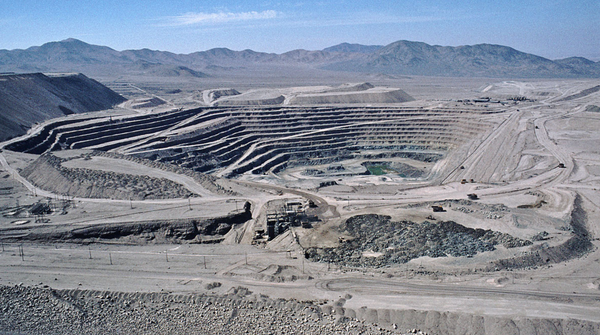
- [SIGNAL] [29.05.26] Listed Chinese metals and minerals company CMOC Group have signed a US$1.7bn deal for the Los Cangrejos gold mine project located in the southern province of El Oro. The agreement signed with the Ecuadorian government gives the state a 50% stake in the project, generating a forecasted US$4.89bn in public revenue. The CMOC project would be the third operational large-scale gold mine in Ecuador, after Canadian-owned Lundin Gold’s Fruta del Norte and Chinese-backed Mirador. Why this matters: CMOC becoming the third major operator alongside Lundin Gold and Mirador marks a potential breakthrough in Ecuador’s move toward a concentrated gold sector, increasing the risk that output and export earnings depend on a small number of politically sensitive mines. Source: [The Northern Miner]. [T3. BSP.]
Paraguay
Diplomacy
- [WATCH] [29.04.26] Paraguay has found itself stuck in between China and America’s competition over Latin America. Currently, Paraguay is the only South American country to formally and diplomatically recognise Taiwan’s claim to sovereignty. The alliance between the two small countries was formed during the Cold War era, when both shared strongly anti-communist administrations. Now, both China and Taiwan are making active efforts to court Asunción — offering funding, investment and aid with the aim to convince the government to either sustain recognition or shift it to Beijing. Beijing has waged a positive campaign of luxurious trips to China for Paraguayan officials, and a negative campaign of alleged cyber campaigns against ministries. Paraguay’s president, Santiago Peña Palacios is now facing pressure from the country’s agricultural sector who have effectively been banned from exporting soybeans and beef to China, because of the nation’s recognition of Taiwan. Source: [NYT]. [T4. BW.]
Costa Rica
R&D
- [NOISE] [1.05.26] The University of Costa Rica’s Center for Agronomic Research has hosted an academic delegation from Qinghai University and Yunnan Agricultural University to collaborate on potato research. Source: [Fresh Plaza]. [T2. BSP.]
Uruguay
Trade
- [SIGNAL] [1.05.26] The Uruguayan government has imposed a VAT tax of 22% on all foreign online purchases (May 1st) — closing a loophole in the country’s ‘franquicia regime.’ However, the policy makes exemptions for products bought in the US — leading critics to dub the move the ‘Temu Tax’ because the policy explicitly targets ultra-low-margin Chinese e-commerce retailers. The Uruguayan government is responding to pressure from domestic manufacturers and retailers, who feel the tax and regulatory regime is skewed against them. Why this matters: The exemption for US-linked goods marks a potential breakthrough in how trade policy is being selectively used to target Chinese e-commerce firms, raising the risk of fragmented digital trade rules based on origin rather than product type. Source: [Rio Times]. [T2. BN, BW.]
Further reading:
Dialogue Earth, ‘Will Chinese megaprojects solve northern Peru’s water crisis’ — northern Peru is facing widespread drought, impacting farmers and habitats. Will long delayed Chinese water megaprojects help? [29.04.26]
Adam Tooze, Chartbook & FT, ‘Is a China Shock Coming?’ & ‘Is China decoupling on food?’ — China is unusual for a developed nation in having a large food trade deficit. Most of this deficit is driven by soybean imports, necessary inputs for the explosion of protein in Chinese diets. A vast majority of these soybean imports are provided by Brazil (73% of exports are consumed by China). Tooze asks — how long will China’s reliance on Latin American suppliers last? Especially considering Xi Jinping and the 15th Five Year Plan’s frequent mentions of ‘food security.’ [3.05.26]
The Latin American Risk Report, ‘How is China responding to the Orange Drift?’ — Boz makes the case that the Trump Corollary hasn’t neatly split Latin America into two blocs: pro-US and pro-China. Instead, the continent is engaging in a murky ‘great game’ where alliances are contingent while rhetoric and policy decisions increasingly uncouple. [5.05.26]
CSIS, ‘Assessing the Impact of China-Russia Security Coordination in Latin America and the Caribbean’ — Ryan C. Berg, director of the Americas programme at CSIS, runs a tabletop scenario plotting out the operating space for China-Russia collaboration in Latin America and the Caribbean. [29.04.26]
About this briefing:
LATAM–China Monitor (LCM) aggregates weekly developments in policy, politics, infrastructure, commodities, energy, FDI, diplomacy, and military cooperation across Latin America and China. This project is designed to support future strategic briefings and political risk advisory services from SinoAméricas (SA).
Subscribe for future briefings
This briefing is free and focuses on aggregation.
Want deeper analysis on China-LATAM relations? Contact info@sino-americas.com
Know someone tracking China-LATAM? Forward this briefing.
Analytical weekly briefings, risk reports and corporate advisory services will be available in the medium-term.