Peru’s Fujimori vs Aliaga on China
Plus, Argentina blocks SOEs from the Vía Navegable Troncal
Plus, Argentina blocks SOEs from the Vía Navegable Troncal
LATAM–China Monitor
Weekly LCM Briefing | Issue #8 | Coverage: [4-14.04.26]
| Brazil | Argentina | Mexico | Chile | Venezuela | Cuba | Ecuador | Panama |
This week — key signals:
- China is buying record levels of crude from Brazil in response to the US-Iran-Israel war
- Rubio has praised the Milei administration for blocking SOEs from bidding on dredging contracts in the Vía Navegable Troncal
- GAC looks likely to be the first Chinese car manufacturer to fully produce units in Mexico
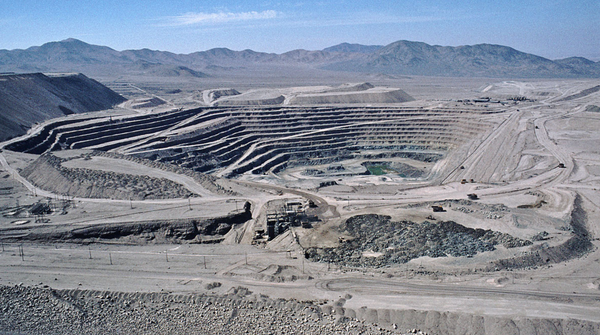
- Chilean authorities have found a US$917mn illegal copper stripping operation with connections to Chinese buyers
The view from Beijing:
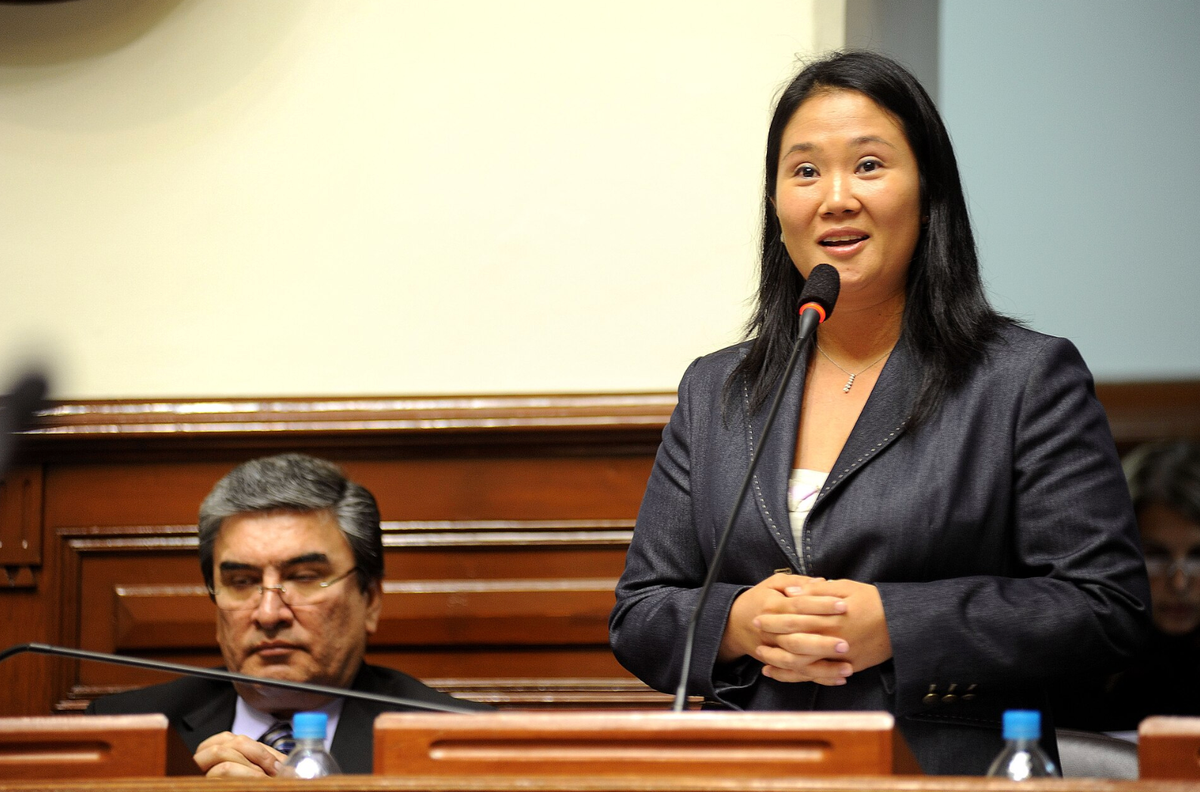
- Peru has gone to the polls — at the time of writing (13.04.26), it looks like the presidential election is neck-and-neck between two ‘far-right’ candidates: Keiko Fujimori (Popular Force) and Rafael López Aliaga (Popular Renewal). Fujimori is currently slightly in the lead, with a 4.8% advantage over Aliaga. Beijing will be struggling to parse which candidate winning will be beneficial to the already US$50.9bn bilateral trade relationship. Both Fujimori and Aliaga have generated mixed-signals on Chinese involvement in Peru. Aliaga has rhetorically aligned himself with Trump and committed to an anti-China stance, even welcoming American security operations in Peru, while retaining strong economic links with Beijing’s SOEs. Indeed, a Foundation for Defense of Democracies (FDD) report detailed Aliaga’s links to Chinese SOE, China Minmetals, through his company PeruRail which directly benefits from copper shipments supplied by an SOE-owned mine — Minera Las Bambas. In contrast, Fujimori, despite extensive personal links with the US, has maintained a non-aligned rhetoric during her campaign, claiming Peru’s foreign policy would be: “based exclusively on national interest,” under her presidency.
- Beijing is tightening its regulation of SOE activities abroad. The regulatory body for China’s SOEs (the State-Owned Assets Supervision and Administration Commission) has established the Overseas State-owned Assets Administration Bureau to supervise the increasing involvement of state-owned-enterprises abroad. This move comes after years of diffuse responsibility for overseas SOE activity — centralising oversight in the new bureau.
- The Chinese foreign ministry responded to the moves by the US Treasury Department to issue mineral extraction licences for Venezuela which will exclude Beijing, Havana, Moscow and Tehran from operating mines in the Latin American nation. FM spokesperson, Mao Ning, responded to the US restrictions by stating that: “China firmly opposes the U.S. setting restrictions on China-Venezuela cooperation by issuing so-called “general licenses.” China’s lawful rights and interests in Venezuela must be safeguarded. What the U.S. needs to do is lift illicit unilateral sanctions on Venezuela at once, rather than use so-called “general licenses” to whitewash its moves of undermining the lawful rights and interests of Venezuela and other relevant parties.”
Cross-Country:
Infrastructure
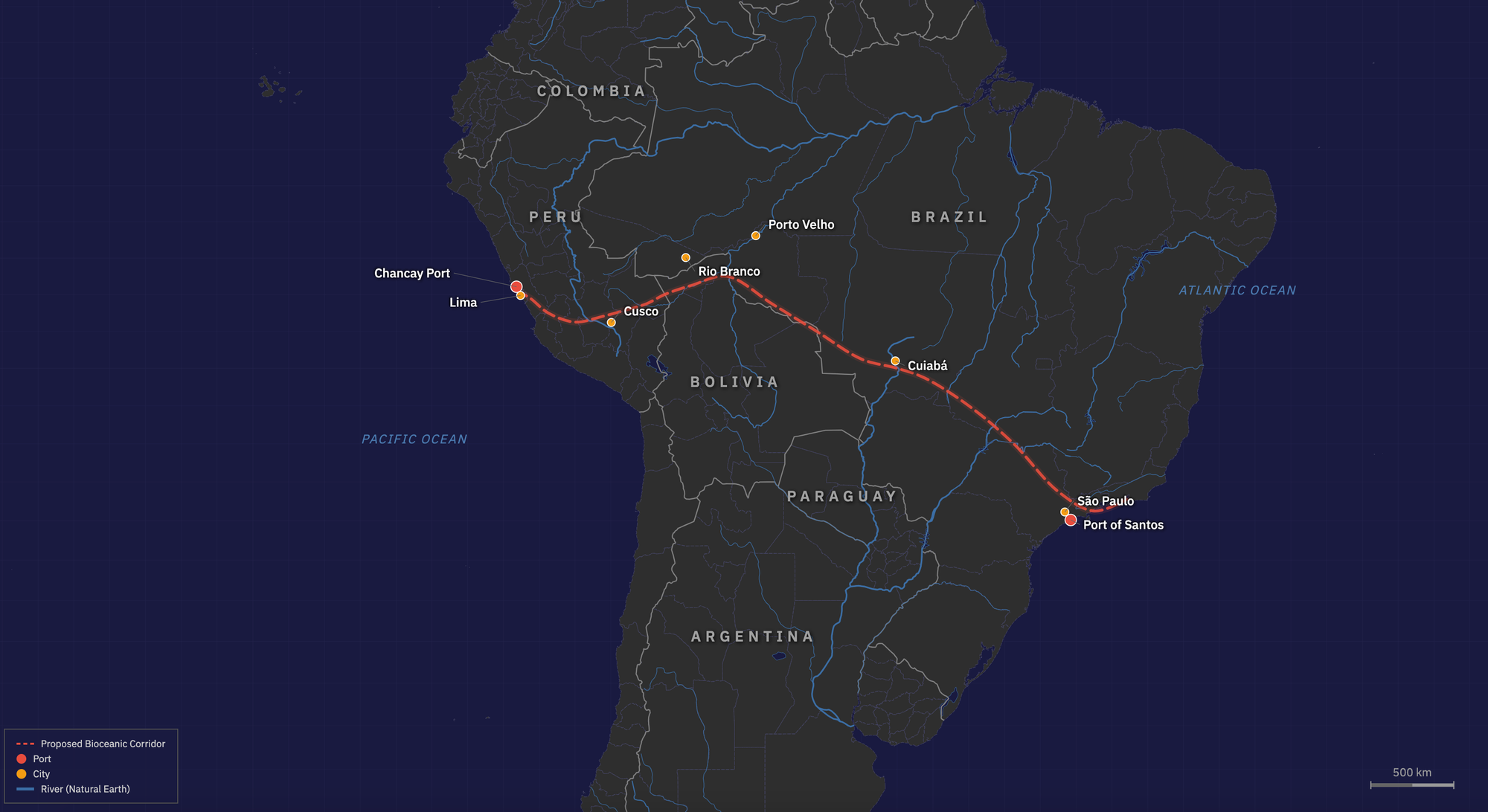
- [WATCH] [1.04.26] Experts have warned that a planned rail route between Peru and Brazil, known as the ‘Bioceanic Railway,’ will bring unacceptable “risk” to the Amazon rainforest. The planning process for a massive, Chinese-sponsored, rail system linking the Pacific and Atlantic oceans across the continent is accelerating. In 2025, memorandums of understanding were signed between Brazil, Peru and China. In 2026, Peru signed a deal with Chinese SOE, Power Construction Corporation of China, to construct a section of the line connecting the Pacific Port of Chancay to the mining region of the Sierra Central. Source: [Mongabay].
Brazil:
Energy
- [SIGNAL] [8.04.26] Brazil’s oil industry has benefited from supply chain constraints generated by the US-Iran-Israeli war. In March, China bought a record level of crude oil from Brazilian suppliers — importing 1.6mn bpd last month. The previous record was broken in May 2020, at 1.46mn bpd. Brazil’s total crude exports rose 12.4% from Feb 2026. Source: [Reuters]. Why this matters: The surge exposes how quickly supply shocks translate into trade realignment — and how dependent China remains on flexible, long-haul suppliers to hedge geopolitical risk.
Commodities
- [WATCH] [9.04.26] Brazilian mining company Vale (the largest publicly listed multinational mining group in the country), has signed a deal with provincial SOE, Shandong Shipping Corporation. The 25-year charter deal will build the world’s first two ethanol powered transoceanic vessels. Source: [Mining].
Infrastructure
- [WATCH] [4.04.26] The infrastructure consultancy, Macroinfra, has warned that Brazilian container ports, such as Santos and Paranaguá, are in danger of reaching ‘operational saturation.’ Analysing data from 2015 to 2025, Macroinfra traced a pattern of increasing operational limit breaches over the decade. The report warns that the ports could reach their limits as early as 2030, if expansion does not take place. Chinese SOEs have major stakes in both ports (China Merchants, 90% stake in Paranaguá terminal; COFCO operates a major grain terminal at Santos). Beijing is reliant on both entry points for agricultural and commodities exports. Source: [CPG].
FDI / Regulation
- [WATCH] [7.04.26] After a series of investigative exposés, and government labour inspections, Brazil has placed China’s EV giant, BYD, on a list of employers who have violated labour standards. The violation in question occurred during the construction of a BYD plant in Camaçari, Bahia – where Chinese workers were found to be employed in “slavery-like” conditions. Brazil is BYD’s biggest consumer market after China. BYD’s inclusion on the list prevents it from receiving certain loans from the Brazilian government. The plant in question will be allowed to operate as normal, while BYD comes to an agreement with the government’s labour ministry. [Reuters].
Agriculture
- [WATCH] [10.04.26] Industry experts have warned that Brazil is in danger of maxing-out its beef quota with China by, at the earliest, May 2026. In response to the newly constrained Chinese market, Brazilian beef suppliers have been looking for alternative markets to China, while profiting off of increased revenues for units they are allowed to export. Brazil exported 233,950 tonnes of beef in March, the highest ever volume for the month. Source: [SCMP]
- [WATCH] [10.04.26] Trase, a supply chain intelligence consultancy, has published a report claiming that Brazil-China trade is central to global deforestation rates — accounting for ¼ of all deforestation risk in global supply chains. Agricultural Brazil-China bilateral trade is valued at US$47bn in 2025, the largest two-way valuation in the world. Source: [ESG News].
Trade
- [WATCH] [8.04.26] This month, Brazil’s Foreign Trade Chamber issued Resolution 875 against Chinese firms exporting ethanolamines into the country. The Brazilian government has accused Chinese companies of dumping ethanolamines, a chemical compound used as an input in oil and gas, cosmetics and agriculture, into the domestic market. In reaction, the trade chamber has introduced anti-dumping measures designed to last for five years, with accompanying tariffs reaching from 23.6% to 97.3%. Source: [ChemNet].
- [WATCH] [8.04.26] Brazil’s trade surplus slightly decreased in 2025, declining 7.9% from US$74.5bn in 2024, to US$62.8bn in 2025. Despite this, trade growth in aggregate and with China have grown aggressively. Brazil-China shipments rose 21.7% year-on-year in 2025, meanwhile total exports rose by a more modest 7.1% in 2025. Source: [PlataformaMedia].
Argentina:
Infrastructure
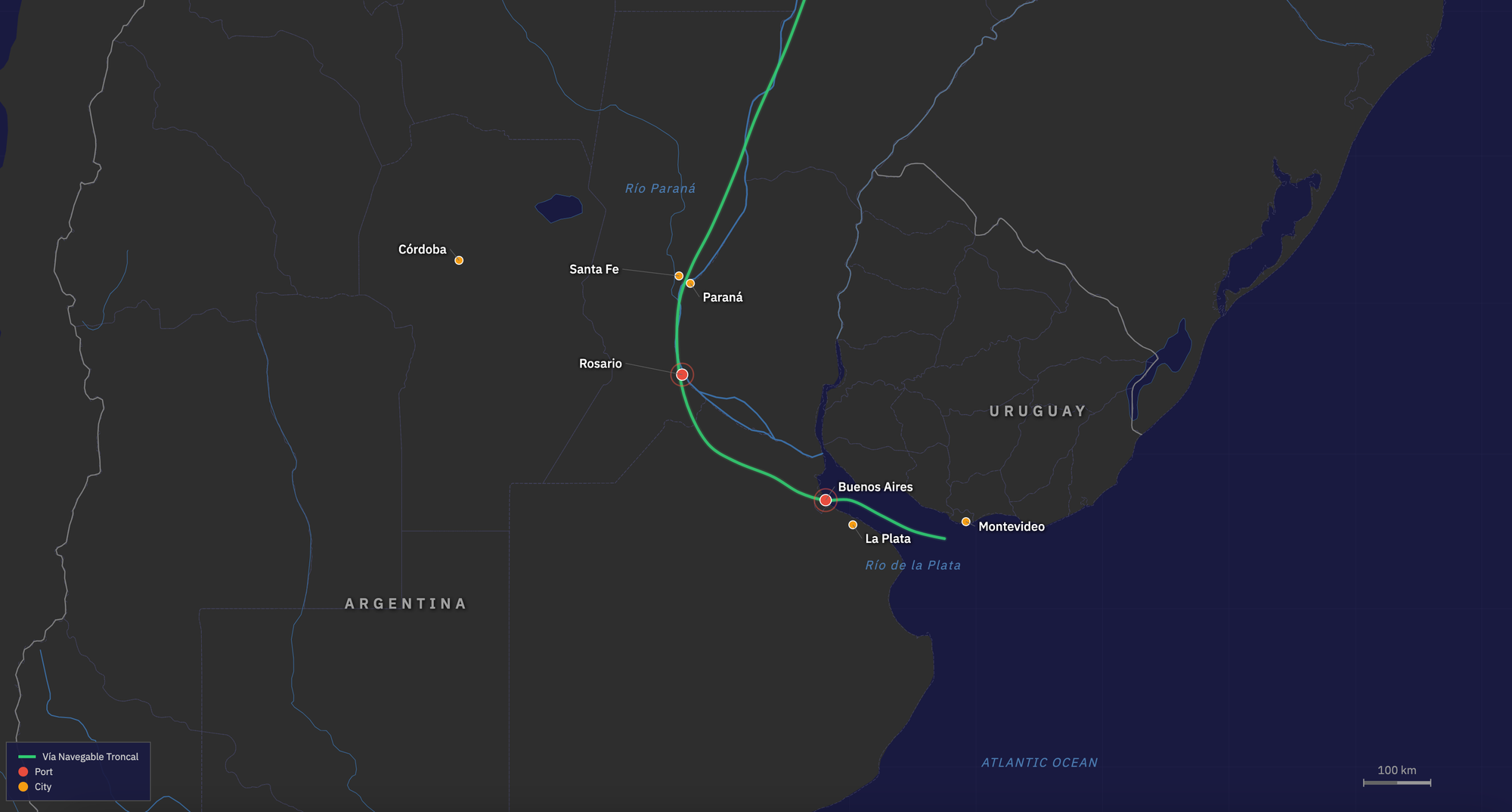
- [SIGNAL] [9.04.26] Marco Rubio’s US State Department has responded to moves by the Argentine government under Milei to block SOEs from bidding on contracts to dredge a key commercial shipping corridor: the Vía Navegable Troncal. “We congratulate Argentina for including language in the VNT waterway tender that precludes bids from state-owned enterprises. This is a vital step toward securing Argentina’s own sovereignty and ensuring its critical infrastructure remains in the hands of transparent, market-driven actors.” The ban on SOEs is implicitly a constraint on Chinese involvement, shutting out various interested organisations including China Communications Construction Company (CCCC). Why this matters: Signals to markets that “sovereignty” is being redefined in anti-SOE (read: anti-China) terms. Source: [Floridian].
FDI
- [WATCH] [6.04.26] The Chinese battery giant CATL is moving forward with its first major Argentine project. CATL is supporting the local private utility company Central Puerto in its plans to provide 1.1 GWh of battery capacity for the Buenos Aires area. If completed, the CATL-Central Puerto project will be the largest battery energy storage system in the country. Source: [Strategic Energy].
Energy
- [WATCH] [9.04.26] Huawei Digital Power, an energy branch of the larger tech corporation, has launched a new set of energy capabilities in Argentina. The main concrete event is that Huawei has launched HUAWEI SUN2000-506KTL-H1, a power inverter designed to improve grid performance in systems dominated by renewables. Source: [Strategic Energy].
Mexico:
FDI
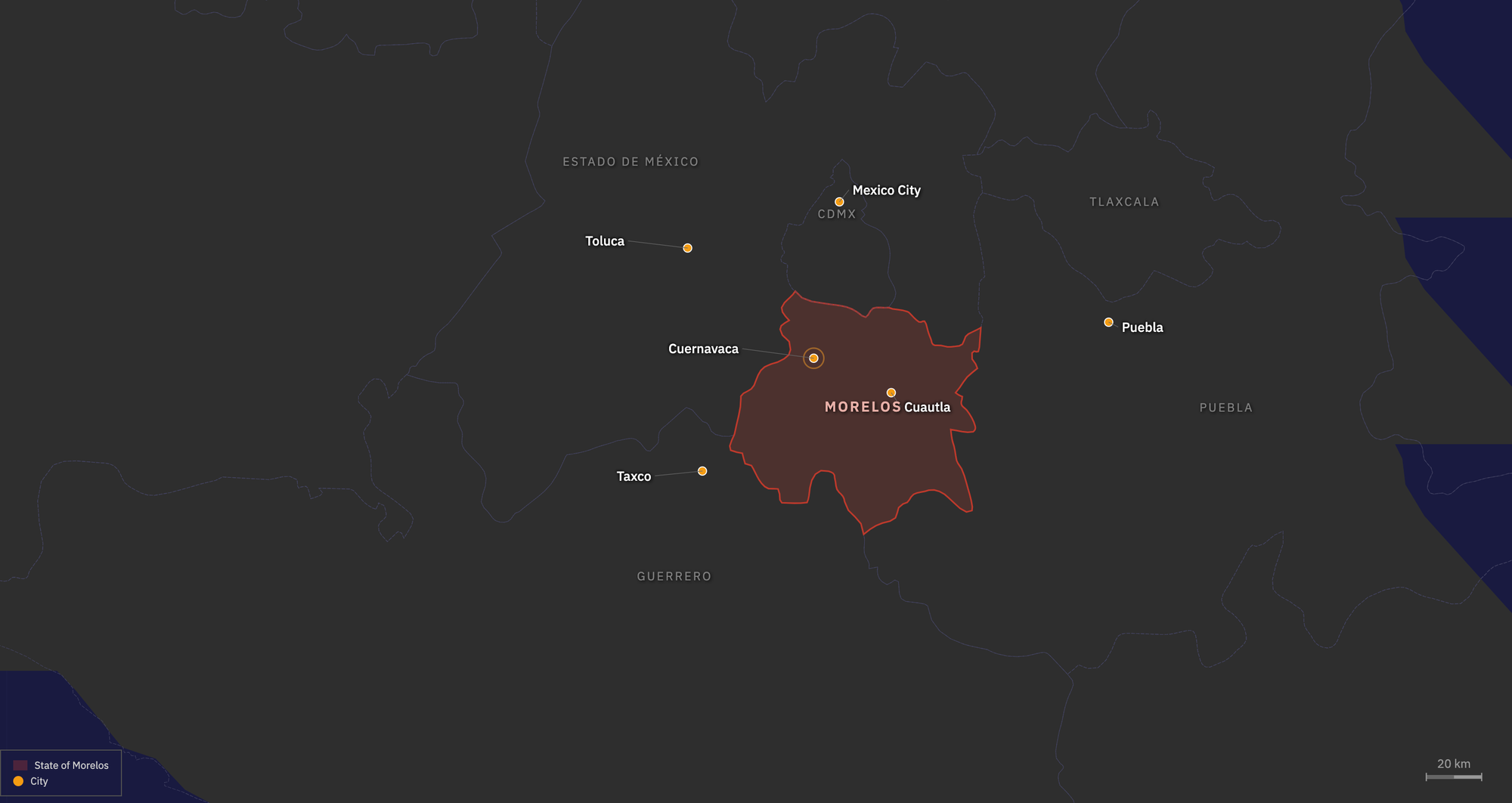
- [SIGNAL] [8.04.26] The provincial SOE EV maker, Guangzhou Automobile Group (GAC), has declared its intention to start assembling its cars in Mexico in the 3rd to 4th quarter of this year — making it the first Chinese car company to establish a full production facility in the country. GAC has signalled that all production will be for domestic consumption, rather than export to the US. It is strongly suspected by industry players that GAC will purchase an old Nissan site in Mexico, either in the south-central city of Cuernavaca, Morelos, or in the central-north state of Aguascalientes. Why this matters: Even if output is “for domestic consumption,” the move complicates US policy by blurring the line between Mexican and Chinese manufacturing. Expect tighter scrutiny of rules-of-origin and potential pressure on Mexico to limit Chinese industrial penetration. Source: [MotorTrend].
Joint Ventures
- [WATCH] [6.04.26] General Motors (GM) and Chinese joint venture EV manufacturer SAIC-GM-Wuling (SGMW) (part owned by SOE SAIC Motor) are in negotiations to start using GM’s plants in Mexico to produce cars. This comes in response to the Mexican government’s move to place, and increase, tariffs on Chinese imports. A joint venture between GM and SGMW is due to expire in 2027, and both companies are looking to reduce the impact of tariffs by restructuring before this date — increasing domestic production for consumption in Mexico, rather than focusing on exports to the USA. Currently, tariffs on Chinese imported vehicles in Mexico have been raised to 50% by the incumbent Sheinbaum administration. Source: [Mexico Business].
Diplomacy
- [WATCH] [8.04.26] The Mexican Senate has confirmed Sheinbaum’s pick for new foreign secretary, Roberto Álvarez — a relatively young diplomat with experience dealing with the USMCA and North American affairs. Prior to his appointment as foreign secretary, he was undersecretary for North American affairs. He was confirmed with 81 senators in favour and 31 against. While Álvarez's career has been focused on North American affairs, he did partially set out his China position during senate hearings. Álvarez argued for “expanding ties with China,” during the senate hearing, while also emphasising “cooperation without subordination.” Source: [Reuters / Sentido Comun]
Chile:
Crime
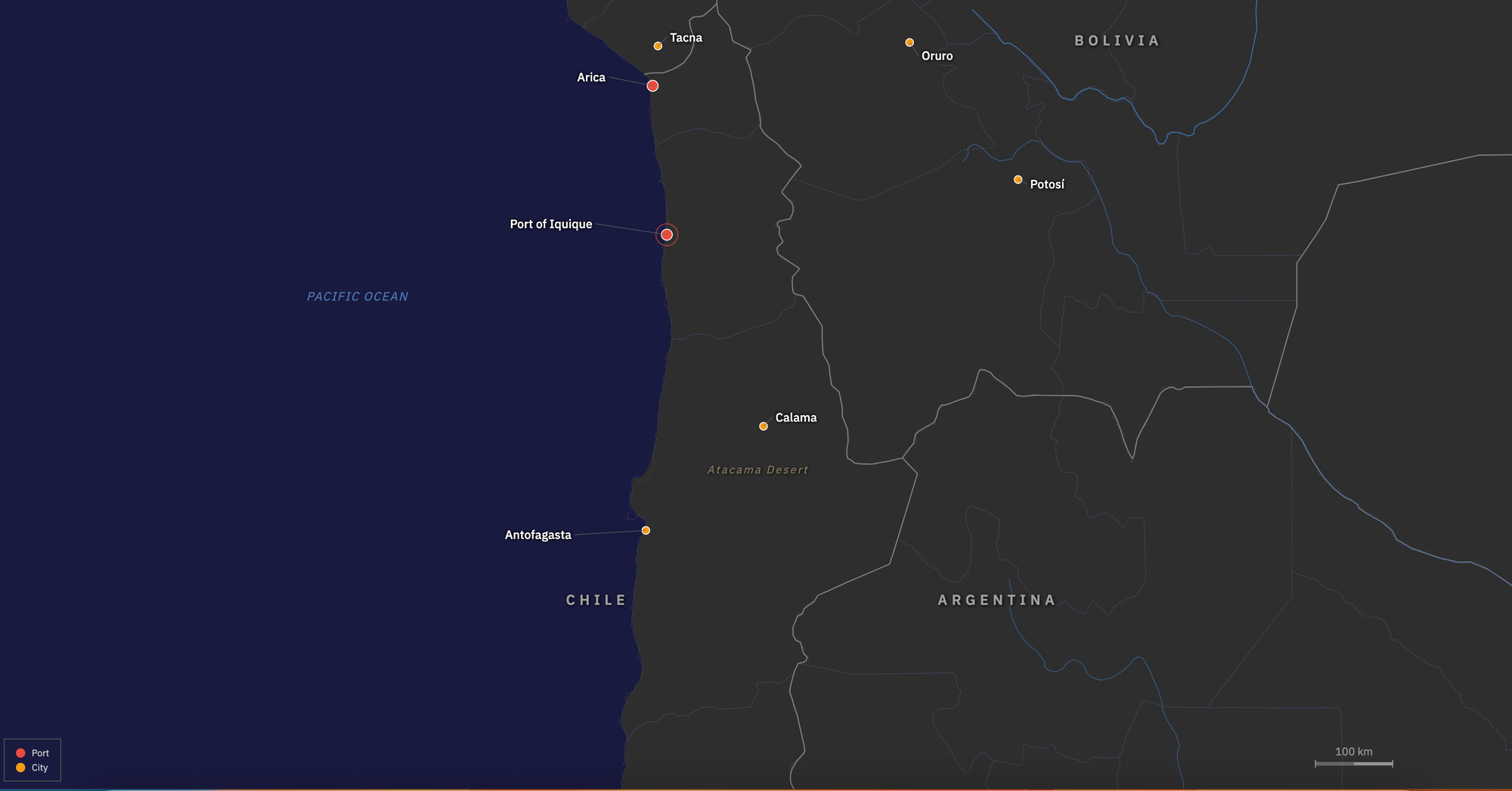
- [SIGNAL] [8.04.26] Chilean investigators have uncovered a criminal network trafficking copper to China. The network stole an estimated US$917mn of copper between 2020 and 2025, shipping the metal from the northern Port of Iquique to China. A large amount of the theft consisted of criminal organisations downing power cables and stripping the copper from them, partly incentivised by rising commodities prices over the last couple of years. Why this matters: Commodity price spikes are feeding organised crime, turning critical infrastructure into extractive targets. That raises operational and security costs for utilities and miners across the region. Source: [Bloomberg].
Venezuela:
Commodities
- [WATCH] [9.04.26] Venezuela is liberalising its mining laws, in response to the US’s military intervention in Jan 2026. The law, passed by the government-controlled national legislature, reverses decades of socialist restrictions on FDI into commodities. The bill will allow private investors into Venezuela’s commodities to request legal guarantees and resort to independent international arbitration during disputes. There is currently no industrial-scale extraction or processing of critical minerals in Venezuela, despite its large reserves. The law, pushed by the new president Delcy Rodríguez, allows for private concessions of up to 30 years. Many see Rodríguez’s bill as influenced by Trump’s mission to diversify the US’s reliance on rare earths and critical minerals away from China. Source: [FT].
Cuba:
Energy
- [WATCH] [7.04.26] Cuba is increasing its reliance on Chinese solar energy technology in response to the oil blockade imposed by the US on the island. Beijing supplied 1 gigawatt of solar power in 2025, prior to the blockade. This year, the Cuban government is looking to supply 15% of its energy needs through renewables. Cuba now has 34 solar parks across the islands, many Chinese sponsored. Source: [FT].
Ecuador:
Infrastructure
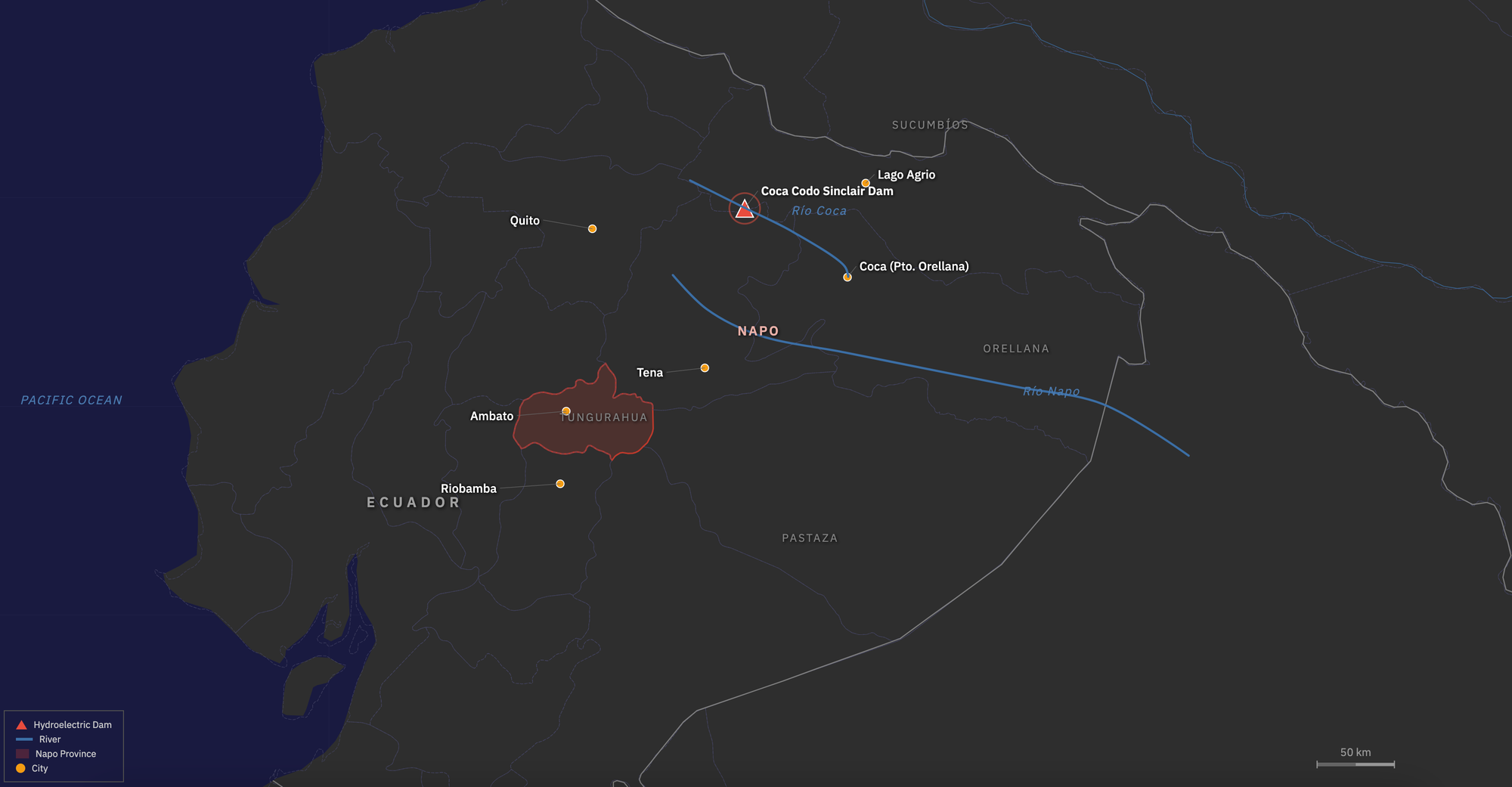
- [WATCH] [6.04.26] Chinese SOE, Sinohydro, has formally requested that Ecuador’s CELEC take control of the Coca Codo Sinclair Dam within 15 days of notification (deadline 17th of April). This follows a mutual arbitration agreement between Ecuador and the Chinese SOE conducted at the International Chamber of Commerce, that originated in a dispute over the construction of the dam and faults in its design. Source: [Expreso].
Panama:
International Arbitration
- [WATCH] [8.04.26] Hong-Kong based firm CK Hutchison has started international arbitration proceedings against the Danish shipping company Maersk over the disputed Panama Canal port concessions of Cristobal and Balboa. CK Hutchison’s local unit was ejected from the ports, after the Panamanian supreme court negatively reviewed the renewal of concessions by the government. The Hong-Kong company has brought arbitration proceedings against Maersk in London, while also filing for US$2bn damages against Panama itself. Source: [Bloomberg].
To watch next week:
Through 14–18 April, the IMF-World Bank Spring Meetings 2026 will bring Latin American finance ministers into direct contact with Chinese counterparts, with particular focus on Argentina’s use of the renminbi swap line with the People's Bank of China.
About this briefing:
LATAM–China Monitor (LCM) aggregates weekly developments in policy, politics, infrastructure, commodities, energy, FDI, diplomacy, and military cooperation across Latin America and China. This project is designed to support future strategic briefings and political risk advisory services from SinoAméricas (SA).
Subscribe for future briefings
This briefing is free and focuses on aggregation.
Want deeper analysis on China-LATAM relations? Contact info@sino-americas.com
Know someone tracking China-LATAM? Forward this briefing.
Analytical weekly briefings, risk reports and corporate advisory services will be available in the medium-term.