China Harbour Engineering Company executive allegedly takes ‘bribe’ from Bogota Metro contractor
Plus, Zijin Mining invests US$709mn into Tres Quebradas.

Plus, Zijin Mining invests US$709mn into Tres Quebradas.
Subscribe for regular briefings, reports and updates on the China-Latin America relationship.
Never miss a market movement, diplomatic fall-out or security development again.
LATAM–China Monitor
Weekly LCM Briefing | Issue #14 | Coverage: [10.07 - 13.08.26]
| Colombia | Brazil | Argentina | Mexico | Chile | Peru | Ecuador |
This week — key signals:
- LATAM oil-producing states pose a challenge to OPEC.
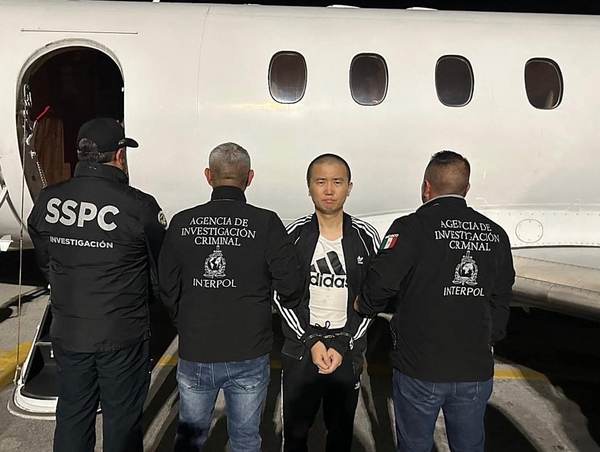
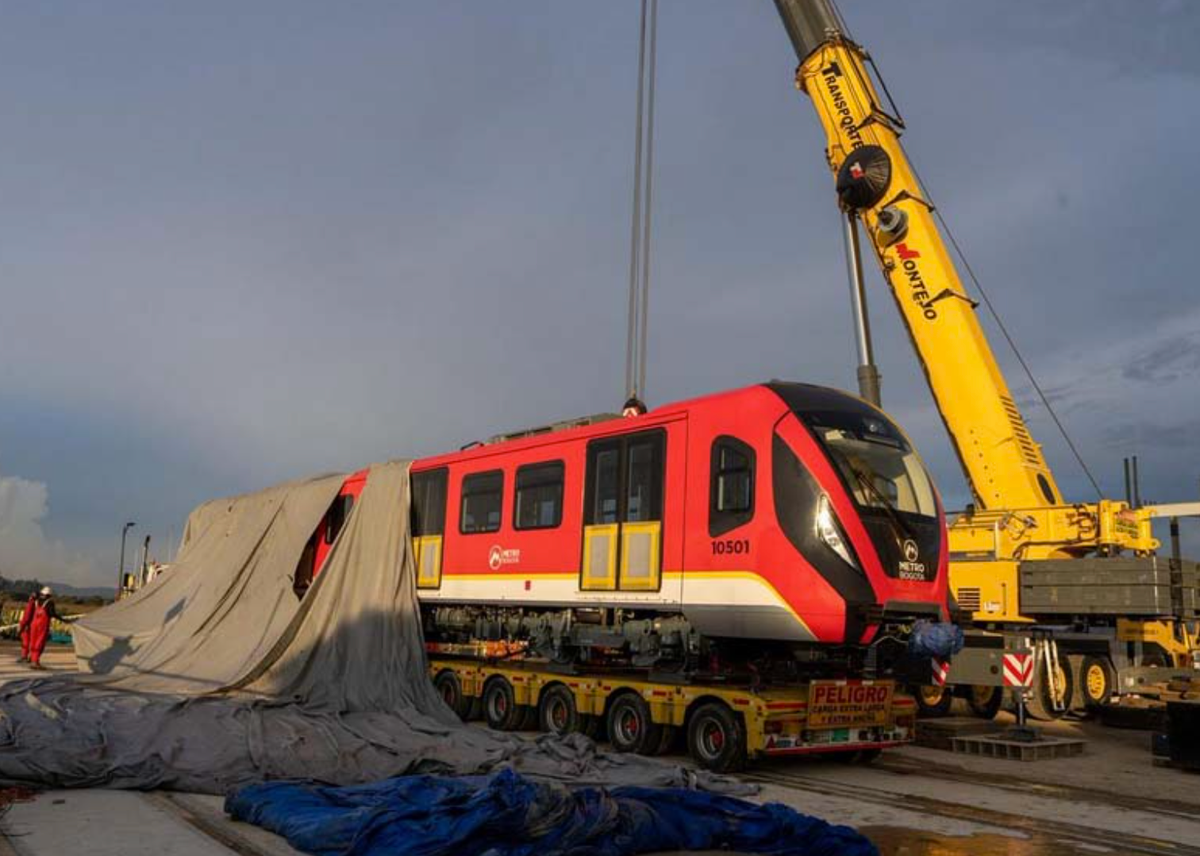
- China Harbour Engineering Company executive allegedly takes ‘bribe’ from Bogota Metro contractor.
- Provincial SOE Windey Energy is intending to invest US$19.4 million into a battery energy storage system (BESS) factory in the Camaçari Industrial Park in Brazil.
- Zijin Mining invests US$709mn into Tres Quebradas in Argentina.
- CALF, an energy cooperative based in Neuquén, Argentina has accused the Argentine US Embassy of trying to interfere in its partnership with the Chinese technology company Huawei.
- Argentina’s Central Bank (BCRA) has renewed its currency swap agreement with the People’s Bank of China (PBC) for up to five years.
- Chinese shipping SOE COSCO is continuing its battles in Peru’s courts over the question of whether the state has legal oversight over the port of Chancay.
The view from Beijing:
- Former two-time Costa Rican president and Nobel Prize laureate Óscar Arias, of the centre-left National Liberation Party, has accused the current Costa Rican administration under conservative Laura Fernandez of selling out the nation’s foreign policy independence to Washington. The conversation, broadcast on live TV, revolved around the revocation of US visas against former Costa Rican officials, Arias had previously argued that the Visa moves were purely domestic — before switching last month, accusing the US of exercising influence over Fernandez. Arias also cast doubt on Costa Rica’s sustained moves towards increased alignment with Washington, pointing out that neighboring El Salvador had maintained good relations with both the US and China. Costa Rica had previously established relations with Beijing in 2007 during Arias’s second presidential term. Fernandez’s predecessor in the presidency – Rodrigo Chaves — previously excluded Chinese components from the nation’s 5G roll out, after pressure from the Trump administration. Beijing may well see Arias’s comments on TV as the start of a public questioning of Costa Rica’s recent foreign policy alignment.
- In mid July, the Trump administration imposed 25% tariffs on Brazil partly in response to the country’s PIX payment system which circumvents US dollar hegemony. Roughly 90% of Brazilian adults use the government sponsored PIX system to transfer money between accounts and individuals via their mobile phones. PIX instituted in 2020 by the Central Bank of Brazil now handles more transactions in the country than credit and debit cards combined. The US will now impose a tariff on over 3,000 Brazilian goods after launching an unfair trade practices investigation in 2025 (which concluded in July 2026), concerned that PIX would undermine American payments processing companies like Mastercard and Visa. The move by Trump could potentially boost Brazilian president Lula’s popularity in the upcoming October presidential elections. Lula continues to be the Brazilian presidential candidate most friendly to Chinese investment and continental strategy.
- Hard-right president-elect, Abelardo de la Espriella, has declared his intention to host a ‘Shield of the Americas’ office in Colombia. The formerly left-wing governed nation, will join President Trump’s LATAM association of anti-cartel and pro-US leaders — an important addition as the largest exporter of cocaine in the world. While the Shield of the Americas is ostensibly a coordinating mechanism against drug cartels, Beijing will probably still consider the group to be implicitly anti-China.
- China has been moving its purchasing of soybeans from Latin America to the US, a reverse of previous trends pointing the other way, in anticipation of Xi Jinping’s September visit to the US. Chinese SOE agricultural purchasers bought nearly 1mn metric tonnes of soybeans from US farmers in early August, after a sharp fall in American prices spurred additional purchases. During the trade wars of 2018-2020, China increasingly relied on Latin American producers to replace US farmers — the opening up of soybean markets between Beijing and Washington is, for now, probably more transactional than a return to previous trade patterns.
Cross-Country:
Energy
- [SIGNAL] [11.08.26] LATAM states are increasingly becoming ‘petrostates,’ according to the news site Semafor, as consumer markets look for oil and gas producers geographically isolated from the Hormuz crisis. Brazil, Argentina, Guyana, and Venezuela all posted higher than expected production gains in the last half year. JP Morgan analysis claimed that growth in non-OPEC oil production had grown by 2.5mn per day this year, the highest rate in a decade. According to the data firm Vortexa, China has been one of the main consumers of the LATAM oil boom — purchasing just under half of Brazil’s exports and 8% of Guyana’s barrels. Why this matters: LATAM oil producers are increasingly looking like a safer alternative to OPEC producers wracked by the fallouts of Gaza 2023, Houthi operations in the Red Sea and the Iran-US war in the Persian Gulf. While the US has been the largest non-OPEC oil producing beneficiary of the turn away from the Gulf, trading off of its LNG and fracking dominance, Brazil comes a close-second — providing China with a reliable energy source (especially considering the downturn of exports from Russia and Kazakhstan). Source: [Semafor].
Trade
- [WATCH] [01.08.26] A free trade agreement (FTA) between the LATAM trading bloc Mercosur and Singapore (MCSFTA) has taken effect in Brazil. The FTA, with other Mercosur states like Uruguay and Paraguay, has already entered into force, while Argentina is still negotiating ratification procedures. The FTA between Brazil and Singapore will eliminate tariffs on the vast majority of goods which move between the two countries. Singapore is Brazil’s largest trading partner in Southeast Asia, and a major rerouting spot for Chinese capital — especially through special purpose vehicles (SPVs) and SOE subsidiaries. The MCSFTA may well open up a triangular relationship between Singapore, China and Brazil. Source: [CNA].
Colombia:
Corruption:
- [SIGNAL] [4.08.26] Video footage has emerged of what is alleged to be a China Harbour Engineering Company (CHEC) executive, working on Bogota’s new metro system, known only as ‘Yang,’ taking a US$19,000 payment from a Colombian subcontractor’s lawyer. The issue is controversial because a complainant alleges that the cash was requested by Yang as a payment, or ‘bribe,’ to release over US$320k in invoices owed to Union Temporal Metrobuild the contractor for work carried out in March. CHEC (a subsidiary of Chinese SOE CCCC) alleges that the payment was a normal retention fee paid by Metrobuild while the two parties resolved a dispute over poor construction work. Councillors in Bogota’s local government have called on the mayor to pressure CHEC into suspending the relevant Chinese construction executive until investigations have been undertaken. Why this matters: If the payment is found to have been a bribe, it could expose vulnerabilities deeper in the Chinese-led project’s subcontracting chain—not simply misconduct by one executive. That would strengthen arguments for tighter oversight of foreign contractors and potentially raise the cost of Chinese participation in Colombia’s future infrastructure pipeline. Source: [SCMP].
Brazil:
Energy
- [SIGNAL] [10.07.26] Provincial SOE owned Windey Energy (majority controlled by Zhejiang provincial government in the southeast of China), has signalled its intention to invest US$19.4 million into a battery energy storage system (BESS) factory in the Camaçari Industrial Park. The park is located in the northeastern state of Bahia, just outside the major port city of Salvador. US$5.9mn will be invested in the first phase of the project — designed to increase storage capacity in a key renewable energy market. Windey Energy had previously established a national office and R&D centre in Brazil in 2025. Why this matters: The scale-up from an R&D presence to local manufacturing suggests Windey sees Brazil as a strategic regional platform rather than a standalone market; this raises the probability of further Chinese clean-energy investment and localisation across Brazil. Source: [PV Magazine].
Diplomacy
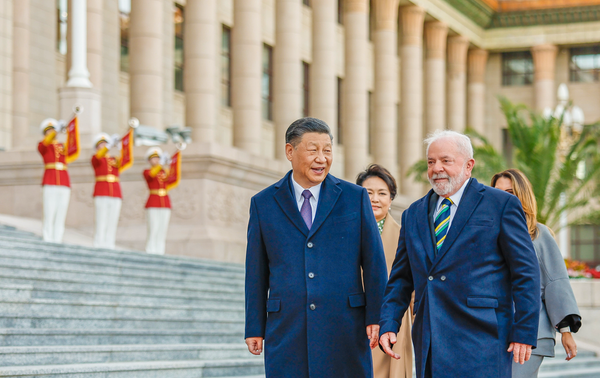
- [WATCH] [28.07.26] President Lula and Xi Jinping conducted a phone call to discuss a ‘shared future.’ Xi said that China and Brazil, both important Global South countries, should firmly “stand on the right side of history”, as well as “the side of the progress of civilization.” Xi has made a point of rhetorically supporting notions such as ‘multilateralism,’ ‘international law,’ ‘sovereignty’ and ‘free trade,’ in response to the Trump administration's moves towards protectionism and the ‘Donroe doctrine’ of hemispheric influence. Source: [The Star].
Argentina:
Commodities
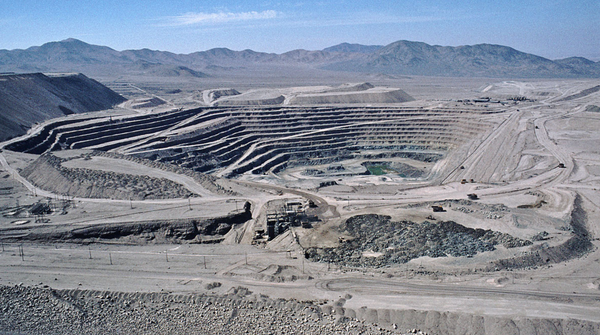
- [SIGNAL] [14.07.26] Luis Caputo, Argentine minister of the economy, has approved a new US$709mn lithium mine expansion investment under the nation’s RIGI (Large Investment Incentive Regime). The investment, made by Liex SA, will expand lithium production capacity at Tres Quebradas Salt Flat in the northwestern province of Catamarca up to 40k tonnes of lithium carbonate annually and create 4,406 jobs in the region. Liex was previously owned by Canadian mining company Neo Lithium Corp, before being bought out in 2022 for US$756mn by the Chinese mining group Zijin. Zijin Mining Group, in turn, is floated as a public company, with its largest shareholder the county-level Chinese SOE Minxi Xinghang State-owned Assets Investment Company (based in Shanghang County, Fujian) at 22.88%. Why this matters: The approval makes it more likely that Argentina’s future lithium build-out will be dominated by Chinese miners capable of bringing projects rapidly from resource to production. If that pattern continues, Chinese firms could become gatekeepers to a large share of Argentina’s exportable lithium supply. Source: [La Nacion / SA Research]
Infrastructure
- [SIGNAL] [07.08.26] CALF, an energy cooperative based in the western province of Neuquén which runs the capital’s grid, has accused the Argentine US Embassy of trying to interfere in its partnership with the Chinese technology company Huawei. CALF reported that the US embassy had asked it to cancel projects with Huawei in July, citing US visa revocations for Huawei partners. The Chinese embassy in Buenos Aires then accused the US of excessive interference in private market affairs in a third country, while the US ambassador to Argentina, Peter Lamelas denied the embassy exerting excessive pressure on CALF. Source: [FT]. Why this matters: If CALF ultimately backs away, it could establish a precedent in which US diplomatic pressure—not Argentine procurement decisions—determines access to Chinese technology in critical infrastructure. That would give Washington considerable informal leverage over Argentina's technological modernisation.
Central Banking
- [SIGNAL] [06.08.26] Argentina’s Central Bank (BCRA) has renewed its currency swap agreement with the People’s Bank of China (PBC) for up to five years. The decision will extend the swap until 2031 and enlarge drawing rights to US$19bn. The swap line was established under the left-wing Peronist administration of president Cristina Fernández de Kirchner in 2009 and has been repeatedly renewed under Peronist governments. While there was some doubt about Milei’s right populist administration renewing the line, Argentine officials have been signalling for an extended period that the agreement would continue. Milei has now twice approved the Argentina-China swap line, despite controversial anti-China rhetoric produced during his presidential campaign. Why this matters: The renewal makes it more likely that Milei will continue pursuing a two-track foreign economic policy rather than fully aligning Argentina with Washington. The $19bn facility gives Buenos Aires a reason to resist US pressure when Chinese trade, investment or infrastructure is at stake. Source: [IntelliNews].
Mexico:
Trade
- [WATCH] [21.07.26] The Mexican government has announced that their December 2025 tariffs have impacted foreign non-FTA imports, and especially those from China. The measures have reduced targeted import volume by 23.2% since January — falling from a value of US$15bn to US$11.8bn YoY. China has been worst affected, with its exports falling 28.4% over the same period. However, overall imports from Asia (including FTA countries) has risen by 42.5%. Source: [Mexico News Daily].
- [WATCH] [20.07.26] The rapid growth in the Chinese truck market in Mexico could become a hindrance in the current USMCA free trade zone negotiations between Mexico City, Washington and Ottawa. Washington has long been concerned about northern Mexico functioning as a ‘nearshoring’ back door into US markets for Chinese cars. The value of Chinese trucks imported into Mexico has grown sevenfold over a six year period, while Chinese truck companies operating in Mexico have grown over the period from negligible numbers to 23. Source: [Transport Topics].
- [WATCH] [10.08.26] China has accused both the US and Mexico of ‘dumping’ pecans into its domestic markets – issuing a preliminary ruling against both states. The Chinese Ministry of Commerce announced this week that: “Over the injury investigation period, the volume of dumped imports rose by a cumulative 104.56 per cent and their share of the domestic market increased by 9.69 percentage points.” China is now requiring Mexican pecan producers to put down a 51.6% cash deposit on imports. Some analysts have seen the Chinese anti-dumping investigation as retaliation against Mexico’s December 2025 tariffs. Source: [SCMP].
Infrastructure
- [WATCH] [10.07.26] Local environmental activists in the western Pacific state of Colima have been protesting against a Morena sponsored plan to expand the Port of Manzanillo out of the town and into a nearby lagoon: Cuyutlan. The plan would result in Manzanillo becoming one of the largest container ports in Latin America. Manzanillo is currently a key node in Chinese-Mexican trade: especially for minerals and automobiles. Chinese SOE shipping company COSCO already uses the port as a main hub for its pacific routes, meanwhile Hong-Kong based CK Hutchison’s subsidiary Hutchison Ports operates the Manzanillo terminal: Terminal Internacional de Manzanillo. Source: [SomselMedio]
Chile:
Commodities
- [WATCH] [22.07.26] Chile’s current Foreign Affairs minister under the right populist administration of Kast, Francisco Perez Mackenna, told Bloomberg’s Sustainable Business Summit in late July that the government was considering a US$100bn investment into the nation’s copper processing to diversify away from China. The investment would attempt to push Chile up the value chain from extracting copper concentrate to refining and shipping the metal. Mackenna laid out the strategy as a way of taking advantage of growing demand for copper by AI data centres, which often need processed and refined metals. Chile is in the process of completing a FTA with India to broaden its copper buyer base. Currently, China consumes over 50% of Chile’s yearly output of the metal. Source: [Bloomberg].
Energy
- [WATCH] [08.08.26] Chilquinta Energia, a large Chilean energy company, 100% owned by Chinese SOE State Grid Corporation of China, has indicated it will pay compensation to users affected by blackouts in the central coastal region of Valparaiso. The governor of Valparaiso, Rodrigo Mundaca, has criticised this offer of compensation, calling out the central government for not properly regulating service companies. Source: [Biobio Chile].
Peru:
Legal
- [SIGNAL] [4.08.26] Chinese shipping SOE COSCO is continuing its battles in Peru’s courts over the question of whether the state has legal oversight over the port of Chancay. A lower regional court had originally upheld a ruling declaring that Peru’s Ositrán (Supervisory Agency for Investment in Public Transportation Infrastructure) had jurisdiction over COSCO’s Chancay megaport to enforce compliance and regulatory matters. COSCO has now appealed to Peru’s Constitutional Court arguing that because Chancay doesn’t operate as a concession, Ositrán has no oversight. Why this matters: If the Constitutional Court sides with COSCO, other Chinese-backed infrastructure projects in Peru may test the limits of state oversight using similar arguments. That could turn Chancay from a single port dispute into a broader fight over Peru’s regulatory authority. Source: [La Republica].
Shipping
- [WATCH] [17.07.26] COSCO has launched a new express shipping service between the Port of Chancay in Peru and Caldera on the west coast of Costa Rica. Called CHX3 (Chancay Express Service 3), the service will introduce a regular weekly shipping route between South and Central America. Source: [Container News].
Ecuador:
Infrastructure
- [WATCH] [11.07.26] The Economic Development Commission — a commission of the National Assembly of Ecuador has voted to ‘audit’ the arbitration award issued by the International Chamber of Commerce (ICC) between the Ecuadorian Electricity Corporation (CELEC EP) and the Chinese SOE Sinohydro Corporation. Source: [Expreso].
Energy
- [NOISE] The Guayasamín Museum, based in Quito, is now generating all its electricity via a solar battery build out guided by Chinese SOE PowerChina. Source: [Megaproject].
About this briefing:
LATAM–China Monitor (LCM) aggregates weekly developments in policy, politics, infrastructure, commodities, energy, FDI, diplomacy, and military cooperation across Latin America and China. This project is designed to support future strategic briefings and political risk advisory services from SinoAméricas (SA).
Subscribe for future briefings
This briefing is free and focuses on aggregation.
Want deeper analysis on China-LATAM relations? Contact info@sino-americas.com
Know someone tracking China-LATAM? Forward this briefing.
Analytical weekly briefings, risk reports and corporate advisory services will be available in the medium-term.