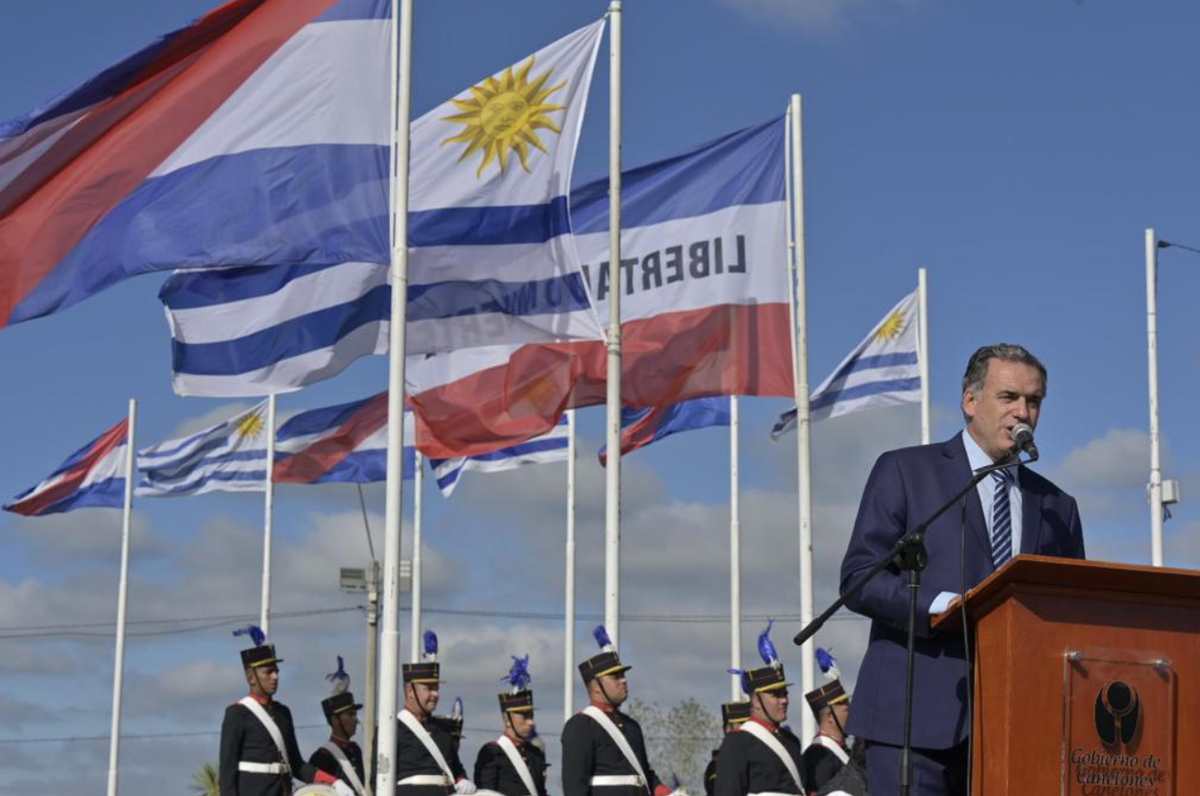
Uruguay’s Yamandú Orsi backs ‘One China’ policy
Uruguay reasserts support for ‘One China’ Policy, US$130mn of Chinese credit has arrived in Argentina to restart construction of La Barrancosa Jorge Cepernic dam

LATAM–China Monitor
Weekly LCM Briefing | Issue #4 | Coverage: [2.2.26 - 9.2.26]
| Uruguay | Brazil | Argentina | Mexico | Chile | Peru | Venezuela | Panama | Cuba | Bolivia |
Key:
SIGNAL — Confirmed action with material or strategic impact.
WATCH — Developments indicating possible future action.
NOISE — Informational updates without material impact.
This week — key signals:
- Uruguay reasserts support for ‘One China’ Policy
- US$130mn of Chinese credit has arrived in Argentina to restart construction of La Barrancosa Jorge Cepernic dam
- Anhui Zhongding Sealing Parts starts construction of an automobile plant in Guanajuato
- CK Hutchison has issued international arbitration proceedings against Panama
The view from Beijing:
- Chinese Foreign Ministry spokesman Lin Jian has said during a press conference on February 2 that Beijing: “will firmly safeguard the legitimate and lawful rights and interests of Chinese companies,” in Panama after the country’s supreme court ruling ejecting CK Hutchison from its ports. Jian was responding to a question from the press, about what China’s response to the possibility of Danish shipping company Maersk taking over CK Hutchison’s ports was — in the event that the takeover happened.
- In a press conference held the next day, Jian put forward Beijing’s position on the US proposal to form a rare-earth mineral group and stockpile to ensure minimum prices and potentially coordinate against China. “On maintaining the stability and security of global critical mineral industrial and supply chains, China’s position remains unchanged,” Jian said. “All sides have the responsibility to play a constructive role in this regard.”
- In a press conference on 4 February, Jian elaborated further on Panama’s Supreme Court decision regarding CK Hutchison, and the American response to the ruling. “China will firmly defend the legitimate and lawful rights and interests of Chinese companies. Let me stress that the U.S.’s words and moves have again shown its Cold-War mentality and ideological bias. It is quite clear to the world who exactly is seeking to forcibly own the Panama Canal and eroding international law in the name of the rule of law.”
- The US hosted 50 countries this week, for discussions on how Washington can better access rare-earth minerals. This followed the declaration of Project Vault, a strategic stockpile of minerals, costing, initially, US$10bn in private funding. Currently, China has a “chokehold” on the majority of rare earth processing, and exports, with large supplies of lithium, cobalt and other metals coming from Peru, Bolivia, Argentina and Chile. China has previously restricted the export of processed rare earths to the EU and US, affecting EV production in these regions.
- The private Chinese company, CATL, has tested its sodium-ion battery: the Naxtra. The Naxtra is being tested for the first time in EVs in China’s cold Inner Mongolian region. CATL hopes sodium-ion batteries will combat price volatility in lithium units. Additionally, sodium is much more geographically available as a key input than lithium, which is concentrated in the Latin American ‘lithium triangle’ between Bolivia, Chile and Argentina.
- China has ended its five-month soybean boycott against the US — but purchases by Beijing, mostly used to feed livestock, have still plummeted (YoY) by 99%. China is now, increasingly, buying its soybeans from Brazil. China’s November 2025 low, has surpassed US soybean purchase rates in 2002, when the nation had only just joined the WTO.
- In 2025, China’s outbound FDI has continued to grow on pandemic-era lows. However, exports have continued to outstrip investment in 2025. Outward FDI grew (YoY) from US$64mn to 73mn between 2024 and 2025. Meanwhile, exports rose US$3.5tn to 3.7tn.
- In 2025, Chinese exports to the US dropped by 20%, while goods sent to Latin America grew by 7%. This trend fits into a broader pattern of China flooding the Latin American consumer market with cheap goods, including automobiles and ecommerce goods. Chinese supply consistently outstrips domestic demand for many goods, and Latin America has become the market of choice to absorb oversupply. BYD and Temu have captured motor and e-retail markets in places like Brazil and Mexico: who are increasingly trying to defend domestic manufacturers with tariffs.
Uruguay:
Diplomacy
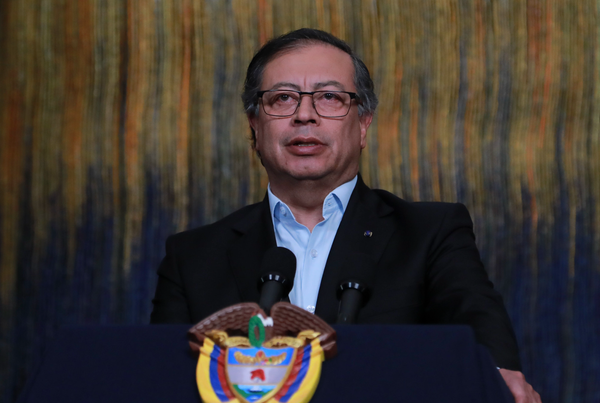
- Signal [3.2.26] During a meeting between Chinese president Xi Jinping and Uruguay’s president Yamandú Orsi in Beijing, a joint declaration and 12 cooperation documents were signed by the leaders. Orsi and Jinping also agreed to try and advance a potential Mercosur-China free trade deal. Most notably, Orsi re-emphasised Uruguay’s support for Beijing’s ‘One China’ policy against Taiwan. This prompted a diplomatic protest from Taiwan. China remains Uruguay’s largest destination for agricultural exports. Source: [MercoPress].
Brazil:
Energy
- Watch [4.2.26] Brazil will be holding auctions for its development of grid-scale batteries in April 2026. The government hopes to add at least 2GW of power to the grid via the auction. Chinese SOEs are understood to be key contenders alongside Tesla and Brazilian multinationals. Source: [Bloomberg].
Argentina:
Diplomacy
- Watch [6.2.26] Argentina’s foreign minister, Pablo Quirno, has insisted that a rare earth deal with the US will not freeze out China. The Argentine government signed an agreement with Washington on February 4, to shore up the supply of rare earth metals to the US. “This [agreement], as of today, does not imply that China cannot participate or will not participate in investments in Argentina,” said Quirno in a press conference. Source: [Mining].
Trade
- Watch [5.2.26] An Argentine cargo ship carrying 65k tonnes of wheat is due to arrive in China. Experts claim the shipment may open up a new trade route between the two countries based on wheat exports. Historically, Argentina has not been a large exporter of the grain to China, with this being the first bulk commercial shipment of wheat since 1997. The ship sailed from SOE COFCO’s international terminal at the Argentine port of Timbues, Santa Fe Province. Source: [ChinaDaily].
Infrastructure
- Signal [06.2.26] More than US$130mn of investment from a Chinese credit line has arrived in Argentina to restart the construction of a stalled hydroelectric dam in Patagonia. The La Barrancosa Jorge Cepernic dam on the Santa Cruz River had been stalled since December 2023. Source: [EcoNews].
Mexico:
Diplomacy
- Noise [4.2.26] Ambassador to Mexico, Chen Daojiang, publishes an op-ed in Mexican daily El Universal, celebrating the connections between Mexican and Chinese youth. Source: [Chinese Embassy - Mexico].
Infrastructure
- Watch [3.2.26] Mexico’s government, under president Claudia Sheinbaum and the left-wing Morena party have announced a plan to invest US$323bn into energy projects and infrastructure up to 2030. The infrastructure spending comes under Sheinbaum’s ‘Plan Mexico’ and will see government investment mixed with private investment opportunities and joint ventures. No Chinese partners have been announced yet, but there are over 1,500 projects included in the new spending plans. [Bloomberg].
- Noise [3.2.26] A specialised container terminal port in the Pacific city of Mazanillo, run by International Container Terminal Services, Inc (ICTSI), has reported record levels of throughput. The terminal posted growth of 10.5% in import volumes and 12.5% in export volumes, mostly because of demand from China. Source: [PortCalls].
Security
- Watch [3.2.26] Guatemala has extradited a man “of Chinese origin” to the US, who has been accused of aiding a Mexican cartel with money laundering and drug trafficking activities. Wenshen Xu was handed over to American officials on February 2. Source: [Infobae].
FDI
- Signal [6.2.26] The Chinese, publicly listed, automotive corporation Anhui Zhongding Sealing Parts has started construction on a plant in the central Mexican state of Guanajuato. The factory is being constructed in the Amexhe Industrial Park in Apaseo el Grande. The company’s investment adds to a growing Chinese automotive presence in the central Mexican state. Source: [FoundryPlanet].
Commodities
- Watch [5.2.26] Mexico is pivoting its rare earth metals sector away from China and towards preestablished supply chains within the USMCA. Deputy Minister for Foreign Trade, Luis Rosendo Gutierrez, announced the move at the first National Investment Promotion Meeting held at the National Museum of Anthropology. Gutierrez is emphasising the move towards USMCA supply chains, as the trade bloc’s review period draws closer. Source: [MexicoBusiness].
Chile:
Commodities
- Watch [4.2.26] Publicly listed Chinese company, Tianqi Lithium, has announced plans to downsize its holdings in Chilean mining giant Sociedad Química y Minera de Chile S.A. (SQM). Tianqi currently holds a minority stake in SQM, of around 22-24%. This sell-off is intended to create an opening for a full exit, according to the Chinese company. Tianqi initially invested US$4.1bn in SQM in 2018, and has been in conflict with the Chilean government and SQM’s board. The conflict has centered around restrictions placed on Chinese influence in SQM and a controversial partnership with state-owned Chilean mining company Codelco. Source: [Bloomberg].
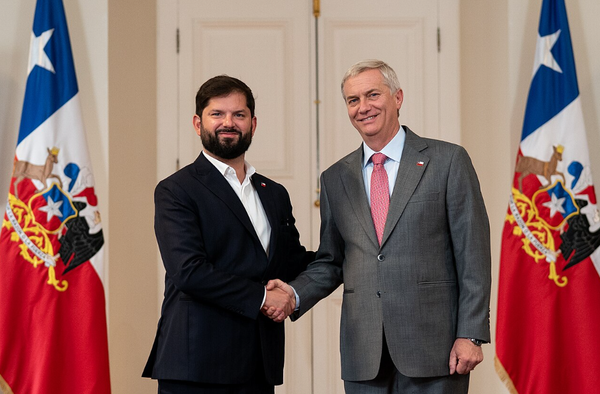
- Watch [8.2.26] Chile’s incoming right-wing government under inaugural president Jose Antonio Kast, is planning to liberalise its permit process for copper mining. Kast’s incoming finance minister Jorge Quiroz has indicated a desire to see Chile’s growth rates return to 4% per annum, by 2029. Chinese investments will remain a part of this growth plan, with Kast, a close ally of Trump, saying that: “no other country is going to buy the copper they buy from us at the moment.” Source: [Financial Times].
Peru:
Security
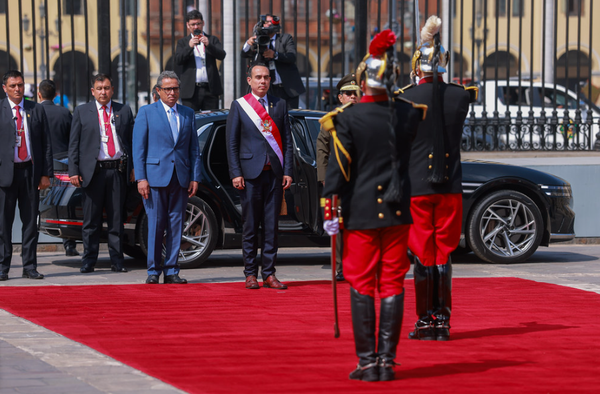
- Watch [6.2.26] Keiko Fujimori, leader of the right-wing Popular Force Party, has backed current Peruvian president Jose Jeri as he continues to weather a scandal known as ‘Chifagate,’ which involves accusations the president staged illicit meetings with a Chinese businessman: Zhihua Yang. Jeri is currently under investigation by the Attorney General’s Office over accusations that Yang has undue influence over Jeri. Source: [Peru21].
Venezuela:
Energy
- Watch [3.2.26] Venezuela’s envoy to China, Remigio Ceballos, has assured Beijing that Caracas will not allow the US to dictate the government’s stance towards Chinese energy, trade and investment interests in the South American nation. “China and Venezuela are trusted partners who share mutual trust. Both nations are sovereign states, and their bilateral relationship shall remain unaffected by the interference of other countries,” Ceballos said, during his visit to Beijing. Source: [SCMP].
Panama:
Infrastructure
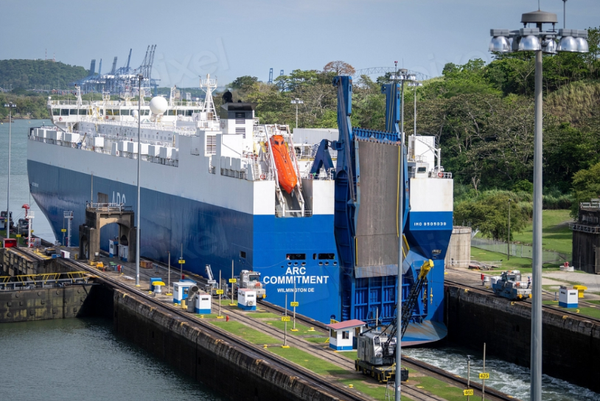
- Watch [3.2.26] APM Terminals, a subsidiary of Danish shipping giant AP Moller-Maersk, will take over the Panama Canal ports of Balboa and Cristobal. The move comes after a large amount of pressure from the Trump administration and Panama’s Supreme Court declaring the presence of Hong Kong-based shipping company CK Hutchison unconstitutional. APM Terminals will operate the ports on a transitional basis. Panama Ports Co (PPC), a subsidiary of CK Hutchison, is looking at international arbitration on the decision. Meanwhile, the Chinese government has called the decision an “act of hegemony by the US.” Legal experts have claimed that CK Hutchison has limited options for recourse, beyond an appeal at the International Court of Justice at The Hague. Source: [Riviera / SCMP].
- Signal [4-7.2.26] The Chinese government has denounced Panama’s Supreme Court ruling on CK Hutchison, calling it “extremely absurd.” In a memo issued by Beijing’s office in Hong Kong, the government complained that the ruling: “incites conflict and decoupling, running counter to the global trends of peace and cooperation.” CK Hutchison, a publicly traded company, has issued arbitration proceedings against Panama, under the rules of the International Chamber of Commerce. Hong Kong has also summoned Panama’s envoy to the semi-autonomous region, to condemn the move. Source: [Bloomberg / AP / CGSP]
Cuba:
Diplomacy
- Watch [5.2.26] Cuban special envoy Bruno Rodriguez Parrilla visited Beijing, to hold talks with Chinese foreign minister Wang Yi. During the meeting Yi declared that: “China firmly supports Cuba in safeguarding its national sovereignty and security.” Source: [CGTN].
Bolivia:
Diplomacy
- Watch [7.2.26] The new centre-right foreign minister of Bolivia, Fernando Aramayo, has declared his intention to restore full diplomatic ties with the US, after nearly 20 years of antagonism. During a meeting with US secretary of state, Marco Rubio, Aramayo insisted Bolivia would balance its relationships with the US and China, who have invested over US$1.2 billion in the country. Source: [RTL].
Further reading:
Centre for Strategic and International Studies, ‘Nearshoring without Growth: Why Investment Uncertainty is Holding Mexico Back,’ [3.2.26] — Mexico is structurally advantaged by its inclusion in the USMCA and geographical proximity to the US: so why is its growth so low?
Americas Quarterly, ‘Rodrigo Paz’s Defiant First 90 Days,’ [5.2.26] — Bolivia’s new president abolishes costly fuel subsidies, battles labour unions, and reorientates the country back towards the US.
The Economist, ‘The Panama Canal is a hinge point in Donald Trump’s New Order,’ [5.2.26] — What are the fallouts from Panama’s Supreme Court ruling to eject CK Hutchison from the canal? A potential international arbitration case, withdrawal of infrastructure financing from China, and alternative supply chain routes.
Infobae, ‘From Satellites to Sovereignty: China’s Silent Space Strategy in Latin America,’ [5.2.26] — From BeiDou’s geolocation software, Argentina’s Chinese-run Espacio Lejano space station, Brazil’s China-Brazil Earth Resources Satellite (CBERS) program: Beijing is now deeply embedded in Latin America’s space infrastructure? Will China’s space development funding deliver optionality or deepen dependency for the region?
About this briefing:
LATAM–China Monitor (LCM) aggregates weekly developments in policy, politics, infrastructure, commodities, energy, FDI, diplomacy, and military cooperation across Latin America and China. This project is designed to support future strategic briefings and political risk advisory services from SinoAméricas (SA).
Subscribe for future briefings
This briefing is free and focuses on aggregation.
Want deeper analysis on China-LATAM relations? Contact info@sino-americas.com
Know someone tracking China-LATAM? Forward this briefing.
Analytical weekly briefings, risk reports and corporate advisory services will be available in the medium-term.