Strategic Context
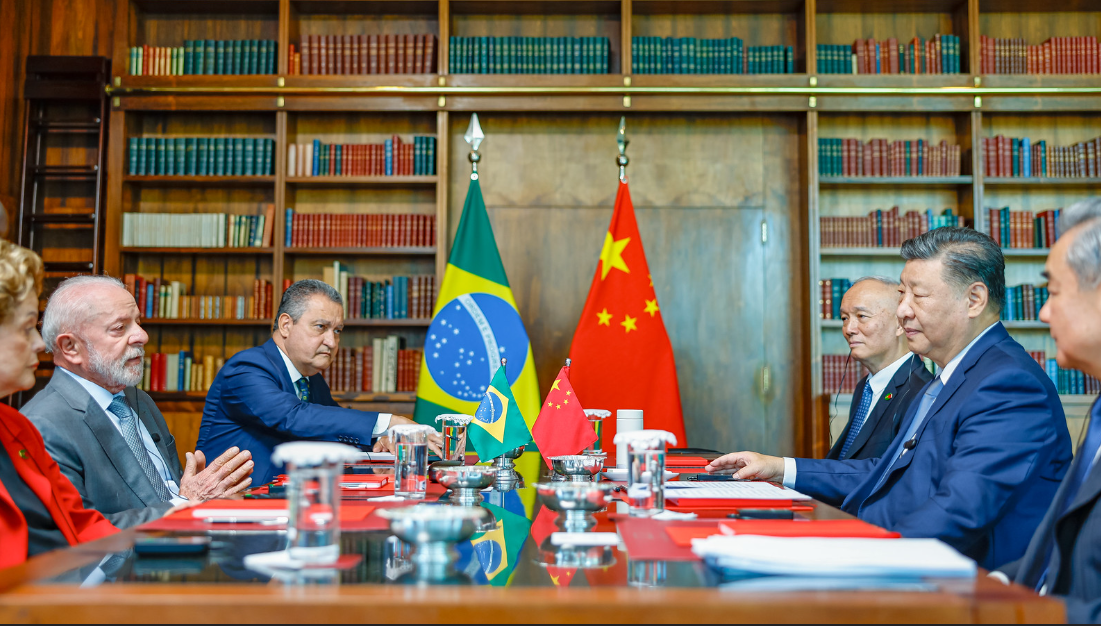
Tracking the China–Latin America relationship as it evolves from trade partnership to strategic balancing act
The second half of the 2020s, and extending into the 2030s, 2040s, and 2050s, will be a pivotal period for Latin America (LATAM) and its relations with China. The LATAM theatre has vast oil reserves, rare earth metals, a huge export-oriented agriculture sector, and rapidly developing human capital.
It is also central to the emerging practices of friendshoring and nearshoring: a back-door into US markets through free trade deals and physical proximity.
Sino-Latin American relations are a systematically undercovered axis in geopolitical risk and market analysis. Yet, as of 2024, aggregated trade flows between LATAM and China are worth $518.47 billion, an 107% increase over a decade (World Bank and ENCS). Concurrently, US-Latin American trade increased by only 66% (ECLAC and US Census estimates) in the same window.
The LCM monitor by SinoAméricas is one (of only a few briefings) systematically tracking the emerging relationship between China and Latin America. The Latin America-China axis combines expanding commercial opportunity with rising geopolitical, regulatory, and security risk. LCM delivers systematic, week-to-week coverage so clients and subscribers can monitor shifts as they happen.
Most geopolitical intelligence services treat China-LATAM as a subset of either 'China analysis' or 'LATAM analysis.' We're the only dedicated service tracking the intersection systematically, which means we catch patterns that China specialists miss (LATAM political nuances) and LATAM specialists miss (Chinese policy shifts)
Contact us
The new Monroe Doctrine:
During the 20th century, Latin American nation-states have either been strategically non-aligned, sponsored by Soviet power or close allies of the US, under the umbrella of the Monroe Doctrine. Consequently, Latin America, and its resources, became a battleground for global superpowers, public and private actors, and multilateral institutions.
In the post-Cold War and early 21st century, China emerged as a non-Western external partner for LATAM, reframing the strategic space away from US vs USSR bipolar competition to multipolar economic and diplomatic engagement.
While not returning to a strict Cold War binary, in 2025, the US Trump administration announced in a NSS (National Security Strategy) publication that:
"We want to ensure that the Western Hemisphere remains reasonably stable and well-governed enough to prevent and discourage mass migration to the United States; we want a Hemisphere whose governments cooperate with us against narco-terrorists, cartels, and other transnational criminal organizations; we want a Hemisphere that remains free of hostile foreign incursion or ownership of key assets, and that supports critical supply chains; and we want to ensure our continued access to key strategic locations. In other words, we will assert and enforce a “Trump Corollary” to the Monroe Doctrine."

Chinese export growth
Now, in an emerging multipolar world, structured around bilateral trade and security agreements — Latin America is balancing, increasingly fraught, realtionships with both China and the USA. Beijing has a rapidly growing role as an export partner for LATAM states and as a source of debt financing for major infrastructure projects in Brazil, Mexico, Peru and Colombia.
Chinese policy banks such as the China Development Bank and Export-Import Bank have been large lenders for infrastructure and energy projects in several LATAM countries, often exceeding Western multilateral finance in particular years.
Consequently, in the last decade, LATAM export values to China have more than doubled in many South American countries — including Mexico, a key trading partner for Washington in the USMCA free trade zone. Mexico's domestic consumer base increasingly purchases retail electronics from China ($23.8 billion, UN Comtrade, 2024). Meanwhile, its automobile manufacturing sector takes in Chinese inputs worth $12.3 billion (UN Comtrade, 2024), with outward shipments of Mexican made, Chinese-input, products to US markets rapidly growing.
Data: IMF. Chart: SinoAméricas
Great power competition
At a lower level, China is a key security partner for smaller LATAM states such as Venezuela, Cuba, Bolivia, Ecuador and Costa Rica, openly challenging the US's Monroe Doctrine and claims to hemispherical dominance. But these relationships are far from established: and China-LATAM security arrangements are a key site of contestation between populist and centrist candidates during elections.
Frequently, Latin American elections are won, and lost, on a candidate's alignment or non-alignment with China. The increasing tension between the USA and China, starting in 2016, has only complicated LATAM's great-power balancing act. For many LATAM governments, security and FDI (foreign direct investment) relationships with China have to be carefully balanced and offset against reliance on the US as an active buyer of exports from the region (automobiles, electronics, oil, and agricultural commodities.)
Any decision to buy weapons from, trade intelligence with, or pursue joint exercises alongside China is filtered through an understanding of the downstream diplomatic effects on LATAM-US relations.
Current China-LATAM security relationships. Map: SinoAméricas
Beijing's new strategy
As of 2025, both China and the USA have recognised and reaffirmed the growing importance of the LATAM theatre, publishing key policy documents.
In December, 2025, China released its strategic 'Policy Paper' on Latin America and the Caribbean (LAC). This is the first update to China's foreign policy stance regarding LATAM since 2016's paper and the third since Beijing's inaugural policy document published in 2008.
 刘雨薇
刘雨薇
The latest policy paper presents China's relationship to Latin America in both ideological and strategic terms. The document opens by declaring that: "as a developing country and a member of the Global South, China has always stood in solidarity through thick and thin with the Global South, including Latin America and the Caribbean (LAC)."
However, Beijing's latest policy pronouncement also presents the contemporary China-LATAM axis as a zone of geopolitical opportunity. The document aims to reorient global security and trade norms across LATAM in its favour:
"Efforts will be made to promote economic integration in the Asia-Pacific region. China will firmly uphold the multilateral trade system and oppose unilateral bullying practices, safeguard the stablity of global industrial and supply chains and reject attempts of 'decoupling' and 'reinventing the wheel,' so as to protect the open and cooperative international enviornment and steer economic globalisation towards the right direction."
According to the policy paper, much of this will be achieved through resource, commodity, energy and infrastructure cooperation — and further extensions of the BRI (Belt and Road Initiative).
"China stands ready to expand China-LAC cooperation on energy development across the whole industrial chain, increase cooperation in oil [and] gas , strengthen cooperation on clean energy, deepen cooperation on peaceful uses of nuclear energy and enchance utilization of mineral resources at various stages. China is ready to work with LATAM to [establish] mechanisms of long-term supply, so as to reduce...external economic risk."
China already has significant investments in Latin America, channelled through SOEs (state-owned enterprises), governmental organisations and private Chinese-based companies — mostly clustered in telecommunications, rare earth mineral processing, energy, transport infrastructure, and automobile manufacturing.
Emerging risks and opportunities
As the US increasingly seeks to reassert itself in the western hemisphere, many of these Chinese interests could be at threat — creating second-order risks, market entry opportunities, and potential blowback.
This decade, Washington has already forced Chinese investment out of key infrastructure projects and chokepoints, pushing Panama to withdraw from the BRI and militarily intervening in Venezuela (one of China's closest collaborators in the region). Any, and all, investments within the LATAM-China axis contain a moderate level of risk: from stochastic American policy developments, to natural disasters, insurgencies, political change in Latin America and dynamics among Chinese political actors.
Select Chinese SOE, BRI and private projects in LATAM. c.2025-2026. Map: SinoAméricas
Chinese-Latin American relations are now at a turning point after a decade of entrenchment and deepening interconnection — SinoAméricas is tracking every development.
Limits and uncertainty
Chinese overseas activity is often opaque, and project timelines, financing structures, and political commitments can shift rapidly. This monitor highlights signals and changes as they appear, rather than assuming linear outcomes.
The LATAM-China sphere contains some of the most dynamic markets, and complex security issues, in the world. SinoAméricas' LCM monitor, reports and consulting services can help you make sense of a vital, and emerging, geopolitical axis. Contact us.