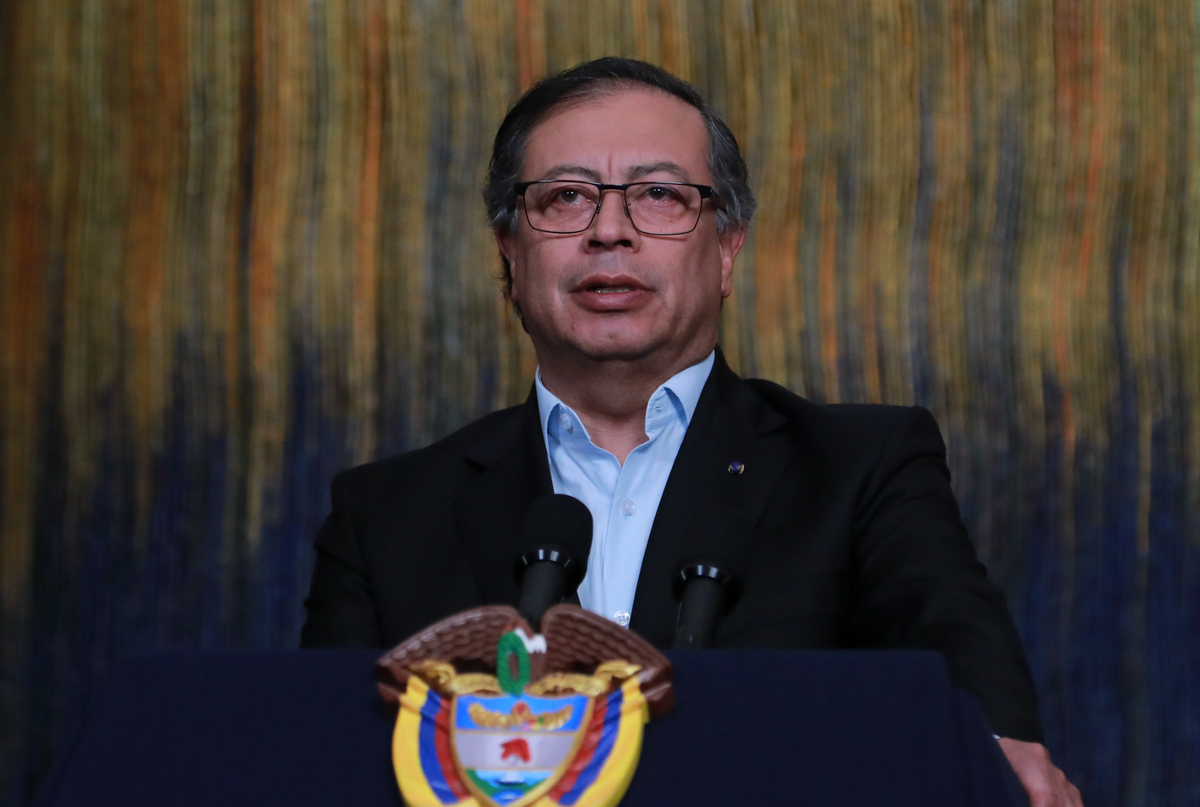
Petro hikes tariffs on Chinese steel
Plus, Panama-flagged cargo ships are detained by China

Plus, Panama-flagged cargo ships are detained by China
LATAM–China Monitor
LCM Briefing | Issue #7 | Coverage: [10-31.3.26]
Brazil | Argentina | Mexico | Chile | Peru | Colombia | Panama | Cuba | Costa Rica | Dominican Republic
This fortnight — key signals:
- Latin American nations informally divide themselves between CELAC and Shield of the Americas.
- Petro places 35% tariffs on Chinese steel imports into Colombia.
- Chinese SOE CRRC is set to build rail infrastructure in Brazil under new Lula plan.
- BYD plant in northern Brazil state of Bahia accused of ‘slavery-like work’ conditions by government.
- American consul-general for São Paulo, Kevin Murakami, warns against Chinese success in Port of Santos auctions.
- Milei government announces resumption of work on Chinese-sponsored Santa Cruz river hydroelectric dams.
- Sheinbaum government places provisional tariffs on Chinese steel imports.
- Mexican Supreme Court ratifies 2022 Mining Law amendment nationalising lithium production and extraction.
- Peruvian port of Chancay (COSCO) posts a US$10.7mn loss for FY2025.
Top Signal Analysis:
Cross-country
- [SIGNAL] [22.3.26] CELAC summit. (10th Community of Latin American and Caribbean States (CELAC) Summit in Bogotá). Low attendance signals the hemisphere's deep divisions on US/China competition in the region. Al Jazeera’s video newsfeed evidences that “relatively few presidents and prime ministers” attended the Bogotá summit — a sign of the continent's fracture between US-aligned centre-right and China-aligned left-leaning governments. Petro's Colombia hosted; Orsi's Uruguay attended; Lula's Brazil attended; Milei's Argentina and Kast's Chile were absent. Rationale: CELAC and Shield of the Americas (Miami, 5-7.3.26) are now parallel competing semi-institutional frameworks — which bloc a government attends is an emerging indicator of geopolitical alignment. The attendance gap is the story. Source: [Al Jazeera] T3. BS
The view from Beijing:
- Chinese National Bureau of Statistics (NBS) data is out for Jan-Feb 2026, industrial output, exports and domestic consumption are all up beyond expectations for the start of 2026, reflecting a slightly longer Lunar New Year holiday. Growth has been revised moderately down by the government (YoY from 5% to 4.5-5%). Unemployment is also slightly up, to 5.3% from 5.1% in December 2025. This relative strength accompanies large import and export orders to the LATAM region during Dec 2025-Feb 2026 — the shock of Trump’s action against Iran has yet to be priced in.
- Cementing the view that CELAC has become an active alternative to the Shield of the Americas, Xi Jinping issued a congratulatory memo through the MFA (21–22.3.26) to the CELAC summit in Bogotá. The memo states that: “Xi Jinping stressed that China will always be a good friend and good partner of LAC countries, and will support them in upholding their sovereignty, security, and development interests.” So far China has only intervened rhetorically and with aid during the unilateral US intervention in Venezuela and blockade of Cuba. Watch for stronger language around ‘security’ as US interventions ramp up. Watch for terms like ‘sovereignty’ if China continues to lose ground in port infrastructure and rare earths projects in LATAM.
- China continues to develop its sodium-battery offering for EVs through private giant CATL — in the medium-to-long term this could replace or provide a scalable alternative to lithium batteries in the energy transition: potentially undercutting lithium reserves in Brazil, Argentina, Bolivia and Chile. Expect sodium-ion battery tests from CATL and BYD in the short-term (1 year).
- Beijing has expressed concern over the Mexican government's active review of Chinese investments in the country. “China consistently opposes all forms of unilateralism and protectionist measures,” said a MoC spokesperson in anticipation of the move on 20.3.26. Mexico had previously placed tariffs on certain Chinese imports in September 2025, which the spokesperson also objected to, citing concerns over unilateral protectionism. Beijing launched its own investigation into Mexico policies, after the September move, concluding that: “The ministry has the right to take corresponding measures to resolutely safeguard China's industrial interests." Why it matters: China buys 100% of Mexico’s copper ore extraction at the value of US$3.72bn (2024) and around 50% of its slag and ash production at US$5.05bn (2024) — creating a large dependency, albeit in a small, but valuable, sector (2-3% of total Mexican global exports). In turn, China is reliant on Mexico both for the nearshoring of auto production on the US border and as a consumption market in its own right for EVs and other manufactured goods.
- The American consul-general for São Paulo, Kevin Murakami, has announced (16.3.26) that Washington would not look kindly on Brazil awarding a future auction sale to Chinese companies. Brazil intends to auction off the concession for the planned Tecon 10 megaterminal at the southern Port of Santos. Murakami’s exact wording was that the port, should not “fall into undesirable hands,” which was interpreted by those present, during an industry event as referring to the Chinese. Santos is the largest port in Latin America, and Tecon 10 will substantially enlarge its capacity. Why it matters: Currently, Santos is entirely controlled by the Brazilian government, with concessions for multinational shipping companies: Chinese-based COSCO and COFCO operate out of the port, and the location is a chokepoint for Brazilian exports of rare earths, foodstuffs, and energy to China. Beijing has a friendly government to deal with in president Lula and a vital entry point to LATAM markets to defend — expect strong pushback to Murakami’s comments.
- The US and China have entered a war of words (27.3.26) over the fallout from Panama’s supreme court ruling rejecting the presence of Hong Kong-based CK Hutchison within the nation’s canal ports. This spat, which involves mutual trade probes launched against each other, precedes a major diplomatic meeting between Trump and Xi Jinping planned for May 14-15. What to look for: Chinese concessions on tariffs directed at American goods in exchange for less US interference in CCP priorities in Latin America.
Cross-Country:
- [WATCH] [11.3.26] The publicly listed Latin American airline, LATAM Airlines Group, has signed lease contracts with the SOE Chinese-backed CDB Aviation for five Airbus planes. CDB Aviation is the Irish wing of the Chinese policy bank China Development Bank. Source: [Air Data News]. T2. BSP
Colombia:
Trade
- [SIGNAL] [20.3.26] President Gustavo Petro has placed 35% tariffs (Colombia’s WTO-bound rate) on Chinese steel (alongside Russian, Indian, and Turkish metal exports). The Colombian chamber of commerce has warned that these tariffs will make house construction in the country more expensive: housing starts under Petro have declined, and the industry has lost 136k jobs over the last three years. Cámara Colombiana de la Construcción (Camacol), is contemplating legal action against Petro’s administration in reaction to the tariffs on Chinese steel. Why it matters: Camacol’s potential lawsuit could create policy uncertainty for both domestic and foreign investors. Chinese firms supplying steel may face delayed payments or disrupted contracts. Source: [Colombia One]. T2. BN.
Legal / FDI
- [WATCH] [25.3.26] Petro is also considering pulling Colombia out of the ISDS (investor-state dispute settlement) system, at the behest of 200 progressive economists. The president has touted alternative resolution mechanisms in the “public justice system” and “bias-free” multilateral courts. What to watch for: China has a large amount of FDI in Colombia that might be exposed to future state-investor disputes: including Bogotá’s Line 1 Metro, whose construction contract (for a 2028 finish) is held by the consortium APCA Transmimetro (made up of SOE subsidiary China Harbour Engineering Company and Xi'an Metro company). Expect tighter contractual terms from Chinese firms in anticipation of ISDS exit. Source: [Colombia Reports]. T2. BN.
Brazil:
Infrastructure
- [SIGNAL] [27.3.26] President Lula has announced that the Chinese SOE CRRC (China Railway Rolling Stock Corporation) is set to build rail infrastructure in the country under the Brazilian New Growth Acceleration Programme. Lula announced the supply deal in the city of Araraquara in São Paulo state. Deliveries are expected to begin in 2027. Why it matters: Signals deepening strategic alignment between Lula’s government and CRRC Corporation Limited, embedding Chinese SOEs in core infrastructure. Source: [Global Times]. T2. BS. BC
FDI
- [SIGNAL] [14.3.26]: A BYD plant in the northeastern state of Bahia has been accused of labour practices tantamount to ‘slavery.’ Brazilian state investigators at the Public Labour Ministry have accused BYD of trafficking Chinese migrant workers to a car plant in the city of Camaçari and imposing “slavery-like” working conditions. The ministry has issued a civil suit against BYD and claimed damages of US$49mn on behalf of the workers. A deal outside of court is currently being negotiated. Why this matters: Brazil is a major importer of Chinese EVs, and Lula is currently more aligned with Beijing than Washington. However, Lula and the PT have built their reputation on workers’ rights. Expect more scrutiny from the Brazilian government over future Chinese FDI. Source: [Washington Post]. T3. BW
- [WATCH] [19.3.26] BYD is planning to invest US$57mn in an R&D centre in Rio. Construction is scheduled for the end of 2026, with operations beginning in 2028. BYD plans to use the centre to test EV performance in tropical climates, and design alterations suitable for the LATAM market. Source: [Seeking Alpha]. T2. BSP
- [WATCH] [14.3.26] Private family holding company Votorantim SA and publicly listed Chinese Huaxin Cement Co have agreed a plan to acquire the cement wing of the Brazilian conglomerate Cia. Siderúrgica Nacional (CSN) — the deal’s value is estimated at US$3bn. CSN has recently faced an increase in debt obligations of 11% in Q4 of 2025, and will use the proceeds of the sale against loans. Source: [AK&M]. T2. BSP
Diplomacy
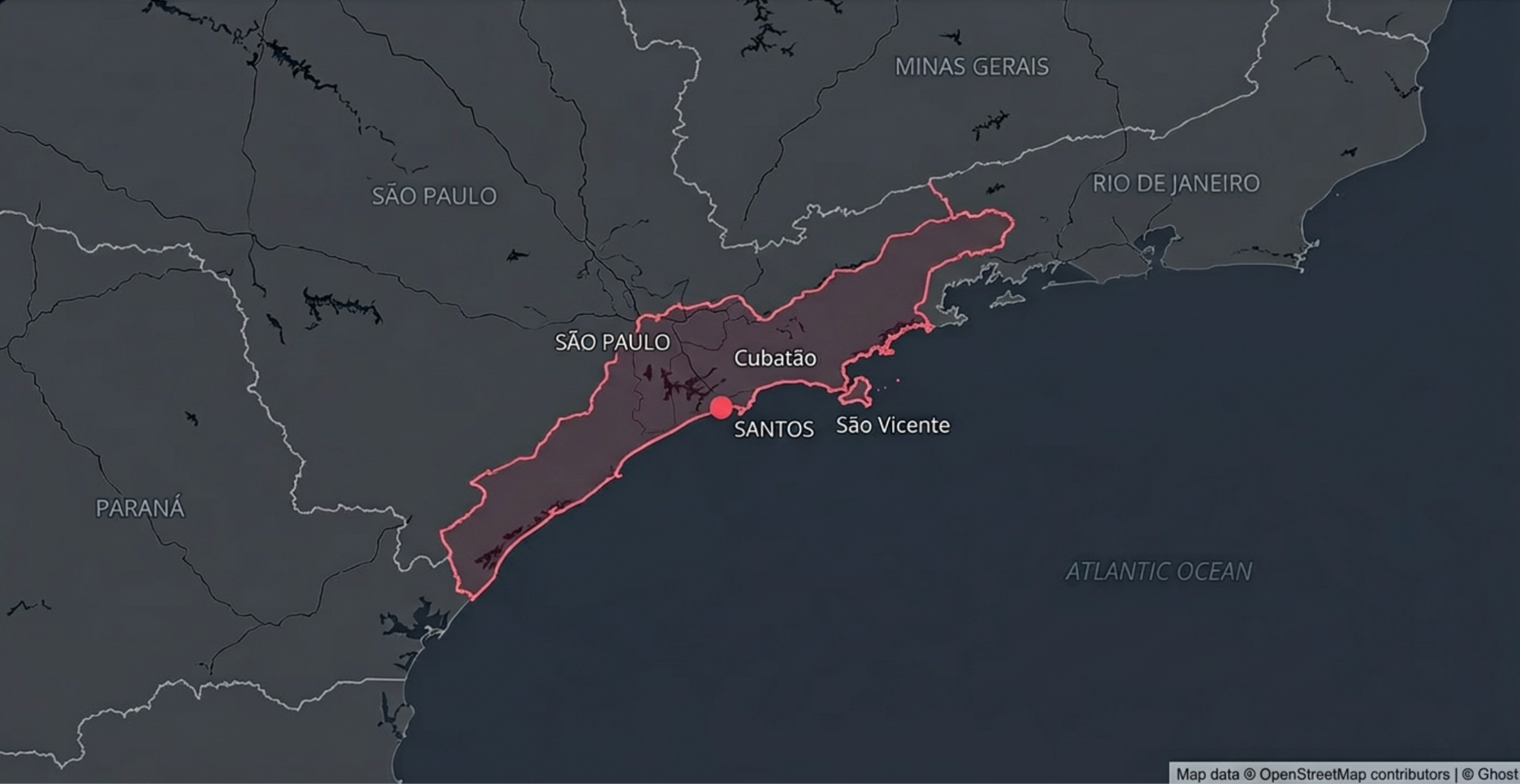
- [SIGNAL] [17.3.26]: Murakami also notified Brazilian port industry executives that Washington is against China winning concessions for terminals in the southeastern port of Santos. Murakami announced American opposition on 5.3.26 during a media event in Santos. The US official mentioned that terminals should not “fall into unwanted hands,” during his speech. This was interpreted as a reference to the Chinese. Currently COSCO and China Merchants Port have both expressed a desire to bid on the terminal in Santos. Source: [SCMP]. T3. BS. BW. BC
Tech
- [WATCH] [15.3.26] Brazil’s US$20bn online food delivery sector has been undergoing a series of mutual accusations of corporate espionage. Both iFood, Brazil’s native app, and recent Chinese competitors Keeta and 99 have alleged that third party consultancies have been attempting to steal confidential information about their operations. Source: [FT]. T4. BW
Commodities
- [WATCH] [18.3.26] The US has entered into discussions with the Brazilian government regarding rare earth reserves, according to the U.S. Chargé d'Affaires Gabriel Escobar. Escobar announced the talks while signing a separate deal in the central Brazilian state of Goiás with centre-right governor Ronaldo Caiado to collaborate on rare earth reserve mapping. Escobar’s approach is part of a bigger policy to diversify reliance away from Chinese dominated supply chains. However, intense diplomatic friction still remains between President Lula and Trump over the US’s ‘unilateral’ interventions in Venezuela and Iran. If, and when, this impasse is overcome — the US has plans for 50 mining sites in the South American nation. Source: [Reuters]. T4. BW.
- [WATCH] [19.3.26] Caiado isn’t just signing memoranda with the Americans to undercut China. This month the governor of Goiás signed an agreement with Japan’s JOGMEC (Japan Organisation for Metals and Energy Security) formalising an ‘understanding’ between the Brazilian state and Japan, as Tokyo seeks to secure its own supply chains against its larger neighbour. Source: [Lowy Institute]. T3. BSP. BW.
Trade
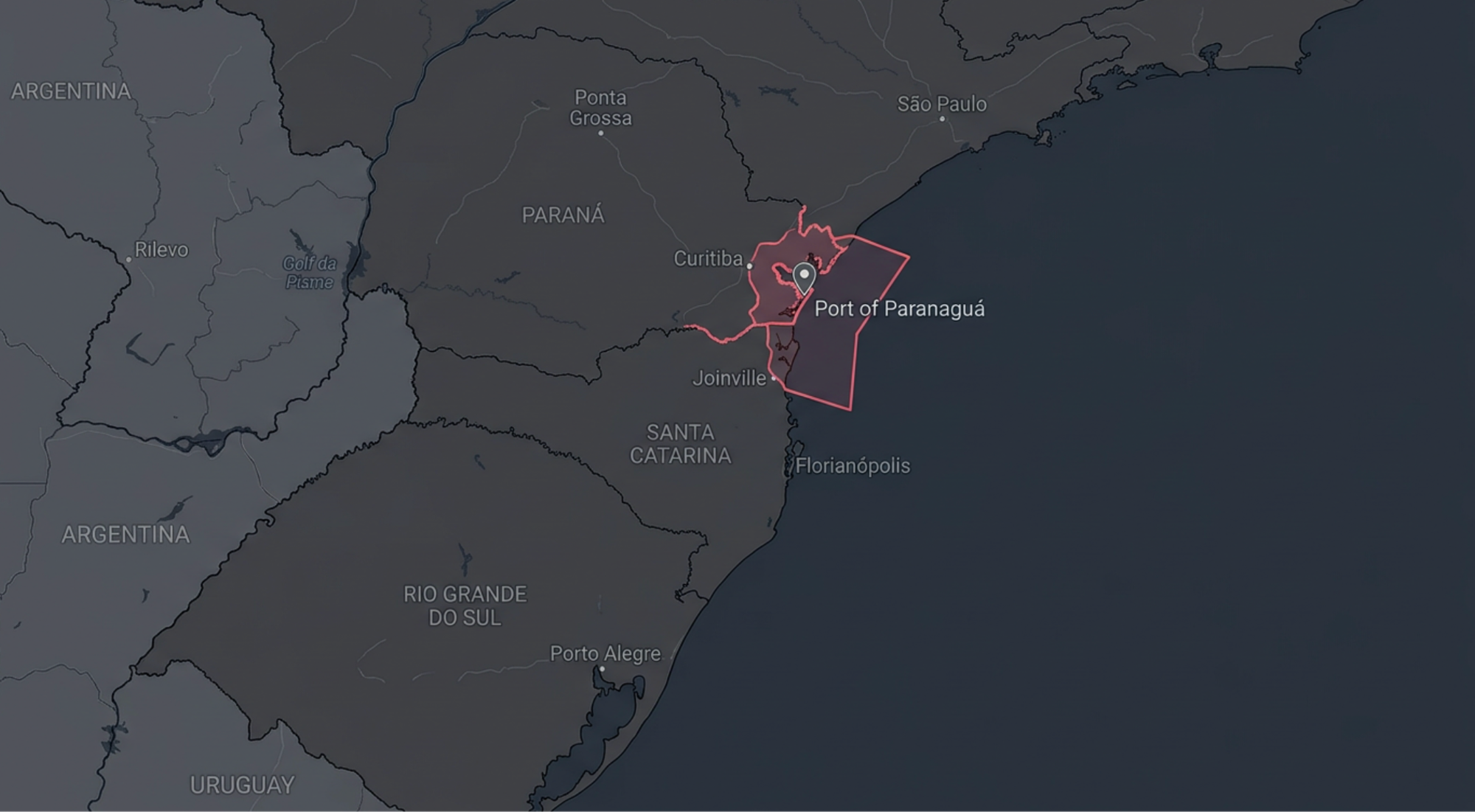
- [WATCH] [23.3.26] The largest recorded shipment of EVs to Brazil arrived in the southern state of Paraná in 3.26. The record was broken by a shipment of EVs that arrived at the Port of Paranaguá on 23.3.26. 3,370 cars from Chinese manufacturer Geely — sailing from the southeastern Port of Nansha. Source: [Folha do Litoral]. T2. BN
- [WATCH] [30.3.26] A year into Trump’s reciprocal tariffs move, Brazil has become the nation impacted the most by the policy choice. Washington’s additional 50% tariff against Brazil, decimated trade by US$1.5bn between August and December 2025. Timbers, metals, fishing, plastics and rubber imports into the US were the worst affected. Brazil made up for this shortfall by upping trade with China (6%) and Europe (6.2%) over the year. Source: [MercoPress]. T3. BSP
- [WATCH] [18.3.26] The trade balances between Brazil and two of its largest partners: China and the US have significantly shifted. Under the impact of increasing tariffs worldwide, between 2024-2025, Brazil moved from 7th to 5th place in trade deficit levels with the US, and from 4th to 3rd in trade surplus levels with China. Beijing’s deficit with Brazil reached US$44.8bn in 2025, overtaken only by Taiwan and Australia. Watch for: more Brazil-to-China oil imports as the US-Iran conflict continues into Q3. Source: [Valor International] T3. BSP. BN.
Politics
- [WATCH] [21.3.26] President Lula made comments about US unilateral actions against Latin American countries at the annual CELAC conference in Bogotá. In comments, apparently addressed to Trump, Lula argued that: “It’s not possible for someone to think that they own other countries…What are they doing with Cuba now? What did they do with Venezuela? Is that democratic? After taking everything we had, now they want to own the critical minerals and rare earths that we have…They want to colonise us again.” Source: [Al Jazeera]. T3. BS.
Argentina:
Politics / Infrastructure
- [SIGNAL] [11.3.26] President Javier Milei’s government has announced the resumption of work on Chinese policy bank financed, and state-linked constructed, hydroelectric dams on the southern river of Santa Cruz. This resumption comes after years of cessation generated by a contractual dispute. Now, Economy Minister Luis Caputo has announced the resumption of work on one of the dams, Cepernic, with an estimated finishing date of 2030. The project includes two dams, and is financed by China Development Bank, the Industrial and Commercial Bank of China, and the Bank of China. Construction was due to be carried out by Chinese state-linked company Gezhouba. Why it matters: Milei’s decision to resume work on the dams, confirms the thesis that his government is balancing relations with Washington and Beijing. Argentina’s financial constraints are limiting the libertarian leadership’s policy movement. Source: [BA Times] T3. BN
Commodities
- [WATCH] [23.3.26] Publicly listed Lithium Argentina (LA) which operates in the northern Salta province has published its Q4 and 2025 full report. The report details a deepening and shifting relationship with China’s publicly listed Ganfeng. The report provides new information on a US$130mn refinancing loan given to Lithium Argentina by Ganfeng, with a 6 year term. In addition to the loan, LA has been selling lithium production to Ganfeng to support its launch of the Mariana Lithium project, and most importantly that the two companies are entering into a joint venture (JV) to combine various lithium projects in Salta into one consortium with 67% Ganfeng ownership and 33% LA. LA has also floated the potential that it will list on the Hong-Kong Stock Exchange, in addition to New York. What to watch for: Lithium Argentina’s debt and joint ventures with Ganfeng give the Chinese partner significant influence, concentrating operational and financial risk. Look out for further consolidation. Source: [Globe&Mail]. T3. BW
Mexico:
Trade
- [SIGNAL] [3.3.26] Mexico’s Ministry of Economy has signalled it is pushing towards provisional duties against Chinese and Vietnamese steelmakers while it continues to investigate accusations of dumping against Asian producers. Mexico has placed a provisional duty of US$0.22/kg to US$0.23/kg on hot-rolled steel imports from China. The anti-dumping investigation follows a complaint made by LATAM company Ternium in November 2024. Why it matters: Targeting Chinese steel risks escalating trade tensions with a key nearshoring and trade partner. It underscores a growing reliance on anti-dumping measures to counter China-driven supply gluts. Source: [Mexico Business News]. T2. BSP
- [WATCH] [20.3.26] The US HVAC sector faces uncertainty over the renegotiation of the USMCA free trade agreement scheduled for July, 2026. Anirban Basu, chief economist for the industry association ABC (Associated Builders and Contractors), has warned about the potential for increasing input costs within the US HVAC sector if tariffs are placed on Mexico. Currently, a large proportion of HVACs, imported into the US, are manufactured in northern Mexico and are reliant on Chinese inputs. What to watch for: rule of origin policies could be further restricted in any future, renegotiated USMCA, to shut out Chinese nearshoring. Source: [Snip News]. T2. BSP
Legal
- [SIGNAL] [27.3.26] Mexico’s Supreme Court has validated former Morena president AMLO’s 2022 amendment to the Mining Law nationalising lithium production, processing and extraction. The move was challenged by opposition legislators on grounds of legal clarity and failure to consult with indigenous communities. The court rejected these challenges, clearing the way for the operation of Mexico’s national lithium company: LitioMx. Mexican lithium is concentrated in the northern state of Sonora, and is found in a mud-based composite which is harder to extract. Currently, the government is only funding LitioMx’s operational costs, not R&D — and Mexico’s lithium reserves of 1.7mt remain unprocessed. Why it matters: Mexico’s combination of R&D funding constraints combined with commitments to lithium sovereignty creates an opening for Chinese firms to enter as partners rather than owners. That could deepen China’s upstream foothold in Latin America despite formal resource nationalism. Source: [Mexico Business News]. T2. BSP
Diplomacy
- [NOISE] [20.3.26] The Chinese ambassador to Mexico, Chen Daojiang, has warned that Mexico placing tariffs on Chinese imports could affect the nation’s manufacturing base. Chen pointed out that Mexico’s national economy was reliant on Chinese inputs at a press conference held at the Chinese embassy in CDMX. “Many products that Mexico imports from China are intermediate goods that benefit 'Made in Mexico' and the national industry,” Chen argued.“The tariffs will actually harm or weaken Made in Mexico.” Source: [La Jornada]. T2. BN. BL
Chile:
Infrastructure
- [WATCH] [25.3.26] Chile’s new foreign minister, Francisco Pérez Mackenna, addressed the Chamber of Deputies. He informed them that the new right-wing government under Kast is continuing to evaluate the controversial planned internet cable between Valparaíso and China, and that Chile will remain “neutral” in a landscape of increasing geopolitical tension. Source: [BioBio Chile] T2. BN
Diplomacy
- [NOISE] [25.3.26] The former socialist president of Chile, Michelle Bachelet, has lost the backing of the new right-wing Chilean government under Kast, for her candidacy to run the United Nations as secretary-general. Bachelet’s name was put forward by the outgoing Boric government days before the transition. Bachelet is also backed by the current administrations of Brazil (Lula: centre-left) and Mexico (Sheinbaum: left-wing). The Chilean candidate is not just facing opposition from her own government. China has also objected to her candidacy, citing her role as an author of a report into human rights violations against Uyghurs, while she was UN High Commissioner for Human Rights. Source: [El Pais]. T3. BL. BW
Peru:
Infrastructure
- [SIGNAL] [20.3.26] The subsidiary company which operates the Chinese-backed Peruvian Pacific port of Chancay, Cosco Shipping Ports Chancay Peru S.A posted a US$10.7mn loss for FY2025 (its first year of full operations). This is a US$10.1mn increase on last year’s loss. Despite these losses, revenues at the Chinese SOE-backed port are rapidly increasing. Why it matters: Chancay is clearly not a financially stable asset for the Chinese government yet, despite its strategic importance. Source: [Datamar News]. T3. BSP
Trade
- [WATCH] [26-28.3.26] Peru’s anti-dumping body has launched an investigation into Chinese car tire imports. Peru’s trade commission (INDECOPI) published its intent to launch an investigation in the country’s El Peruano newspaper — acting on tips from domestic manufacturers, including Goodyear del Perú S.A. The investigation will cover FY2025, and look for signs of dumping by Chinese companies. Goodyear currently estimates that Chinese manufactured tires are 48% cheaper than domestic units. The filing by Goodyear also claimed that Chinese firms had increased their market share in Peru from 81.4% in 2022 to 83.5% in 2025. Source: [AutoNews]. T2. BSP
Diplomacy
- [NOISE] [26.3.26] The central Chinese city of Chongqing (5th largest by population) has twinned with the Peruvian capital: Lima. Peru’s capital already hosts various Chongqing-based businesses such as Changan Automobile, Seres Group, and Qingling Motors. Source: [iChongqing]. T1. BC. BS
Panama:
Infrastructure
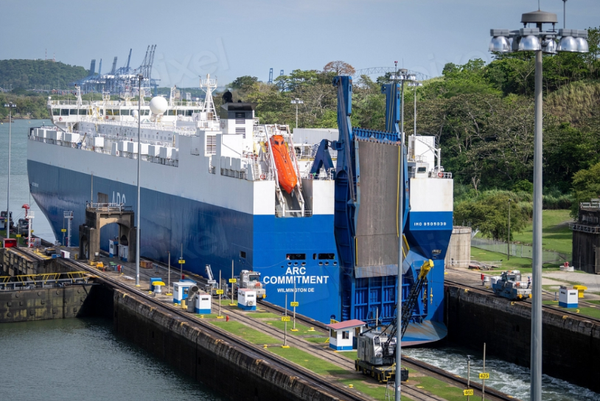
- [WATCH] [10-31.3.26] The conflict over the Panama Canal’s coastal ports continues. In reaction to the expulsion of Hong Kong–headquartered CK Hutchison from the ports of Balboa and Cristóbal, the Chinese government has started to detain Panama-flagged cargo ships. According to Lloyd’s List Intelligence, over 70 Panama-flagged ships have been detained in Chinese waters since 8.3.26. A large proportion of US containerised trade is carried on Panama-flagged vessels — consequently, China’s actions will have a knock-on effect on US commerce. Panama operates as a “flag of convenience” country for 23% of the world’s shipping by tonnage. What to watch for: US diplomatic intervention and escalating language around shipping access. Source: [IDN Financials]. T2. BSP
Cuba:
Energy
- [WATCH] [18.3.26] The Chinese ambassador to Cuba, Hua Xin, has offered Havana the outline of a joint plan for green energy solar projects on the island in response to the US’s oil and energy embargo. At a smaller scale, Chinese donors have given 5,000 solar household energy sets for installation on clinics. Prior to the blockade, China had already aided in the construction of 49 solar parks on the island — solar energy as a share of total energy production in Cuba has increased from 5.8% in 2025 to 20% in 2026, according to news reports. Source: [SCMP] T3. BS. BW. BC
Costa Rica:
Crime
- [WATCH] [18.3.26] Illegal gold mining has grown on the Costa Rican and Nicaraguan border, attracted by large Chinese companies willing to buy illegal ores. Costa Rican authorities have estimated that illegal mining activities have reached US$250mn annually. Most of the Chinese mining companies buying illegally processed ore from Costa Rica, are located in concessions granted by the Ortega government in Nicaragua. Source: [El Pais]. T3. BL. BW
Dominican Republic:
Space
- [WATCH] [27.3.26] A privately-funded American rocket launch project has been inaugurated in the Dominican Republic to counter Chinese space capabilities across the continent. The American company Launch on Demand is planning a US$600mn rocket lab on the border with Haiti. Its chief executive, Burton Catledge, has claimed that the project will “work to counter” Chinese space infrastructure in Latin America. The project is entirely privately funded, with no subsidies from the Dominican government. Source: [Taipei Times]. T2. BW
To watch next week:
Following the 3.26 US-led “Shield of the Americas” summit, Washington is expected to continue bilateral outreach to aligned Latin American governments. Watch for more concrete policy moves (tariff concessions, cessation of BRI projects, etc) to cement ‘Shield of the Americas’ as more than just rhetorical positioning.
Further reading:
USCC, ‘China’s Expanding Interests in Latin America: Development, Leverage, Coercion, and Crime,’ — Various experts testify to the US-China Economic and Security Review Commission at the Senate. The hearing is chaired by GOP-aligned commissioner Joshua Hodges and Democrat aligned commissioner Reva Price. Testimonies claim increasing disaggregation of Chinese strategy in relation to specific national and sub-national dynamics in the LATAM sphere. [19.3.26].
Bloomberg, ‘How Brazil Can Chip Away at China’s Rare Earth Dominance,’ — Brazil is well positioned to take advantage of Western nations’ desire to diversify away from rare earth supply chains dominated by China. The South American nation makes up 25% of the world’s rare earth reserves, but only produces 0.5% of output. [18.3.26]
About this briefing:
LATAM–China Monitor (LCM) aggregates weekly developments in policy, politics, infrastructure, commodities, energy, FDI, diplomacy, and military cooperation across Latin America and China. This project is designed to support future strategic briefings and political risk advisory services from SinoAméricas (SA).
Subscribe for future briefings
This briefing is free and focuses on aggregation.
Want deeper analysis on China-LATAM relations? Contact info@sino-americas.com
Know someone tracking China-LATAM? Forward this briefing.
Analytical weekly briefings, risk reports and corporate advisory services will be available in the medium-term.