Peruvian President José Jerí is ousted from office for China connections
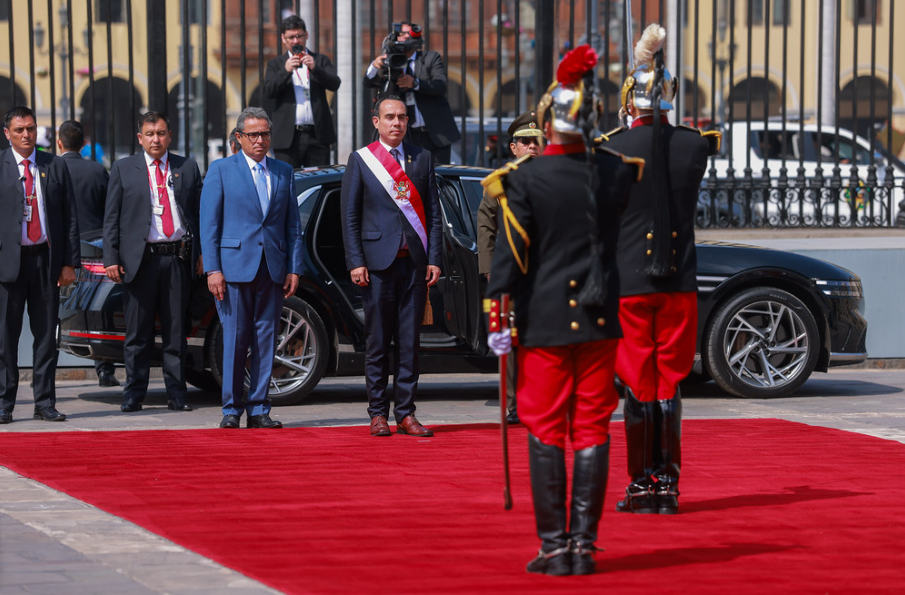
Chifagate, involving unrecorded meetings with Chinese business men, led Peru's Congress to oust Jerí.
LATAM–China Monitor
Weekly LCM Briefing | Issue #5 | Coverage: 10th to 25th, Feb, 2026.
| Brazil | Argentina | Mexico | Chile | Colombia | Venezuela | Nicaragua | Bolivia | Uruguay | Panama | Peru |
Key:
SIGNAL — Confirmed action with material or strategic impact.
WATCH — Developments indicating possible future action.
NOISE — Informational updates without material impact.
This week — key signals:
- Peru’s president José Jerí is ousted by congress over China-linked businessman scandal
- Brazil has placed anti-dumping measures on Chinese steel imports
- China overtakes Russia, at the end of 2025, as the largest exporter of fertilisers to Brazil
- Argentina signs a critical mineral deal with the US, to undercut Chinese supply chains and processing
- Mexico’s International Commercial Practices Unit has launched an investigation into the dumping of Chinese cold-rolled steel
- The US state department has placed visa restrictions on three Chilean officials for business dealings with Chinese companies
- Maersk has officially taken over CK Hutchison’s former Panama Canal ports in an interim capacity
The view from Beijing:
- China may well increase its outwards flow of FDI and M&As, on the back of increased competition, stalling domestic demand and encouragement from Beijing. In terms of Latin American investment, SOE China Southern Power Grid Corp has been seeking to increase its 28% share in major private Chilean power utility company Transelec SA in a $4 billion deal, according to insiders.
- Beijing may well be watching for signs of future collaboration and coordination between LATAM governments and the US next month, as Trump hosts a regional summit in Miami for the LAC region. Reports from right-wing newsites, (feeding off of local reporting) have detailed Trump’s intention to host the leaders of Argentina, Bolivia, Ecuador, El Salvador, Honduras and Paraguay on the 7th of March in the Florida city. All of these countries have recently experienced a medium-term shift away from centre-left and left-wing governance, towards moderately US-aligned centre-right and libertarian leadership. The summit intends to counter Chinese influence in agriculture, supply chains and critical minerals in LATAM. Watch for Beijing’s reaction to the meeting, which might be more muted than expected, given Beijing’s continuing good relations with Argentina’s Javier Milei and El Salvador’s Nayib Bukele.
Peru:
Politics
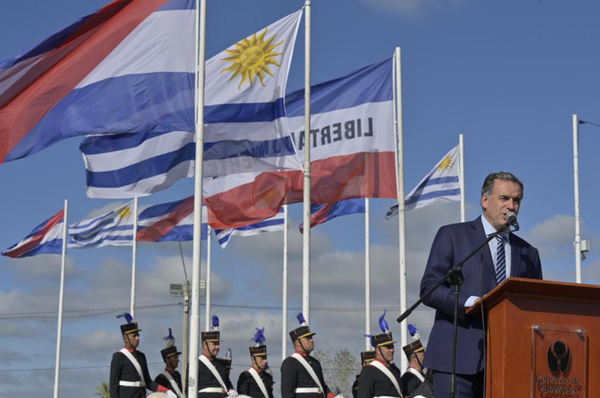
- Signal [17.2.26] Peru’s interim president José Jerí, of centre-right party Somos Peru, has been ousted from office by congress. Jerí was brought down by accusations that he had held unrecorded meetings with Chinese business near and inside the presidential palace, in what has been termed ‘Chifagate,’ by the Peruvian press. Jerí lost his confidence vote in congress by 75 votes to 24, and has left office only four months after taking up the presidency. Central to the case was a meeting between Jerí and Chinese businessman Zhihua Yang at a restaurant in Lima. Yang has close connections to government contracting. Source: [MercoPress].
Infrastructure
- Watch [13.2.26] The US and China have clashed over Peru’s Chancay port. The Trump administration issued a statement in reaction to a Peruvian judge issuing a ruling that the Cosco (Chinese SOE) run Chancay port, near Lima, was exempt from certain governmental and regulatory oversight. The US State Department’s Bureau of Western Hemisphere Affairs posted to X that they were: “concerned about [the] latest reports that Peru could be powerless to oversee Chancay, one of its largest ports…Let this be a cautionary tale for the region and the world: cheap Chinese money costs sovereignty.” The local judge who ruled against regulatory oversight has been criticised by Peru’s Veronica Zambrano, head of the country’s infrastructure regulatory body. However, Peru’s other ports are concessions on public land, while Cosco’s Chancay is privately held, limiting public oversight. In turn, Peru’s foreign minister, Hugo de Zela hit back at US comments, saying: “it is absolutely clear that sovereignty is not at stake,” to a local news channel. Source: [Bloomberg].
Energy
- Watch [17.2.26] Energy company, Pluz Energía Perú (which is owned by Chinese SOE China Southern Power Grid) covers the northern half of Lima and various regions of the country. In February, it issued US$200mn of corporate debt through bond placements. Pluz Energía Perú serves 1.6mn clients in the Lima concession area. Source: [BNAmericas]
Brazil:
Trade
- Signal [19.2.2026] Chinese steel exports to Brazil have had anti-dumping measures placed on units of up to US$670 per tonne. The policy was approved by vice-president Geraldo Alckmin, while acting as trade chief. Tariffs will be placed on Chinese cold-rolled steel, coated flat steel, and medical needles, after the Brazilian government found Chinese exports were significantly undercutting domestic prices. Source: [SCMP].
- Watch [10.2.2026] China has become Brazil’s biggest vehicle exporter, overtaking the long dominant Argentina by the end of January 2026. Argentina had long benefited from geographical proximity and the Mercosur trade bloc, when it came to selling cars into the Brazilian market. However, China surpassed Argentine export rates in the first month of 2026, reaching 16,800 units a month against 13,400. Source: [SCMP]
- Watch [20.2.2026] Japanese car manufacturer, Nissan, is holding its ground in Brazil and Mexico against increasingly cheap Chinese exports like BYD, Christian Meunier, chairman of Nissan Americas, told a press conference in Sao Paulo. Meunier flagged that Nissan intends to compete against Chinese imports in Latin America via quality and service rather than price. Source: [CBT].
Agriculture
- Signal [12.2.26]: China overtook Russia, at the end of 2025, as the largest exporter of fertilisers to Brazil, according to reports. China shipped 9.76 mn tonnes of fertiliser to Brazil, between January and October 2025. Chinese exports were dominated by ammonium sulphate and nitrogen-phosphorus fertilisers. Russian exports came close to China’s — 9.72mn tonnes. Source: [FarEasternAgriculture].
- Watch [12.2.26] Brazil’s slaughter of cattle has reached record highs on the back of surging Chinese demand. Beef processing was 13.4% higher in the last quarter of 2025, than it was in the same period of 2024, according to preliminary Brazilian census bureau data. There were also US$650 million worth of beef shipments from Brazil to China in January 2025 alone, according to trade data. Source: [BitGet]
- Watch [11.2.26] In reaction to a quota-sensitive tariff of 55% that China has placed on Brazilian beef exports, Luis Rua, trade secretary at Brazil's ministry of agriculture, has floated a policy proposal of placing individual quotas on Brazilian companies exporting to the Asian nation. The measure would be an attempt to “organise the industry” in response to China’s quotas, and prevent a sudden oversupply of beef at the start of the year, Rua told a press conference. A week later, law firm Barral Parente Pinheiro issued an opinion on behalf of industry group ABIEC, proposing individual quotas of 8k tonnes of beef exports to China, per year, per company. Source: [Reuters / Reuters].
- Watch [19.2.26] Chinese imports of soybeans have continued to tilt towards Brazil and away from the US in 2025. Agricultural trade flow movements towards Brazil have been the result of a tariff gap between the South American nation and the US, according to experts. China currently imposes a 13% rate on US soybean exports, while charging a much lower most-favoured-nation rate (MFN) of 3% on Brazilian shipments. Source: [S&P Global].
Infrastructure
- Watch [13.2.26] The Port of Itaqui, in Brazil’s northeast, (a major node in LATAM-China trade flows, including grains and fertilisers) has expanded its ability to export diesel. The private ports and logistics company, Santos Brasil, has completed its first large-scale operation of new liquid bulk pier lines, constructed at the Port of Itaqui. Santos’s terminal can now discharge 20k cubic metres of diesel at an average rate of 585 cubic metres per hour. Source: [DatamarNews].
- Watch [13.2.26] The southeastern Brazilian port of Paranaguá, has announced it is investing billions in infrastructure in 2026. Paranaguá is a main access point for Brazilian export flows to China. The port has announced plans to dredge their access channel, expanding capacity by up to 125k tonnes of shippage per year. Source: [GazetadoPovo].
Commodities
- Watch [12.2.2026] Ahead of an expected visit to the US by Brazilian president Luiz Inácio Lula da Silva, Caleb Orr, Assistant Secretary of State for Business and Economic Affairs, told the Brazilian newspaper O Estado de S. Paulo, that: “the United States considers Brazil an essential partner in critical minerals.” Orr expressed his hope in a press conference that Brazil’s economic diversity would: “allow it to carry out processing and help the United States diversify the markets for processing and refining critical minerals.” Currently, China and Brazil lead globally on rare earth and critical mineral reserves. However, there is a huge negative ratio gap between the two countries when it comes to processing, with the former having a throughput of 270k tonnes last year, while the latter only produced 2k tonnes. Brazil has historically rejected exclusivity clauses when it comes to its rare earth deposits. Source: [BNAmericas].
- Watch [21.02.2026] Brazilian president Luiz Inacio Lula da Silva signed a critical minerals deal with Indian prime minister Modi in New Delhi — as the Indian government seeks new rare earth suppliers to mitigate its dependence on China for extraction and processing. [AlJazeera].
Security
- Watch [16.2.2026] Brazilian police are trying to figure out whether a US$191mn money laundering operation run by the Primeiro Comando da Capital (PCC) in Sao Paulo, was connected to Chinese criminal operations. Operation Dark Trader carried out by Brazilian security services uncovered a large money laundering operation connected to an e-retailer of electronic goods. While the fronts for the operation were run by the PCC, a large amount of the money ended up in Chinese accounts. Source: [Infobae].
Argentina:
Commodities
- Signal [16.2.26] Argentina’s foreign minister, Pablo Quirno announced a critical minerals deal with the US on X. The deal is aimed at granting Washington competitive access to Latin America’s critical mineral reserves, while reducing China’s monopoly on access and production. The full bilateral deal, titled “The Framework Instrument for Securing Supply in the Mining and Processing of Critical Minerals” is worth US$130bn. The US has now secured priority access to Argentine minerals, while Buenos Aires secured a US$20bn credit line in exchange. Source: [LatinAmericaReports].
- Watch [19.2.26] Publicly listed Chinese company Ganfeng Lithium has its first export of lithium chloride from Argentina’s Salar de Llullaillaco in the far northwest. The lithium was produced at the Ganfeng owned Mariana Project in the region. Ganfeng has confirmed a shipment of 240 tonnes of lithium chloride to China, for use in electric vehicle manufacturing. The project in the Argentine province of Salta, is operated by Litio Minera Argentina S.A, a subsidiary of Ganfeng. Source: [PanoramaMinero].
- Watch [18.02.2026] Canadian-headquartered Lithium Chile Inc, has received a deposit from privately held Chinese company China Union Holdings, for the sale of its Argentine operations and subsidiary Argentum Lithium S.A. China Union Holdings transferred a US$5mn deposit, to be held in trust, before the deal is closed in June 2026. The deal will transfer Lithium Chile’s Arizaro project in the northwestern province of Salta to Chinese ownership. Source: [Junior Mining Network].
Diplomacy
- Watch [14.2.26] Chinese foreign minister Wang Yi met ‘informally’ with Argentine counterpart Pablo Quirno at the Munich Security Conference. Their interaction was printed across Chinese state media and the BRI website. According to Chinese sources, Quirno recommitted Argentina to the “One-China” policy, while Wang signalled China’s willingness to help Buenos Aires “on the sovereignty issue” of the Malvinas / Falkland Islands. Wang assured onlookers, and obliquely referenced the US’s increasing intervention in Latin America, saying: “We never engage in geopolitical contests, nor do we ask other countries to take sides. China-Argentina cooperation is not targeted at any third party, nor should it be disrupted by any third-party factors.” [BRI/A.A].
Agriculture
- Watch [16.2.26] China has completed its first large-scale commercial purchase of wheat from Argentina, totalling 70k tonnes. The wheat shipment departed from the Argentine port of Timbúes controlled by the Chinese SOE COFCO. The wheat shipment will be distributed among four domestic Chinese millers, according to Chinese state media. Source: [Milling].
- Watch [19.2.26] COFCO has also completed its first shipment of Argentine soybeans to Vietnam. The cargo was moved from COFCO’s Argentine operations to the Vietnamese port of Phu My near Ho Chi Minh City. It is the first time COFCO has sold Argentine grains into any international location. Source: [AquaFeed].
Trade
- Watch [18.2.26] Argentine president Javier Milei has made his 14th trip to the US to take part in Donald Trump’s inaugural Board of Peace initiative. Milei also intends to be present at Trump’s Miami LATAM summit on March 7th. Milei’s administration is, increasingly, walking a delicate line between its trade partnership with China and diplomatic alliance with the US. China overtook Brazil, as Argentina’s largest trading partner in September-October 2025. Additionally, Argentine exports to China shot up (YoY) by 125%. Source: [AP].
Mexico:
Trade
- Signal [22.2.26] Mexico’s International Commercial Practices Unit (UPCI) has declared an investigation into the dumping of cold-rolled steel from the US, China and Malaysia. If the three countries are found to be dumping by the UPCI, then tariffs may be applied to Chinese and US steel exports to Mexico. Source: [MSCI].
- Watch [13.2.26] Mexico’s deputy economy minister Vidal Llerenas met with China’s chief trade negotiator Li Chenggang in Beijing. This is the first time there have been bilateral trade talks between the two nations, since Mexico imposed 50% tariffs on many Chinese goods. The dialogue intersects with the upcoming deadline to renew the USMCA free trade deal between the US, Canada and Mexico. Any renewed trade deal will face pressure from the Trump administration to limit China-origin inputs in the supply chain. Beijing has yet to announce any counter measures to Mexico’s tariffs. Source: [MexicoNewsDaily]
Diplomacy
- Noise [11.2.26] The Chinese ambassador to Mexico, Chen Daojiang, set out his vision for the next five years of bilateral relations between the two countries, at an embassy party celebrating the start of the new year. Daojiang claimed the relationship would be closer at the resolution of the current five year plan which runs until 2030. Source: [LaJornada].
Commodities:
- Watch [17.2.26] Claudia Sheinbaum’s Mexican government is considering its critical minerals strategy in light of the US Trump administration’s move towards an international cooperation strategy on the commodities. The US announced moves in February to form an inaugural Critical Minerals Ministerial and Project Vault — a domestic stockpile of critical minerals, intended to create price floors, and constrain Chinese dumping. In response to the US, the Mexican government, under centre-left Morena, has pursued a position of multilateral dialogue, while refusing the issuance of any new foreign mining concessions, to maintain Mexican resource sovereignty. Source: [BNAmericas].
FDI
- Watch [13.2.26] Chinese car manufacturers BYD and Geely are competing over a closing-down Nissan factory in the central Mexican state of Aguascalientes. The two Chinese manufacturers have emerged as finalists in a bidding war for the site, alongside Vietnamese firm VinFast. The Mexican plant has the capacity to process 230k units per year, and is well located on supply lines to Mexico City and the USA. Source: [El Pais].
Chile:
Diplomacy
- Signal [20.2.26] The US State Department has placed visa restrictions on three, currently anonymous, Chilean officials for “undermining regional security,” via business dealings with Chinese companies. Secretary of State Marco Rubio placed visa restrictions on Chilean officials, just before current president Gabriel Boric is due to leave office in March. Rubio cited the restrictions as being down to Chilean officials: “knowingly direct[ing], authoriz[ing], fund[ing], [and] provid[ing] significant support to, and/or carr[ying] out activities that compromised critical telecommunications infrastructure and undermined regional security in our hemisphere.” Source: [Bloomberg].
Commodities
- Watch [11.2.26] The publicly listed Chinese company Tianqi Lithium, is in the process of a sell-down of its Sociedad Química y Minera (SQM) shares after a proposed restructure of mining activity in Chile by left-wing president Gabriel Boric and a negative supreme court ruling. Tianqi Lithium had acquired a 24% stake in the Chilean lithium mining giant in 2018, for US$4.1 billion. The Boric government’s policies have resulted in SQM having to give up its stake in Atacama lithium projects by 2031. Tianqi has now proposed selling 1.25% of its original holding, worth approximately US$206mn. Source: [BambooWorks].
Colombia:
Commodities
- Watch [11.2.26] Private Chinese company, JCHX Mining Management Co., Ltd’s share prices have risen in response to the mining contractor signalling it will fully purchase CMH Colombia. The private Colombian company owns the development rights to Alacrán — a gold-silver-copper mine in the nation’s northern province of Córdoba near the town of Puerto Libertador. JCHX’s share price closed with a 4.3% increase on 11.2.26. Source: [YicaiGlobal].
Venezuela:
Energy
- Watch [11.2.26] US Secretary of Energy, Chris Wright has warned about the legitimacy of Chinese business operations in Venezuela, after a high-profile visit and talks with interim president Delcy Rodriguez. During talks with Rodriguez about upping Venezuelan oil exports to friendly countries, Wright also set out the Trump administration’s position on Chinese commercial involvement in the country: “China does a lot of deals in countries where they are not mutually beneficial…They have been quite damaging to nations in South America, Africa and around the world. So I think with U.S. help and with U.S. partnership we want to stop those kind of deals." Wright caveated this statement by saying that legitimate deals by “legitimate Chinese companies” would be fine in Venezuela. Source: [Reuters].
Panama:
Infrastructure
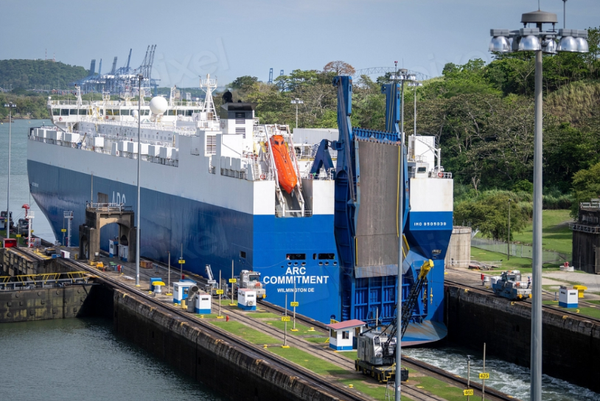
- Signal [23.2.26] Danish shipping company, Maersk, alongside Swiss MSC, now have interim control of the Panama canal ports of Balboa and Cristóbal, after the country’s supreme court ruling came into effect. A new concession to run the ports is likely to come into effect within 18 months. President Mulino has claimed the occupation of the ports and the ejection of Hong-Kong based company CK Hutchison is “an exceptionally legal tool.” Balboa Port, on the Pacific side of Panama, will be run in the interim by Maersk, while the Atlantic port of Cristóbal will be controlled by MSC. CK Hutchison, in turn, described the takeover as “forceful” and “unlawful.” [FT].
- Watch [12.2.26] A Panamanian bridge project awarded to a Chinese consortium consisting of China Communications Construction Company and China Harbour Engineering Company, has resumed construction after the ending of a labour strike. Work has resumed on the US$1.42bn ‘Fourth Bridge’ project after an agreement was reached by Panama Fourth Bridge Consortium (CPCP), the Panamanian government and labour unions. Source: [Infobae].
Aid
- Noise [17.2.26] Chinese ambassador to Panama, Xu Xueyuan, has donated Chinese ambulances to the Panamanian city of Penonome during new year celebrations. Source: [Chinese Embassy - Panama].
Politics
- Watch [10.2.26] Current centre-right Panamanian president José Raúl Mulino of the Realizing Goals party has entered into verbal conflict with the former president Juan Carlos Varela of the right-wing Panameñista Party over the alleged taking of Chinese ‘cooperation funds.’ Varela raised questions about the Mulino government taking Chinese funds on X. Panama’s Ministry of Foreign Affairs strongly rebutted the accusations from Varela. In turn, the ministry alleged that the only funds taken from China by Panama were in 2017, under Varela’s government during the country’s diplomatic break with Taiwan. [Telemetro].
Nicaragua:
- Noise [17.2.26] China has delivered a fleet of 180 buses to Nicaragua — which will operate across different regions of the country. These are the first units in a 600 bus plan that China intends to execute in the central American nation. The Chinese company Yutong is central to this deal, as one of the dominant electric bus manufacturers in Latin America. Source: [El Cronista].
Bolivia:
- Watch [20.2.26] Bolivia’s state steel company, Empresa Siderúrgica del Mutún is requesting deductions to a Chinese loan. The loan was issued to the Bolivian national by China Eximbank. Mutún is alleging contractual failings from SOE Sinosteel during its construction of a plant in the east of the country. China Eximbank issued Mutún a US$400 million loan for the development of the plant. Mutún is arguing that there are about 300 outstanding technical issues left by Sinosteel. The plant has produced no steel since its inauguration. Source: [FinancialPost].
Uruguay:
Diplomacy
- Noise [20.2.26] Uruguay’s foreign minister Mario Lubetkin appeared before the nations’ parliament to face scrutiny over statements about Taiwan and president Yamandú Orsi’s trip to China. Centre-right National Party legislators questioned Lubetkin over statements made about Taiwan and the “One China Policy” during Orsi’s delegation to Beijing. Source: [MercoPress].
Further reading:
Americas Quarterly, ‘China’s Green-Tech Push in Latin America is Gaining Traction,’ [9.2.26] — despite a general turn to the centre-right and right across Latin American nations in recent elections, China’s investment in the green transition is only picking up.
Bloomsbury Security and Intelligence Institute, ‘Panama’s Shadow: The US War on Drugs and Russo-Chinese Presence in Latin America,’ [23.2.26] — the BSII compares and contrasts the US security interventions of 1989-1990 in Panama with the current actions in Venezuela, looking at the different influence regimes of Russia in the 20th century and China in the 21st.
About this briefing:
LATAM–China Monitor (LCM) aggregates weekly developments in policy, politics, infrastructure, commodities, energy, FDI, diplomacy, and military cooperation across Latin America and China. This project is designed to support future strategic briefings and political risk advisory services from SinoAméricas (SA).
Subscribe for future briefings
This briefing is free and focuses on aggregation.
Want deeper analysis on China-LATAM relations? Contact info@sino-americas.com
Know someone tracking China-LATAM? Forward this briefing.
Analytical weekly briefings, risk reports and corporate advisory services will be available in the medium-term.