Boric and Kast clash over Chile-China cable
Plus, Panamanian authorities raid CK Hutchison offices
LATAM–China Monitor
Weekly LCM Briefing | Issue #6 | Coverage: 25 Feb — 6 Mar 2026
Brazil | Argentina | Mexico | Chile | Peru | Panama | Venezuela | Bolivia | Colombia |
This week — key signals:
- Chilean presidential transition between Boric and Kast has broken down over Chile-China undersea fibre optic cable.
- Brazilian imports of Chinese steel fell in December 2025 in anticipation of anti-dumping tariffs.
- Argentina’s Labor Modernisation Act leaves manufacturing industries open to Chinese competition.
- Panama issues revocation of CK Hutchison port concessions in gazette; security forces raid Hong-Kong-based company’s offices on the canal.
- Peru awards rail contract to Power China.
The view from Beijing:
- Beijing enters the week on the rhetorical defensive. Since February, there have been three simultaneous flashpoints — Chile’s internet cable, Panama’s canal port seizures, and the collapse of Venezuelan oil exports — all involve direct US state action. This gives Beijing strong messaging material for a Global South audience unsettled by American unilateral action. China's Embassy in Santiago accused Washington of “obvious contempt for the sovereignty, dignity, and national interests of Chile” (CNBC, 25 Feb). The framing mirrors, foreign minister, Wang Yi's Munich speech (Feb 2026), which stressed “sovereign equality” and “multilateralism” as a counter to US “unilateralism” — language explicitly drafted to appeal to non-aligned LATAM governments watching events unfold.
- The US House Select Committee report (26 Feb) on Chinese space/military infrastructure in LATAM will sharpen Washington's messaging ahead of the Miami summit. Beijing has not yet formally responded to the report — watch for an MFA press conference rebuttal in the coming days. The 11 identified sites span Argentina (Espacio Lejano, Vaca Muerta area), Venezuela, Bolivia, Ecuador, Brazil, and Peru — several of which have been covered in prior LCM briefings. Source: [US House Select Committee on China] T4, BW
Chile:
Politics / Infrastructure
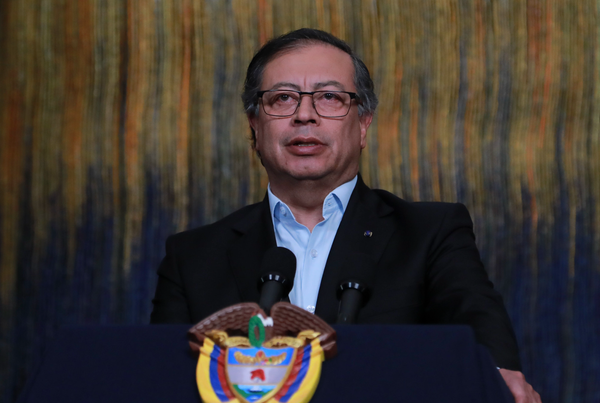
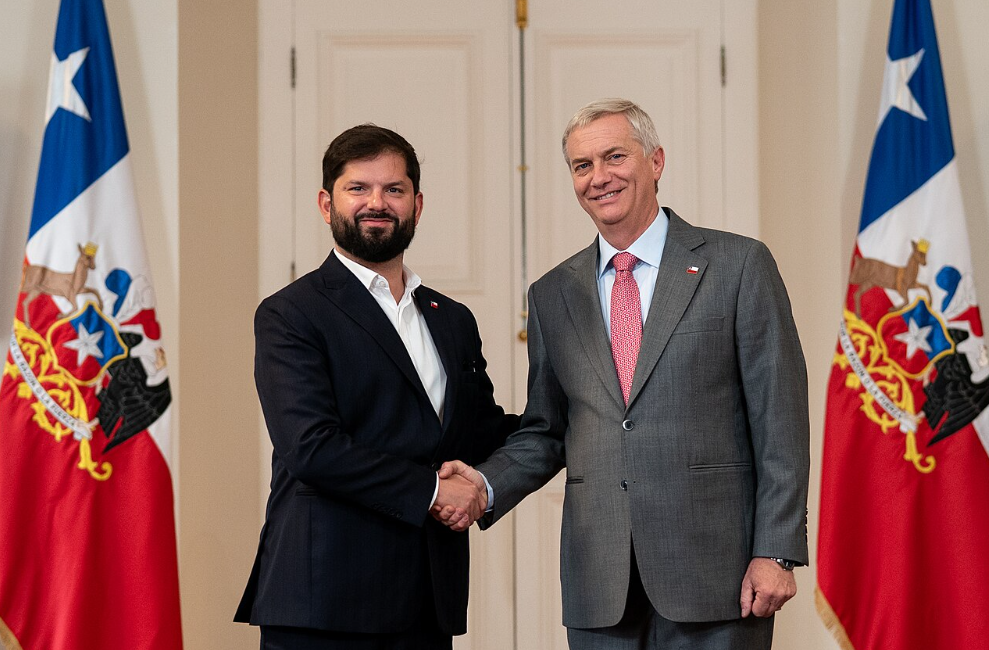
- [SIGNAL] [3.3.26]: Chile's presidential transition has formally broken down over the China Mobile-backed (SOE) Chile–China Express cable. A 22-minute meeting between outgoing President Gabriel Boric and President-elect José Antonio Kast at La Moneda (the presidential palace) ended in a public rupture: Kast accused Boric of misrepresenting what had been communicated about the cable project; Boric refused to issue a retraction. Kast then cancelled all scheduled bilateral Cabinet-level handover sessions. Claudio Alvarado, Interior Minister-designate said Chile was left 'under crossfire' between China and the United States. Boric's outgoing government maintains a 30-year concession decree for China Mobile which was signed on 27 Jan, and annulled 48 hours later on technical grounds. In response to perceived pressure from the US, Chile’s Chamber of Deputies, via a committee, approved a request from the foreign ministry to “seek withdrawal” of the US ambassador: Brandon Judd. Kast heads to Miami's Shield of the Americas on 7 Mar, arriving with no government briefings and his first foreign policy crisis already public. Source: [MercoPress / UPI] T3, BW
- [In-Depth] [24.2.26]: The Chile–China Express cable: is a $500mn submarine fibre-optic cable from Valparaíso to Hong Kong, backed by China Mobile (an SOE), HMN Technologies, and Hengtong Optic-Electric (which acquired Huawei's cable stake). The cable consortium registered a Chile subsidiary — CMI Chile SpA — in Santiago in August 2025. Previously, the US sanctioned three Chilean officials around security concerns, they are: Transport and Telecommunications Minister Juan Carlos Muñoz; Telecommunications Undersecretary Claudio Araya; and Araya's chief of staff Guillermo Petersen. Judd warned the cable “could force a review of all spectrums of intelligence-sharing with Chile.” Kast must decide his position by, or after, 11 Mar inauguration. Source: [Rio Times Online] T3, BN
- [WATCH] [28.2.26]: president-elect Kast arrives at the Miami summit as Chile's copper-China dependency makes any clean anti-Beijing pivot commercially ruinous. China buys approximately 60–65% of Chilean copper exports. Verisk Maplecroft analyst Mariano Machado notes: Kast's Shield of the Americas attendance will be “an early test of how Chile balances partners under pressure,” and that “[deal winning will come to those] that lock in clear governance and credible security assurances early enough to preserve bankability.” Kast's designated Foreign Minister Francisco Pérez Mackenna has maintained ambiguity on the cable, saying only that Chile's foreign policy “must defend Chilean interests.” Source: [CNBC] T3, BW
Brazil:
Trade
- [SIGNAL] [24.2.26]: Brazilian steel market confirms full repricing following Brazilian’s foreign trade chamber’s (CAMEX) five-year anti-dumping duties on Chinese cold-rolled-coil (CRC) and hot-dip-galvanized (HDG) exports. Brazilian distributors confirm an active sourcing pivot to Vietnam, South Korea, Taiwan, and Japan. Multiple market participants told Fastmarkets they had already been building relationships with non-Chinese suppliers since late 2025 in anticipation of the ruling. The definitive duties — up to $709.63/tonne on HDG and $670.02/tonne on CRC — have effectively ended Chinese flat steel price competitiveness in Brazil. December 2025 imports had already fallen 22.6% month-on-month as traders pre-positioned. Source: [Fastmarkets] T3, BSP
- [WATCH] [25.2.26]: A new Foreign Trade Secretariat (SECEX) investigation into hot-rolled flat steel from China (initiated June 2025) is progressing through standard WTO procedures, with a ruling expected in the April–June 2026 window. This would extend Brazil's anti-dumping architecture to cover the full spectrum of flat steel products from China — potentially adding a fourth definitive measure. Combined with duties on pre-painted, cold-rolled, and coated steel already in force, Brazil is building one of the most comprehensive trade-defence regimes against Chinese steel in any emerging market. Source: [Discovery Alert] T3, BSP
Argentina:
Politics
- [SIGNAL] [28.2.26]: Milei's Labor Modernization Act passes Argentina's Senate (28 Feb) after intense debate, reshaping for the first time in 50+ years a legal framework that includes severance, working hours (now up to 12h/day), and union restrictions. The bill's passage is directly contemporaneous with the Fate tire factory crisis: Fate workers have occupied the Virreyes plant since approximately 25 Feb, staging a near-total blockade of the Panamericana highway's Tigre ramp on the Friday morning before passage, dispersed by police and gendarmerie with four arrests. The Labor Act's passage makes it cheaper for companies to restructure in response to import competition — which critics read as institutionalising Chinese-import-driven deindustrialization. The UIA (The Industrial Organization of Argentina) in addition to unions involved with Bridgestone and Pirelli (tire companies) have all publicly warned of sector-wide contagion. Source: [Courthouse News] T3, BN
Peru:
Commodities
- [WATCH] [6.3.26] Publicly listed (and partially SOE controlled) Chinese mining company MMG has signalled its intention to invest between US$800mn and $850mn this year in an open-pit copper mine, Las Bambas, located in Peru’s southern Apurímac region. This is an increase of 62-72% on last year's expenditure, and will be allocated to mining and infrastructure at the Ferrobamba pit. Source: [BNAmericas], T3, BSP
Infrastructure
- [SIGNAL] [3.3.26] Peru has awarded a US$420mn freight line contract to Chinese SOE, Power China. The 120km line is expected to connect the COSCO controlled pacific port of Chancay with Peruvian mines in the interior of the country. Source: [Rail Journal]. T3, BSP
Colombia:
Diplomacy
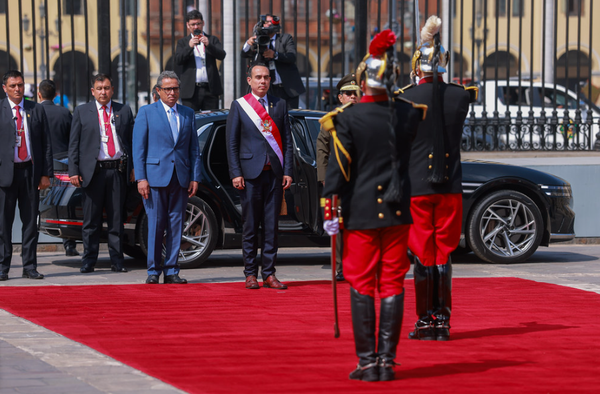
- [WATCH] [25.2.26 – ongoing]: President Petro's exclusion from the Shield of the Americas is a significant diplomatic signal. Colombia — historically the US's closest strategic partner in the Andes, the recipient of Plan Colombia, and a major counternarcotics ally — is not invited, while Bolivia (a recent socialist government) is, purely on the basis of Paz's pro-US ideological alignment. This marks the most explicit formalisation yet of Trump's 'ideological bloc' approach to LATAM diplomacy, and will complicate US-Colombia security cooperation on drugs, migration, and the Venezuela situation. Watch whether Petro uses the exclusion to accelerate his planned Beijing visit (postponed from December 2025 after a Colombian congressional delegation visited Taipei). Source: [Colombia One] T3, BN
Venezuela:
Energy
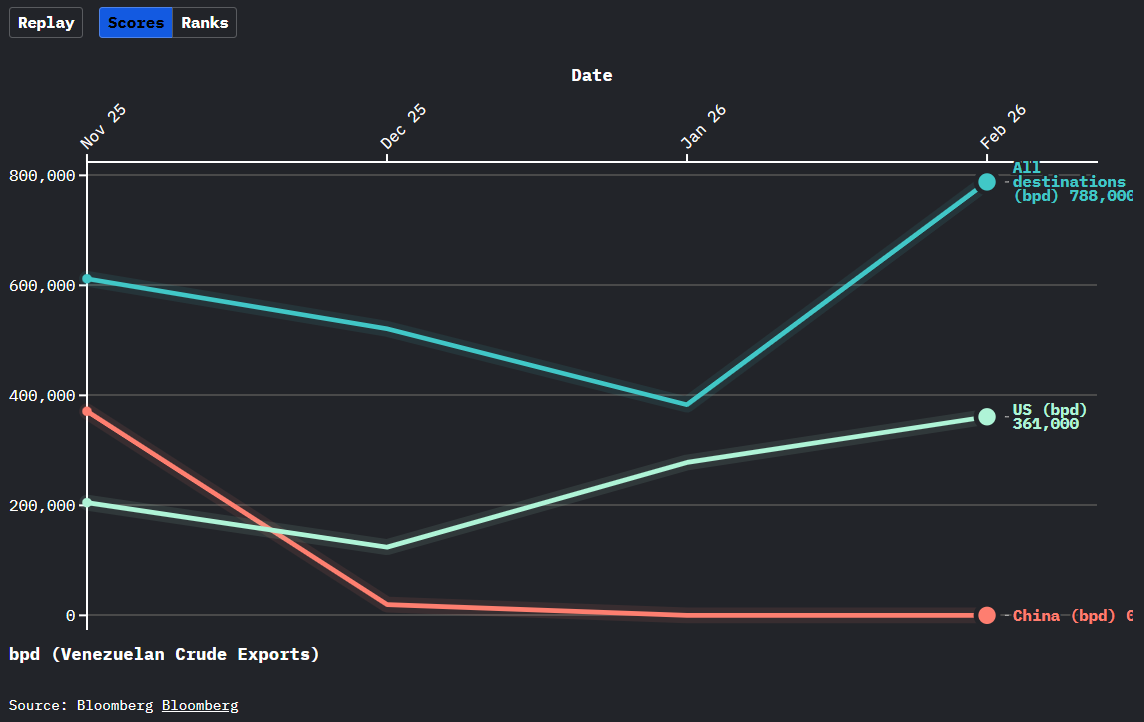
- [WATCH] [3.3.26]: February oil export data confirms a massive shift in energy flows. Venezuela's total crude and fuel oil exports fell 6.5% month-on-month in February 2026, after the US military unilaterally extracted president Maduro from Caracas. Asia-bound exports collapsed 67%, from 145,000 bpd in January to approximately 48,000 bpd. China bought effectively zero Venezuelan barrels in February, a historic low. A shortage of Very Large Crude Carriers (VLCCs) capable of lifting heavy crude is an additional constraint limiting Chinese re-engagement. Chinese teapot refiners — historically Venezuela's largest buyers — processed Venezuelan oil into bitumen and are now facing Q2 supply gaps. Source: [EnergyNow] T3, BSP
- [WATCH] [2.3.26]: Bloomberg data (via RWA Times substack, 2 Mar) shows total Venezuelan crude exports actually doubled in February from their January low — but this uptick reflects US-controlled flows to the US, Europe, and Caribbean, not China. The structural shift is now confirmed: Venezuela's oil has gone from a China-first system (buying 75% of exports in 2025) to a US-first system (US and Caribbean buyers now dominating). For Chinese teapot refiners with equipment specifically designed for Venezuelan heavy sour crude, this is a permanent supply shock until an alternative (Canadian heavy grades, Iraq's Basra Heavy) can be commercially substituted. Source: [RWA Times / Bloomberg data] T2, BSP, T3, BW
Bolivia:
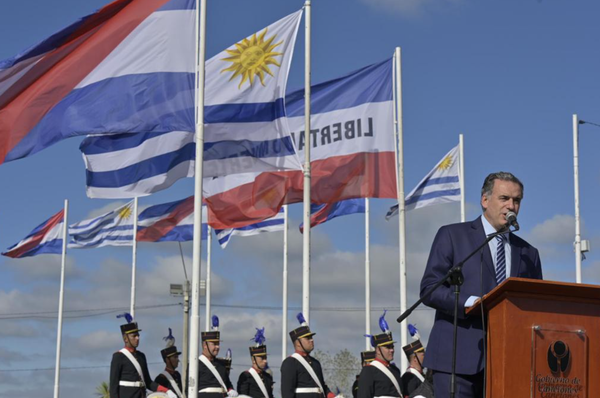
- [WATCH] [4.3.26]: Australian mining exploration company Cosmos Exploration has completed a US$25mn deal to acquire EAU Lithium. EAU Lithium is a mining technology company operating in the Lithium triangle. Cosmos has bought all existing development rights and the right to negotiate with Bolivia's state lithium company YLB (Yacimientos de Litio Bolivianos) which has previously partnered with EAU. This is the first formal Western acquisition of Bolivian lithium development rights under the Rodrigo Paz government. The deal is being read in market analysis as a test case: if Cosmos can progress to a YLB agreement, it signals that Paz's government can provide legal guarantees to Western capital — the core question for any US-backed critical mineral strategy in the Lithium Triangle. Source: [Pravda USA (citing sector reporting)] T2, BS
Panama:
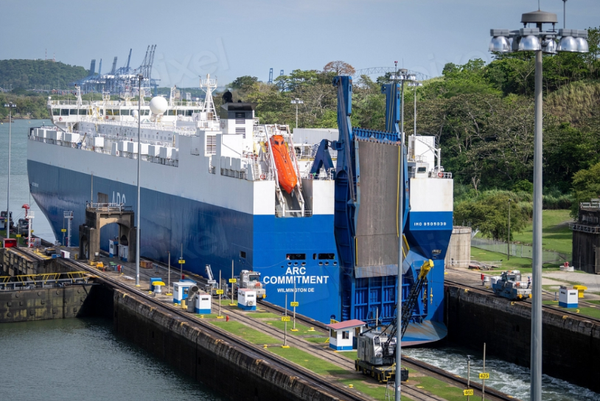
- [SIGNAL] [24.2.26]: Panama has published the Supreme Court ruling in its official gazette (24 Feb), formally making the annulment of CK Hutchison's port concessions legally binding. President Mulino ordered physical occupation of the Balboa and Cristóbal terminals. CK Hutchison stated that authorities made “direct physical entrance” to the ports and threatened employees with criminal prosecution if they refused to leave, calling the transfer “unlawful.” The company has activated international arbitration proceedings under ICC rules. Mulino characterised the action as “a legitimate tool that is not an expropriation.” Following on from the gazette publication, Panamanian security forces have raided CK Hutchison offices on the canal, further escalating tensions. Source: [CNBC / Reuters] T3, BW
- [WATCH] [3.3.26]: Material deal restructure: BlackRock and MSC are now in talks with CK Hutchison to complete the acquisition of approximately 41 global ports — excluding the two Panama Canal terminals — after Panama's seizure of the Balboa and Cristóbal assets, per Reuters and the FT. This marks a fundamental restructuring of the original $23bn transaction. The Panama ports, which were the geopolitical centrepiece of the deal, would now be subject to a separate Panamanian government concession tender. COSCO's demand for majority control and veto rights across the wider portfolio remains unresolved and is the single biggest obstacle to any deal closing. Source: [Reuters / FT via Dredgewire] T3, BSP
Trends Snapshot:
Scenarios: The Shield of Americas Summit
- Scenario A — Shield Crystallises (medium probability): The 7 March Miami summit produces substantive commitments — “secure infrastructure” protocols on ports and 5G, a coordinated critical minerals investment framework (with Project Vault integration), and possibly a commitment to Chinese investment screening from the six attending nations. Kast kills the Chile cable on 11 Mar inauguration. Bolivia formally suspends CATL contracts, and looks at other Chinese funded projects. Panama requests US support to deal with international arbitration proceedings involving CK Hutchison. Beijing responds with targeted commercial retaliation across 2–3 countries simultaneously, creating a short-term escalation cycle before the April Trump-Xi meeting.
- Scenario B — Managed Ambiguity and Balancing Acts (high probability): The summit is high on optics, low on binding commitments. Kast delays the Chile cable decision through a “security review.” Bolivia's Paz negotiates an amended lithium deals with China rather than cancellations. Panama ports remain in Maersk/MSC interim control while BlackRock closes a deal; Panama issues a new concession tender. Venezuelan oil slowly returns to Chinese buyers at narrower discounts. Trump-Xi April meeting produces a broader trade-off that quiets LATAM escalations.
- Scenario C — Deal Collapses (Low-Medium probability): COSCO kills the BlackRock-MSC-CK Hutchison $23bn deal by insisting on majority control. Panama ports enter prolonged legal limbo. Beijing launches coordinated retaliation across Panama, Chile, and Bolivia for 180 degree turns on infrastructure projects. LATAM bloc excluded from Shield meeting — Brazil, Mexico, Colombia placed pressure on centre-right governments. Trump postpones the April Beijing trip, citing LATAM provocations. US-China decoupling in LATAM infrastructure accelerates beyond individual flashpoints into a systemic split.
Further reading:
The Diplomat, 'Peru's Political Crisis Shows How China Could Militarily Use the Port of Chancay Against the US' — security-framing centrepiece of the Chancay debate: a Peruvian court stripped the regulator Ositran of oversight authority over the port; Peru's ninth president in ten years removed by a simple congressional majority; COSCO's near-total physical control means a future pro-PRC president could block interdiction of PLA naval resupply without any overt Chinese action. [Feb 2026].
House Select Committee on the CCP, 'Pulling Latin America into China's Orbit' — second instalment of the committee's Western Hemisphere investigation, focused on space rather than ports: at least 11 Chinese-linked ground stations, radio telescopes, and satellite laser ranging sites across Argentina, Venezuela, Bolivia, Chile, and Brazil; facilities presented as civilian science cooperation but assessed as technically capable of satellite tracking, signal interception, and support for PLA targeting of carrier strike groups. [26 Feb 2026].
CSIS, 'The Shield of the Americas Gathering and a New Strategy to Counter China in the Western Hemisphere' — policy prescription timed to the 7 March Miami summit: China's regional trade reached $518 billion in 2024 with $120 billion in government loans; Beijing has built a ~36-port network, more space infrastructure than anywhere outside mainland China, and Huawei embedded in over a dozen telecoms; the piece recommends Trump use the gathering to lock in counter-China clauses across economic, defence, and governance agreements. [5 Mar 2026].
East Asia Forum, 'Peru bets on Chancay to reshape Pacific trade' — commercial counterpoint to The Diplomat's security framing: 19,000 Chinese cars expected through the terminal in 2026; Callao launching a competing MSC direct-China route; genuine trade creation underway. [28 Feb 2026].
To watch next week:
- Post 7 March: Shield of the Americas summit at Trump Doral, Miami — watch for concrete deliverables on port screening, 5G standards, and critical minerals cooperation. Any joint communiqué language on China could be market-moving.
- 11 March: Kast inauguration as Chilean president. Decision on Chile-China Express submarine cable is the most immediate China-relevant policy call he faces.
- March ongoing: CK Hutchison-BlackRock-COSCO triangular negotiations on the $23bn ports deal — any movement toward or away from resolution has major implications for global port ownership and the Panama Canal operational landscape.
- Venezuela: First March delivery of legalised Venezuelan crude to Chinese refiners via Vitol/Trafigura — volume and discount data will reveal how much of pre-Maduro flows are being restored under the new framework.
- Bolivia: Watch for first signals from the Paz government on the CATL direct lithium extraction partnership at Uyuni, especially after Trump Miami meeting — any suspension or renegotiation announcement would be a landmark Sino-LATAM minerals event.
- Trump-Xi April meeting: All current LATAM escalations are effectively pre-positioning for this bilateral. Watch for any back-channel signals on Panama, Chile, or Venezuela before the end of March.
About this briefing:
LATAM–China Monitor (LCM) aggregates weekly developments in policy, politics, infrastructure, commodities, energy, FDI, diplomacy, and military cooperation across Latin America and China. This project is designed to support future strategic briefings and political risk advisory services from SinoAméricas (SA).
Subscribe for future briefings
This briefing is free and focuses on aggregation.
Want deeper analysis on China-LATAM relations? Contact info@sino-americas.com
Know someone tracking China-LATAM? Forward this briefing.
Analytical weekly briefings, risk reports and corporate advisory services will be available in the medium-term.